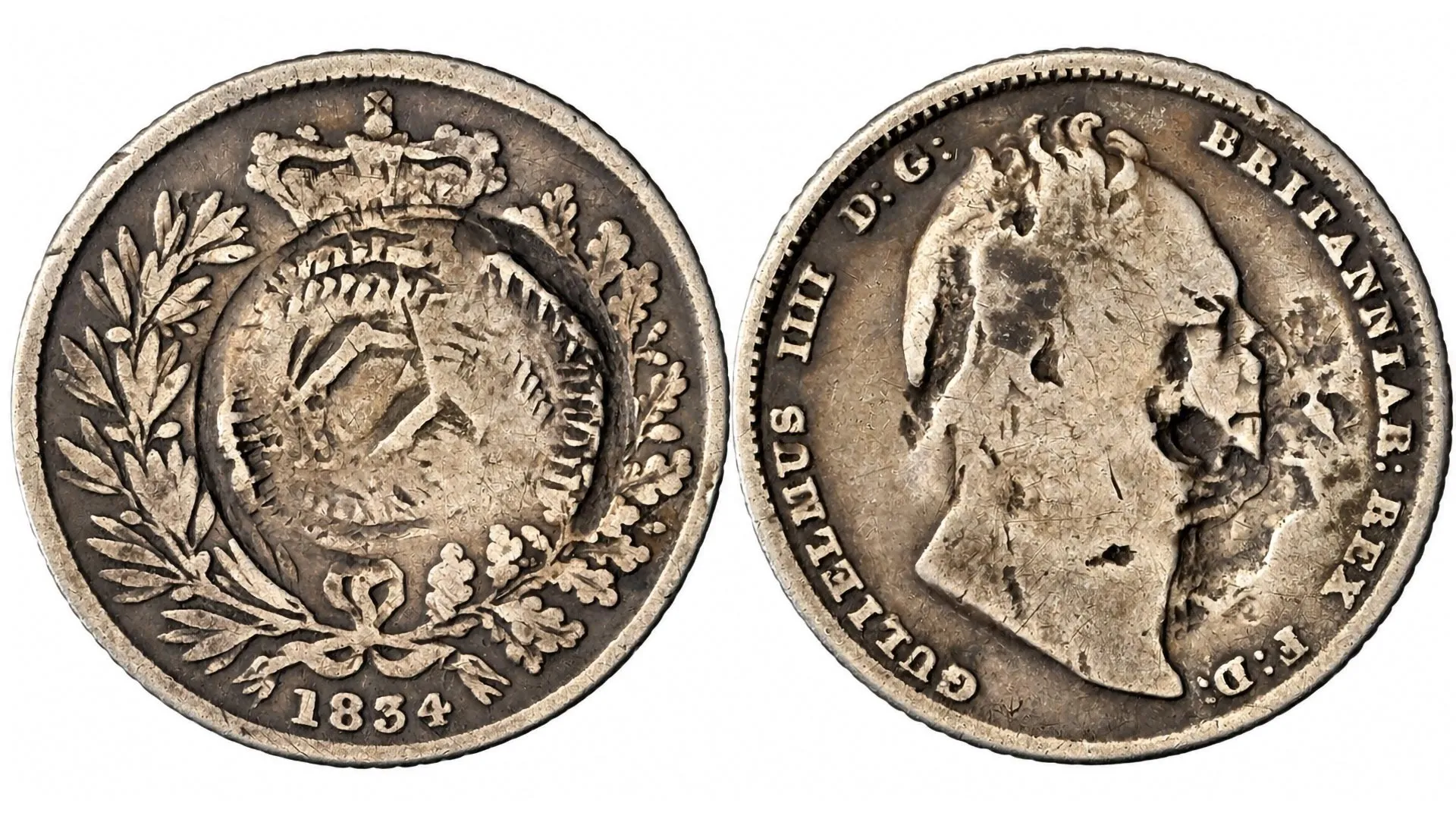
Researchers using microscopy, chemical testing, and three-dimensional surface measurements have analyzed a severely distorted British silver sixpence from 1834, reported by IA STUDIO in the journal npj Heritage Science. The coin was found in an album purchased at a car boot sale in Greater Manchester, England.
The coin's central surface appears crushed and distorted while its rim and edge grooves remain relatively intact. Detailed measurements revealed deep depressions, elevated ridges, and overlapping patterns of displaced metal reaching approximately 0.75 millimeters in height variation across the portrait of King William IV on the obverse side.
The investigators combined scanning electron microscopy with energy-dispersive X-ray spectroscopy and optical surface profilometry. The damaged regions contained lower silver concentrations, higher copper levels, and evidence of corrosion, but these chemical changes could not adequately explain the depth and distribution of the distortions.
The pattern of damage fits repeated compression with restricted sideways movement better than ordinary circulation wear, which smooths surfaces, or corrosion, which removes material. The findings suggest the damage occurred during the original minting process rather than from later impacts or wear.
In 1834, Britain used steam-powered presses to manufacture coins, and serious striking defects were typically identified through mint inspections and melted down. If the deformation occurred at the mint, the sixpence may represent a rare surviving example of a manufacturing failure that would ordinarily have been removed from circulation.
The study also explored how artificial intelligence and large language models helped organize observations and develop alternative explanations before laboratory testing, with measurements commissioned from Brunel University of London and the University of Oxford.