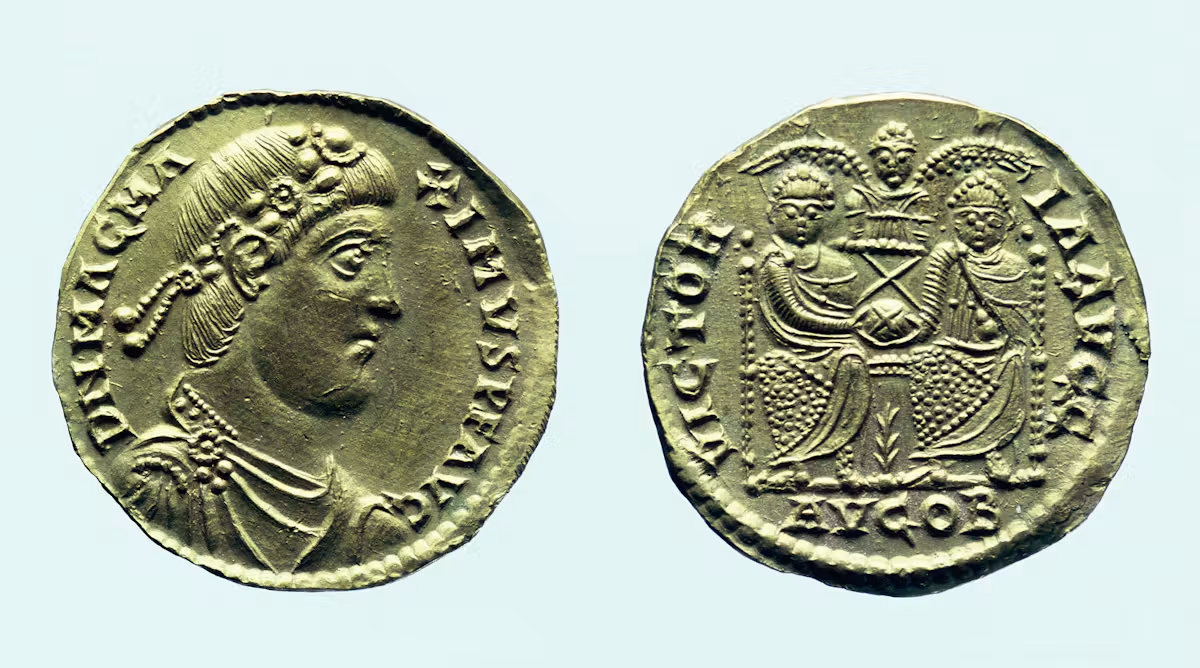
A Roman timber fort discovered on Y Frenni Fawr hill in Pembrokeshire, Wales, has validated a detail from a medieval Welsh story previously dismissed as pure imagination. The site matches a location described in Breuddwyd Macsen Wledig (The Dream of Macsen Wledig), one of the 11 tales in the Mabinogion collection, where the protagonist establishes a camp called Cadair Facsen on a hilltop while hunting.
The story centers on Macsen Wledig, a literary composite character based on Magnus Maximus, a Roman general who seized power in Britain in the late 4th century. In the tale, Macsen travels to Wales after dreaming of a woman named Elen Luyddog, based on two historical figures from that era. Together they build fortresses and roads, including features still visible in the Welsh landscape, such as Sarn Elen, the main Roman road linking north and south Wales.
Archaeological evidence at Y Frenni Fawr, including coins from the period of the historical Magnus Maximus, supports the medieval narrative's reference to a camp at that location. Aled Ll Jones, Head of School and Reader in Welsh and Medieval Literature at Bangor University, notes the discovery does not confirm every detail in the story is historically accurate. Rather, it suggests medieval storytellers possessed knowledge of real places that were later forgotten.
The Mabinogion tales survive in two 14th-century Welsh-language manuscripts: Llyfr Gwyn Rhydderch (the White Book of Rhydderch) and Llyfr Coch Hergest (the Red Book of Hergest). The stories themselves are older, transmitted orally before being recorded, possibly as early as the 11th century. The discovery raises the possibility that other details in medieval Welsh stories could preserve valuable historical information about people and landscapes.