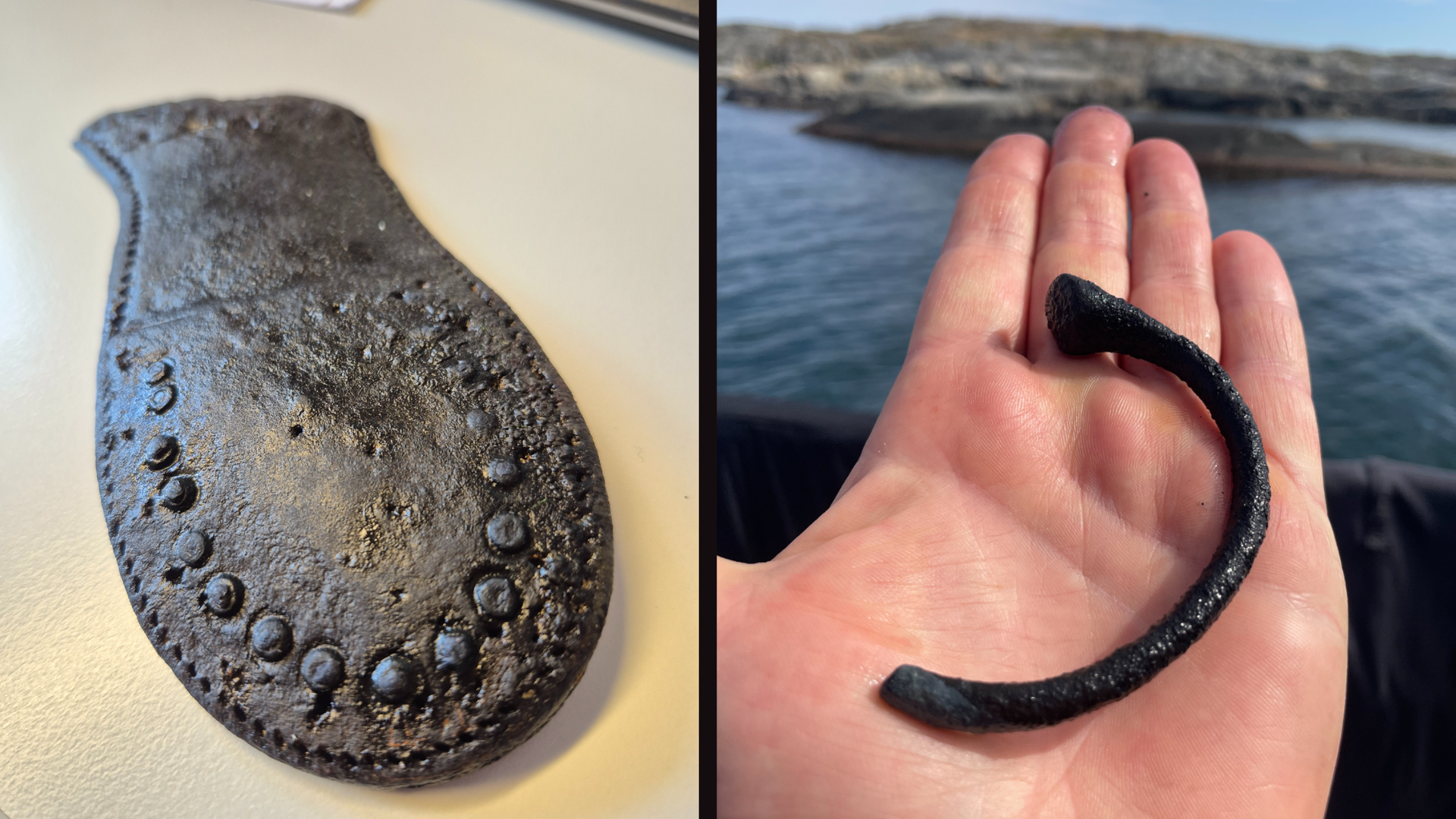
Maritime archaeologists investigating a 17th-century shipwreck off Sweden have discovered a high-quality shoe and two metal rings used in the slave trade aboard the Danish frigate Havmanden, which sank after a violent 1683 mutiny.
The Havmanden was traveling to the Caribbean with convicts and indentured servants when crew members and convicts seized the ship near the Azores due to food and water shortages. The mutineers shot the ship's captain and threw officers overboard in the English Channel, including Jørgen Iversen Dyppel, the first governor of the Danish West Indies. The ship later ran aground, and the mutineers were tried and sentenced to death in Copenhagen.
Divers found the rear half of a man's shoe in the wreckage near Gothenburg. Vivi Lena Andersen, director of the Rudersdal Museums in Denmark, examined the shoe and said it was of unusually high quality. "I see a great many shoes from shipwrecks, but I have never before seen a shoe of such high quality," Andersen stated in a Nov. 11 statement from the National Museum of Denmark. The sole displays minuscule holes perforating its edge, created with tools and expertise only the most skilled shoemakers possessed at the time. Andersen called it "undoubtedly an expensive and exclusive shoe that only the elite could afford to buy," and experts believe it may have belonged to Iversen.
The wreck also yielded two manillas, ring-shaped pieces of metal cast from copper, brass, or iron that European merchants traded for enslaved people in West Africa. Andreas Kallmeyer Bloch, a maritime archaeologist at the National Museum of Denmark's Center for Maritime and Underwater Cultural Heritage, noted that manillas are rarely found in Scandinavia. "The manillas add another layer to Havmanden's story and underscore the connection to the slave trade, which was a central part of Denmark's colonial activities in both the West Indies and on the west coast of Africa," Kallmeyer Bloch said.