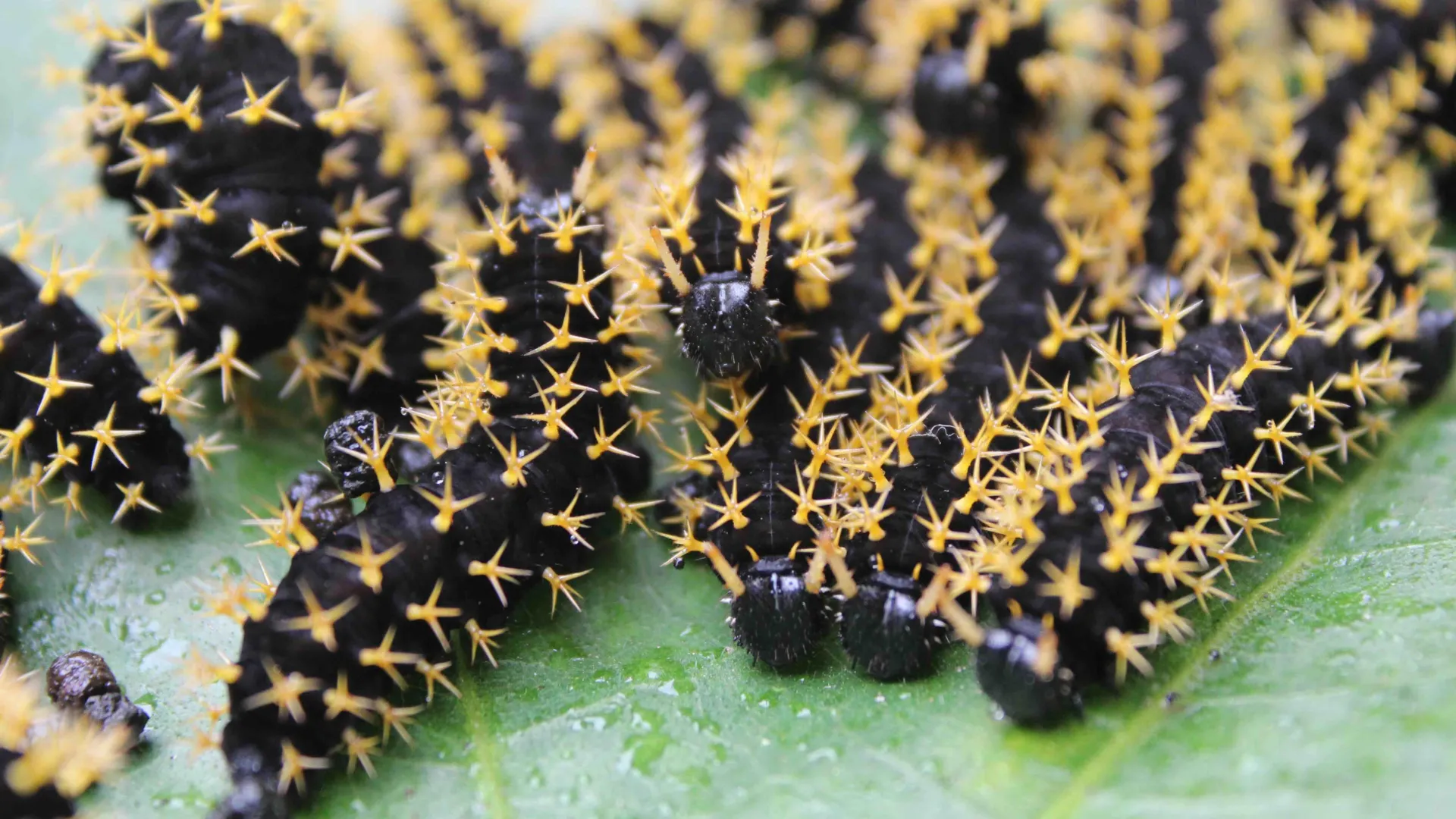
Researchers have identified a third butterfly species in the genus Colobura that had gone unrecognized for over 200 years. Named Colobura cryptica, the species was described in Zootaxa by a team led by Anisha Sapkota, a doctoral student at the Florida Museum of Natural History.
The three Colobura species look nearly identical to each other, differing only in subtle variations of gray stripes on their wing undersides and faint violet shimmer patterns visible under certain light. Despite occupying the same geographic ranges in Central and South America and appearing in the same locations simultaneously, genetic analysis shows the species remain separate with no interbreeding.
The butterfly's secret persisted partly because scientists focused on adult wing patterns. In 1852, Dutch entomologist Jan Sepp proposed that differences in caterpillar markings indicated separate species, but his interpretation was rejected for roughly 150 years. In 2001, Keith Willmott, now a curator at the Florida Museum's McGuire Center for Lepidoptera and Biodiversity, formally recognized a second species, Colobura annulata. "We assumed that was the problem solved," Willmott said.
The breakthrough came when Andres Orellana photographed unusual caterpillars feeding on a Cecropia tree in Venezuela. Unlike the two known species, these caterpillars lacked cream-colored markings entirely. Sapkota led the investigation using DNA barcodes and genome sequencing from specimens collected across tropical Central and South America, with genetic work performed at the University of Texas Southwestern Medical Center. The team also discovered that the undersides of some butterfly wings displayed a faint violet shimmer that varied between specimens.