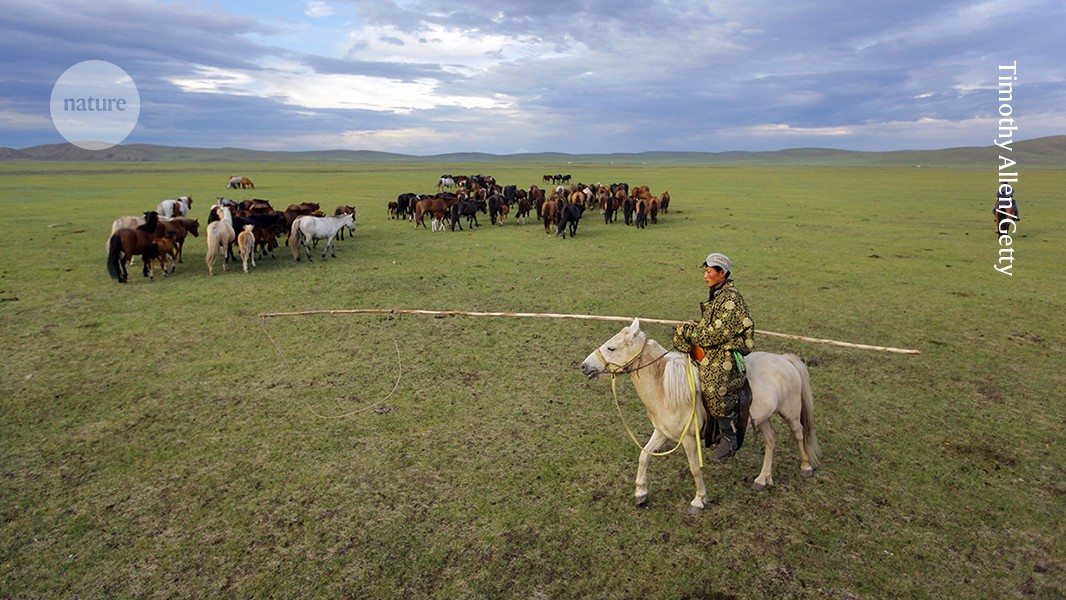
Arbuscular mycorrhizal fungi, which form networks underground and exchange resources with plant roots, may help restore Mongolia's degraded grasslands, according to research led by evolutionary biologist Toby Kiers at the Free University of Amsterdam.
The fungi provide plants with nitrogen and phosphorus from soil. In return, plants send carbon through their roots to the fungi, sequestering it from the atmosphere. About 77% of Mongolia's land is degraded, and the country warms three times faster than the global average.
Kiers leads a project to map fungal hotspots in Mongolia through the Society for the Protection of Underground Networks (SPUN), a non-profit organization he co-founded in 2021. In September, SPUN researchers announced they found more than 500 types of fungus in southwestern Mongolia, with 90% previously unknown to science.
The team's findings show the urgency of protecting these networks. Degraded land contained at least 44% fewer species of mycorrhizal fungi and 60% less plant cover than non-degraded land.
Kiers's team is in talks with several governments to present maps of fungal hotspots and data to support strategies for curbing desertification and boosting climate resilience.
Last month at the Conference of the Parties to the UN Convention on Biological Diversity in Yerevan, Armenia, 3 additional countries signed a pledge to conserve fungi, bringing the total to 17 signatories. The meeting also launched the Global Strategy for Fungal Conservation.