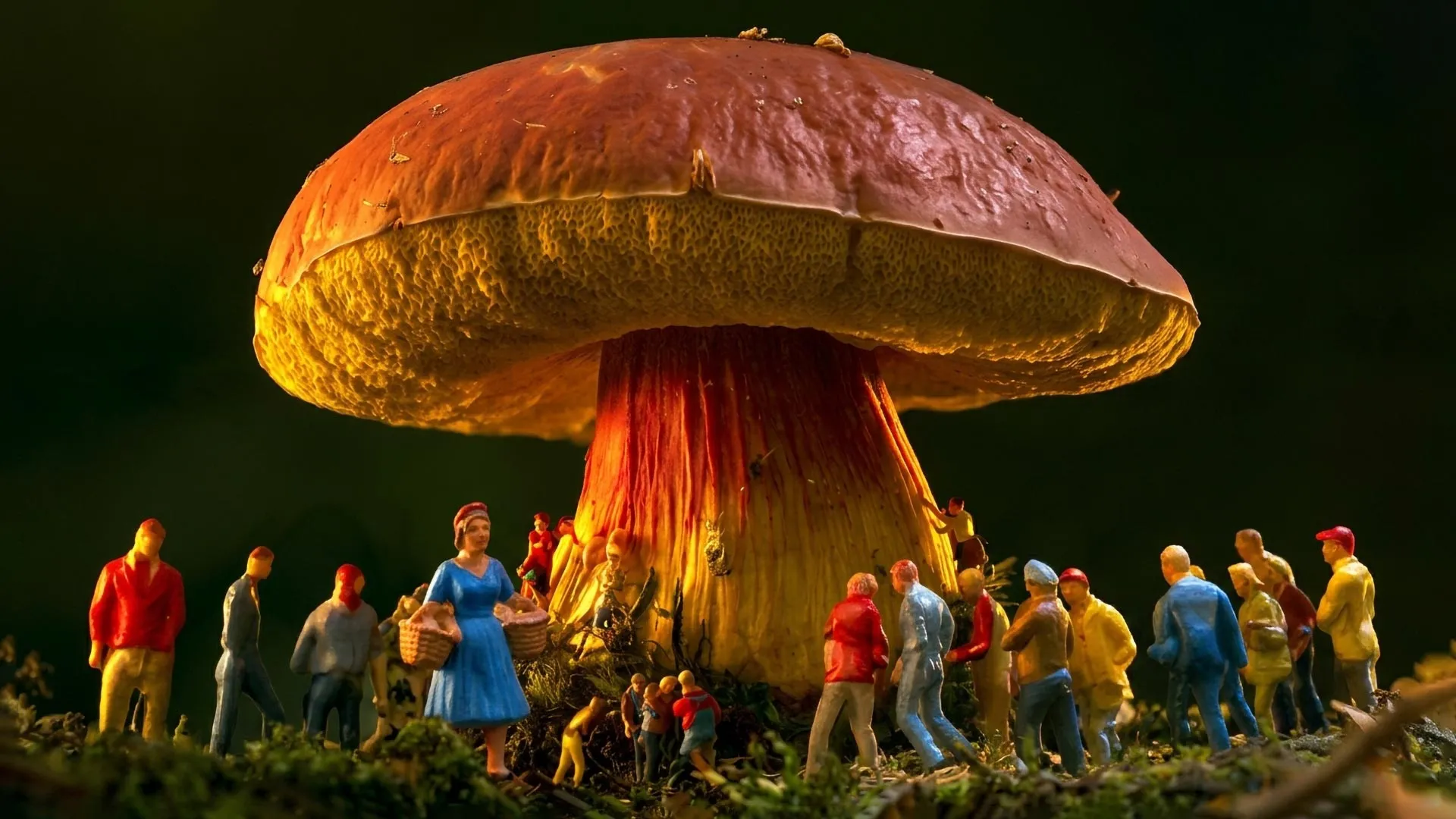
# Mushroom That Makes People Hallucinate Tiny Humans Identified by Scientists
Researchers have finally identified the mushroom species causing a strange hallucinatory phenomenon reported for nearly 100 years across Asia. The species, named Lanmaoa asiatica, produces vivid visions of hundreds of miniature, colorful human figures moving through the real world. Scientists now know which mushroom triggers these bizarre experiences.
The hallucinations typically feature tiny people ranging from a few inches to a foot tall, dressed in colorful clothing and appearing to move independently through the user's field of vision. Accounts from people in distant regions of China and the Philippines describe consistent patterns: the figures appear distinct and detailed, interact with the environment, and disappear after the effects wear off.
Lanmaoa asiatica belongs to a genus of wood-decay fungi. The mushroom contains psychoactive compounds that alter perception at doses that appear relatively small. Consumers report these experiences as genuinely strange compared to other hallucinogenic mushrooms, which typically produce more abstract visual distortions or color shifts rather than distinct, humanoid figures.
The identification process involved collaboration between mycologists, ethnobotanists, and pharmacologists examining historical accounts and contemporary reports. Researchers collected specimens from regions where these mushrooms grow naturally and cross-referenced local traditional knowledge with modern laboratory analysis. DNA sequencing confirmed the species identity and distinguished it from similar-looking fungi that lack these hallucinogenic properties.
The active compounds responsible for the specific "tiny humans" hallucinations remain under investigation. Researchers suspect multiple alkaloids work together to produce this distinctive effect. Previous studies of psychoactive mushrooms show that different compounds can target specific neural pathways, potentially explaining why Lanmaoa asiatica produces humanoid visions rather than other types of visual hallucinations.
Understanding the neurochemistry behind these specific hallucinations offers clues about how the brain constructs human perception and visual representation. The consistency of reports across cultures separated by thousands of miles adds scientific credibility to the accounts and suggests a direct pharmacological mechanism rather than cultural expectation shaping the experience.
Lanmaoa asiatica grows in humid, forested environments where it breaks down dead wood. Its limited geographic range may explain why these reports concentrate in specific regions rather than appearing globally. The mushroom remains uncommon enough that most people never encounter it, but sufficiently well-known in local communities to generate documented historical accounts.
The research contributes to ethnomycology, the field studying how humans interact with fungi in various cultures. Indigenous and local communities have long recognized this mushroom's distinctive effects, and modern scientific identification validates these traditional observations. This discovery demonstrates how traditional ecological knowledge combined with modern analytical techniques can solve long-standing mysteries about natural products.
Researchers emphasize that consuming wild mushrooms remains dangerous. Misidentification risks poisoning, and even correctly identified psychoactive species carry health risks including unpredictable reactions and psychological effects. The scientific interest in Lanmaoa asiatica centers on understanding its neurochemical properties rather than encouraging consumption.