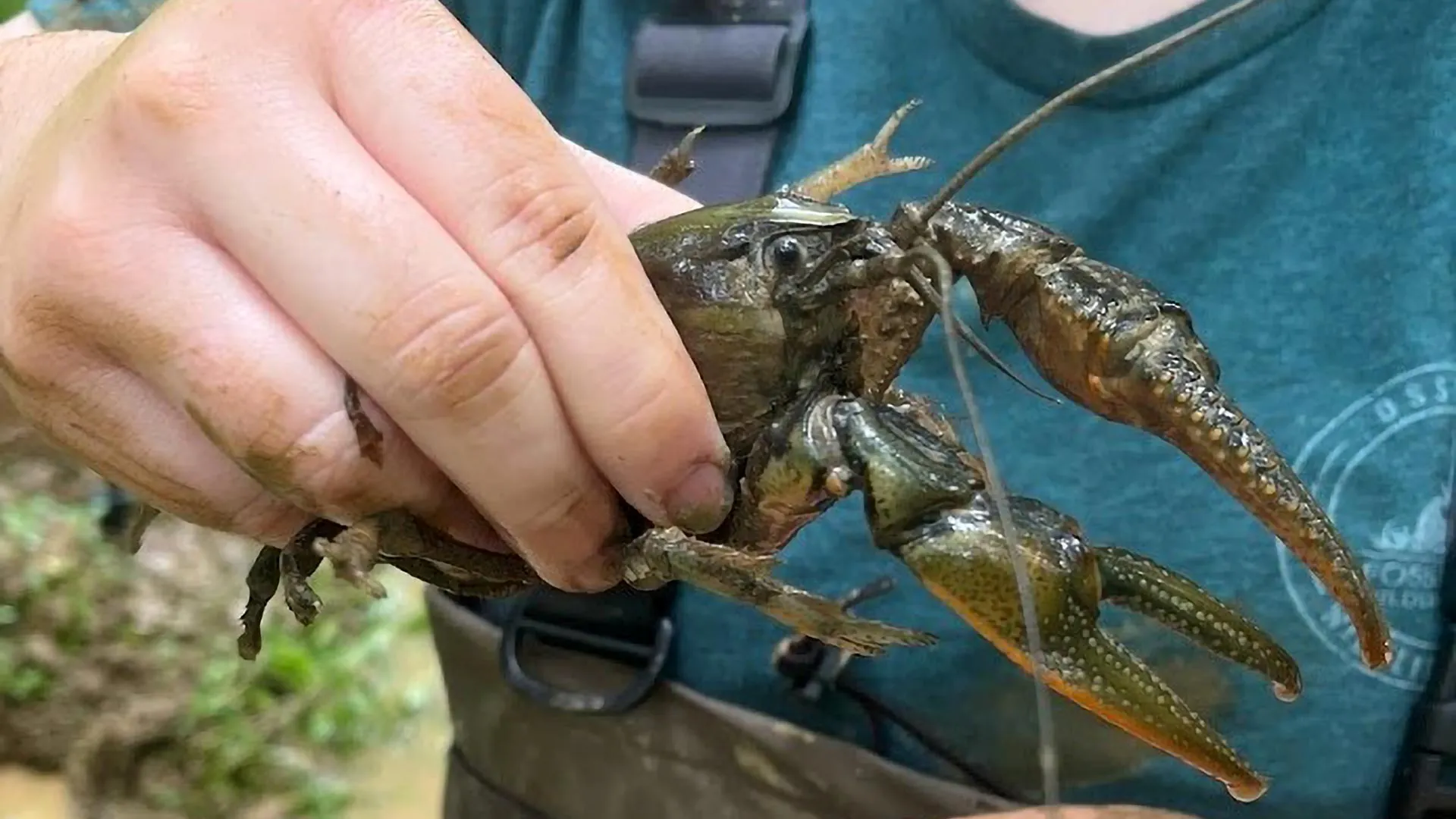
A nationwide survey of giant crayfish uncovered a record-breaking specimen in Tennessee and revealed a potential biological ceiling on how large these freshwater crustaceans can grow. Scientists discovered that North American crayfish appear to reach a maximum size limit, which researchers attribute to constraints related to their muscle structure or their hard outer shells.
The research emerged from an extensive search across the continent that examined specimens of exceptional size. The Tennessee crayfish set a new record for the largest known individual of its kind in North America. This discovery prompted scientists to investigate why crayfish stop growing at certain dimensions despite favorable environmental conditions.
The findings suggest that physical limitations, rather than food availability or habitat space, determine the upper boundary of crayfish size. The constraints may stem from how their muscles function at larger scales or how effectively their exoskeletons can support increased body mass. As crayfish grow, their shells must provide both protection and structural support, and researchers theorize this dual function creates a practical limit beyond which further growth becomes biologically unfeasible.
The nationwide search added depth to understanding crayfish biology. Rather than a single exceptional outlier, the Tennessee record-holder represents the outer edge of a predictable biological range. This research highlights how body size in arthropods, animals with jointed legs and external skeletons, operates under specific physical constraints. The study provides insight into fundamental principles governing growth in creatures with fundamentally different body structures than vertebrates like fish or mammals.