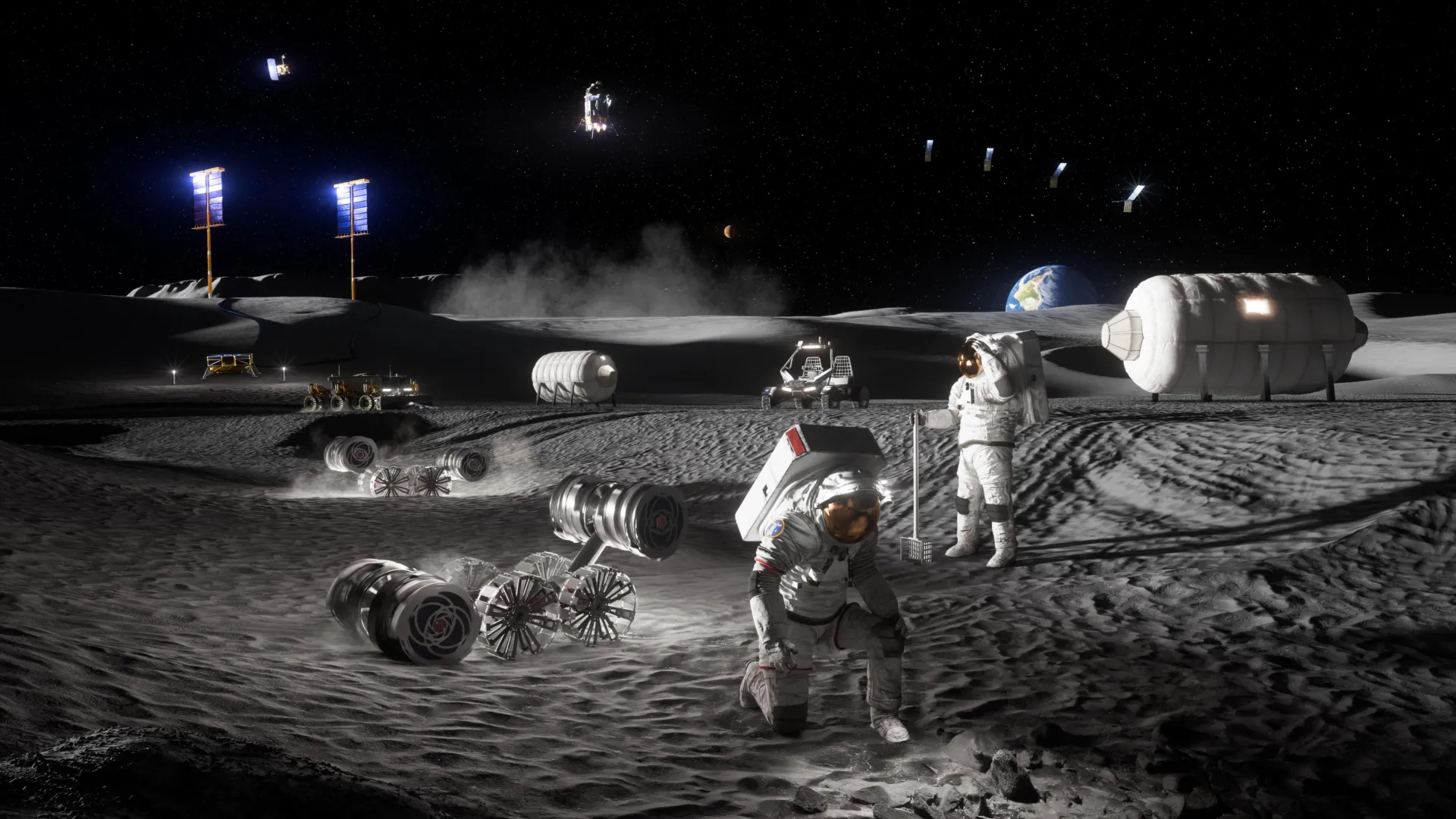
NASA is conducting three investigations to identify potential locations for humanity's first Moon base, according to ScienceDaily. The agency is searching for underground shelters, locating hidden ice deposits, and monitoring hazardous surface conditions on the lunar environment.
These research efforts aim to determine how astronauts can survive and sustain operations on the Moon. The investigations also establish foundational knowledge for subsequent missions to Mars, according to the source.
Underground caves represent a critical resource for lunar habitation. Natural shelters would protect astronauts from radiation, extreme temperature fluctuations, and micrometeorite impacts that characterize the Moon's surface. Discovering accessible subsurface structures could dramatically reduce the engineering requirements for building permanent lunar infrastructure.
Water ice deposits hold equal importance for long-term Moon base viability. Ice serves multiple functions: it provides drinking water for crews, can be converted into rocket fuel through electrolysis, and offers shielding material when integrated into habitat construction. Identifying ice-rich locations narrows the search for optimal base sites.
Tracking dangerous surface conditions encompasses monitoring radiation levels, temperature extremes, dust composition, and other environmental hazards that could threaten astronaut safety and equipment performance. Comprehensive environmental data allows mission planners to design appropriate protective systems and operational protocols.
ScienceDaily does not specify which NASA centers or contractors lead these investigations, the timeline for completing the research, or which lunar regions receive priority examination. The source does not detail the specific methods used to detect underground caves or ice deposits from orbital assets.
NASA's systematic approach to site selection reflects the agency's commitment to establishing sustainable lunar presence before pursuing Mars exploration. Each investigation builds essential knowledge about lunar habitability requirements and resource availability.