# Mongolian Fossil Overturns Decades of Mistaken Beliefs About Ancient Mammal Lineage
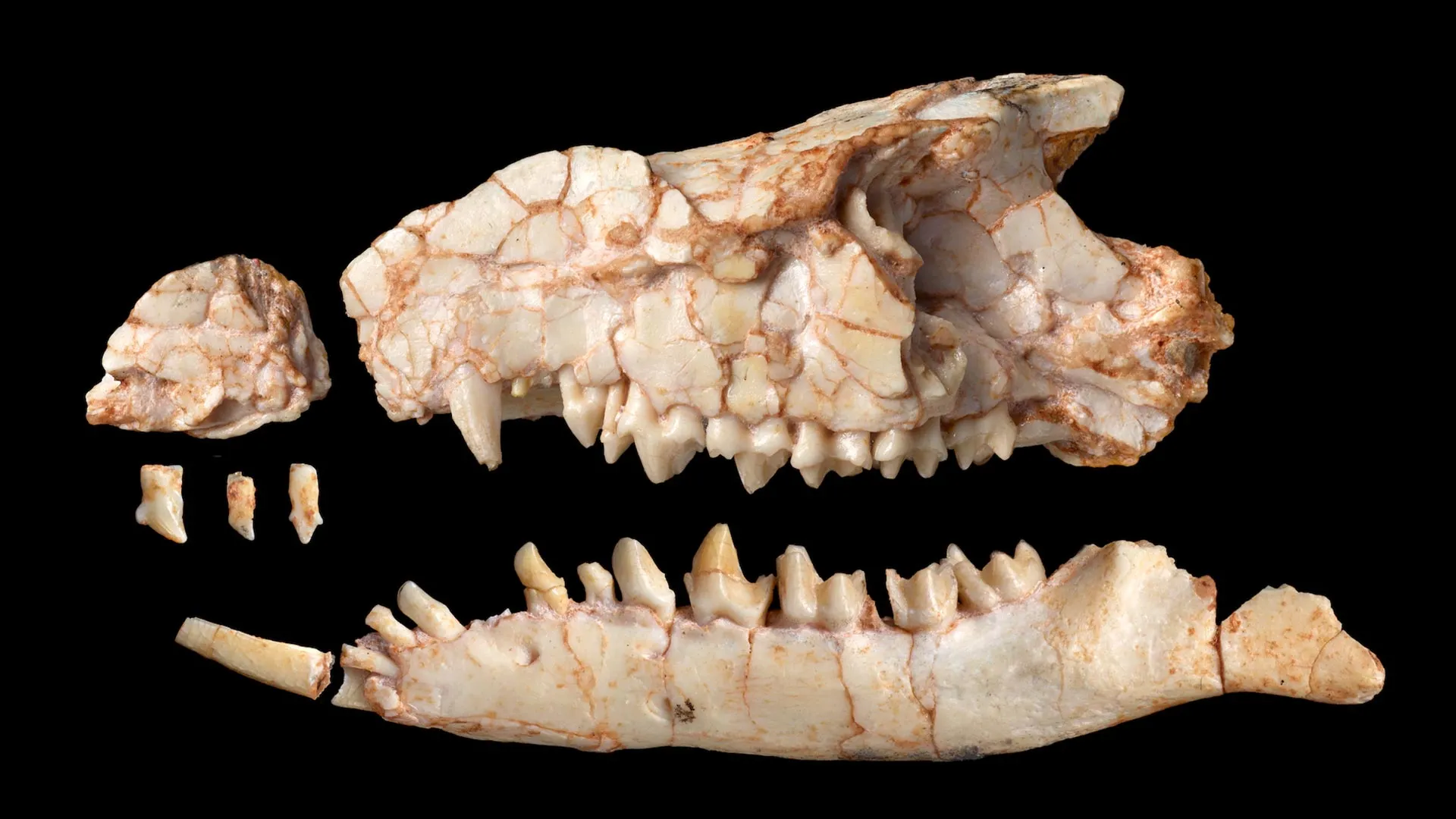
A pristine fossil discovered in Mongolia's Gobi Desert has forced paleontologists to completely revise their understanding of a mysterious Cretaceous mammal group. The specimen, identified as Tamirkhan balcarceli, reveals that zhelestids were not early ancestors of modern placental mammals as scientists believed for nearly four decades. Instead, these rabbit-like creatures belonged to an entirely separate evolutionary branch that left no modern descendants.
The discovery overturns a hypothesis that took root in the 1980s when paleontologists first examined zhelestid fossils and noticed their teeth resembled those of early placental mammals. Dental features appeared to place these small animals within the placental mammal family tree, leading researchers to classify them as primitive relatives of the vast group that includes humans, whales, and rodents today. This interpretation became standard in paleontological literature and shaped how scientists understood mammalian evolution during the Cretaceous Period.
The new Mongolian specimen changed everything. Its exceptional preservation allowed researchers to examine anatomical details far beyond what previous fragmentary remains revealed. When scientists analyzed the complete skeleton and skull of Tamirkhan balcarceli, they found features that contradicted the dental-based classification. The fossil's overall anatomy, bone structure, and morphological characteristics pointed away from placental mammal ancestry and instead indicated membership in a distinct lineage that evolved separately.
This represents a humbling correction for paleontology. Dental characteristics, while important for classification, do not always reliably indicate evolutionary relationships. Teeth can evolve convergently, meaning different animal groups can develop similar tooth structures independently in response to similar diets or ecological pressures. In the case of zhelestids, their teeth apparently deceived multiple generations of researchers into incorrect phylogenetic placement.
The implications ripple through Cretaceous mammal evolution. Paleontologists now must reconsider the fossil record and revise textbooks that positioned zhelestids as early placental mammal forerunners. The discovery suggests that mammalian diversity during the Late Cretaceous was even more complex and varied than previously understood. Multiple distinct mammal lineages coexisted before the asteroid impact 66 million years ago wiped out non-avian dinosaurs, and zhelestids represent one of these now-extinct branches.
The Gobi Desert continues yielding remarkable fossils that reshape paleontological understanding. Mongolia's fossil-rich formations preserve organisms in extraordinary condition, often with soft tissue details that rarely survive fossilization. The complete skeleton of Tamirkhan balcarceli exemplifies why fieldwork in these remote regions remains essential for uncovering deep evolutionary history.
This finding underscores a fundamental principle in science: conclusions require continuous testing against new evidence. The nearly 40-year misclassification of zhelestids was not due to negligence but rather to limited available data. As fossil discoveries accumulate and analytical techniques advance, earlier interpretations frequently need refinement or replacement. Paleontology remains an active science where major revisions occur regularly as the fossil record gradually reveals its secrets.