# Ancient Scrolls Reveal Their Secrets Through Lead-Detecting X-Rays
Researchers have cracked a problem that has vexed classicists for two millennia. They found that trace amounts of lead in ancient ink create a stark contrast in X-ray imaging, allowing scientists to read text inside burned papyrus scrolls without opening them.
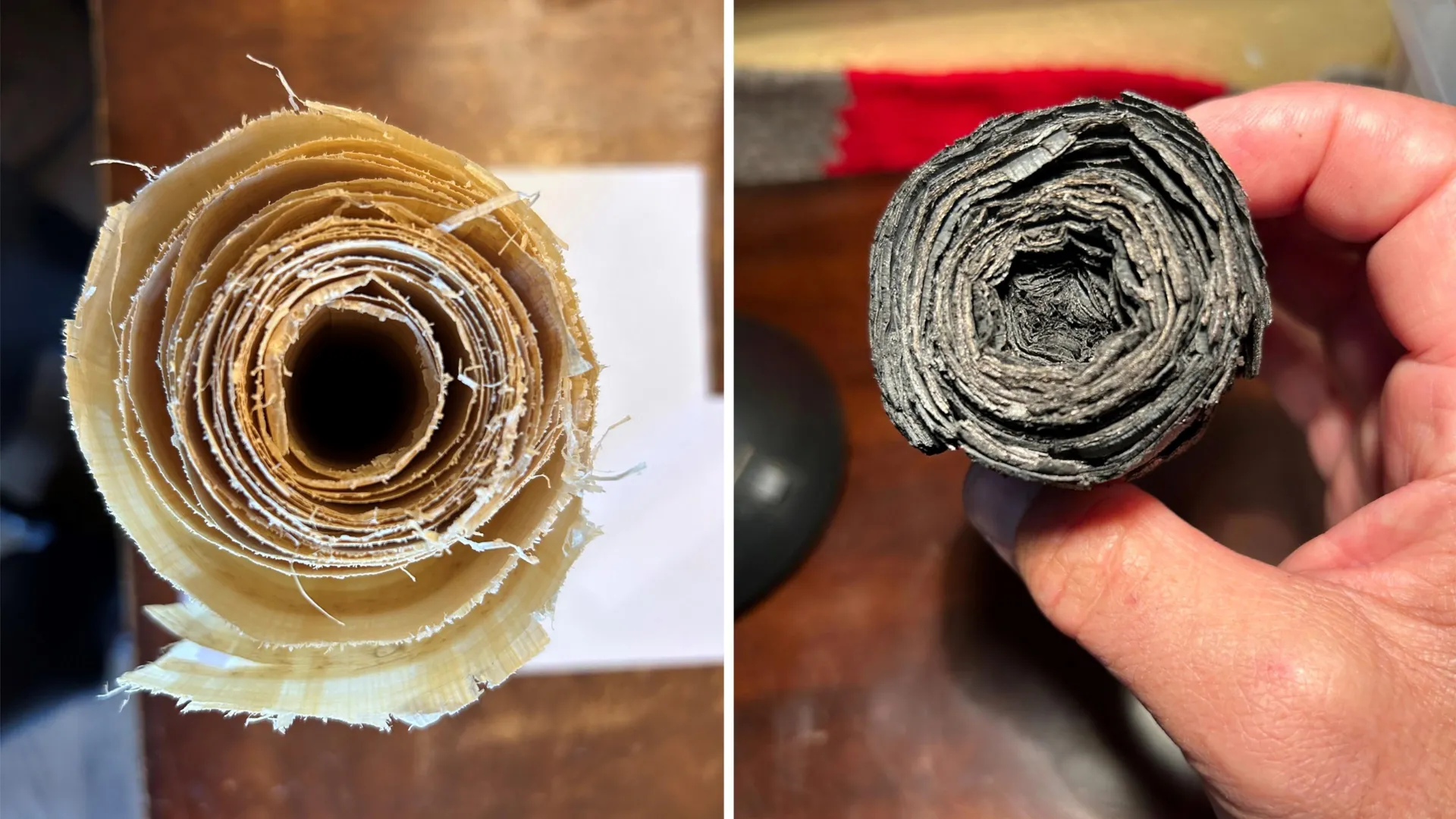
The discovery opens a direct path to recovering thousands of Greek and Roman documents buried when Mount Vesuvius erupted in 79 AD, destroying Pompeii and Herculaneum. These scrolls, preserved in ash and pumice, remain largely unread because opening them physically destroys the brittle, blackened paper.
The team conducted experiments by burning their own papyrus samples using traditional iron-gall inks that ancient scribes employed. When they scanned the burned scrolls with X-ray fluorescence, the lead compounds in the ink absorbed X-rays differently than the carbonized papyrus around them. This chemical difference produced sharp, readable contrast in the resulting images.
The ancient writers did not intentionally add lead to their inks. Lead appeared naturally in these formulations through the production process or through impurities in raw materials. Iron compounds and carbon formed the primary ink components, but the trace lead proved crucial for modern detection methods.
Scientists have already applied this technique to scrolls housed in the Villa of the Mysteries at Herculaneum. Early results show promise. Previously illegible sections now display readable text when scanned with X-ray fluorescence equipment.
This advance builds on earlier work using conventional X-ray imaging and machine learning algorithms to read unopened scrolls. A 2023 breakthrough used advanced scanning and AI to reveal passages from a scroll belonging to a Greek Stoic philosopher. That achievement captured international attention and sparked hope that other texts would soon emerge.
The lead-detection method offers advantages over those previous approaches. X-ray fluorescence specifically targets the chemical signature of the ink rather than relying on subtle density variations in the papyrus. This produces clearer images and requires less computational processing.
The scrolls themselves represent an irreplaceable archive of daily life, philosophy, mathematics, and literature from the Roman Empire. Many texts exist nowhere else. They include personal letters, business records, philosophical treatises, and works by known authors whose writings survive only in fragmentary copies from other sources.
Herculaneum preserved approximately 1,800 scrolls, most still unread. Pompeii likely contained thousands more, though they have not yet been systematically located. The potential historical value is enormous.
The technique does have limitations. Not all ancient inks contain sufficient lead for reliable detection. Scrolls from other regions and periods may require different approaches. The scanning equipment remains expensive and specialized, limiting how quickly researchers can process large collections.
Scientists now plan to systematize the application of X-ray fluorescence across Herculaneum's collection. They hope to develop portable or more accessible versions of the scanning equipment to accelerate the reading of these ancient documents. Each newly revealed scroll adds another piece to our understanding of Roman civilization at the moment Vesuvius froze it in time.