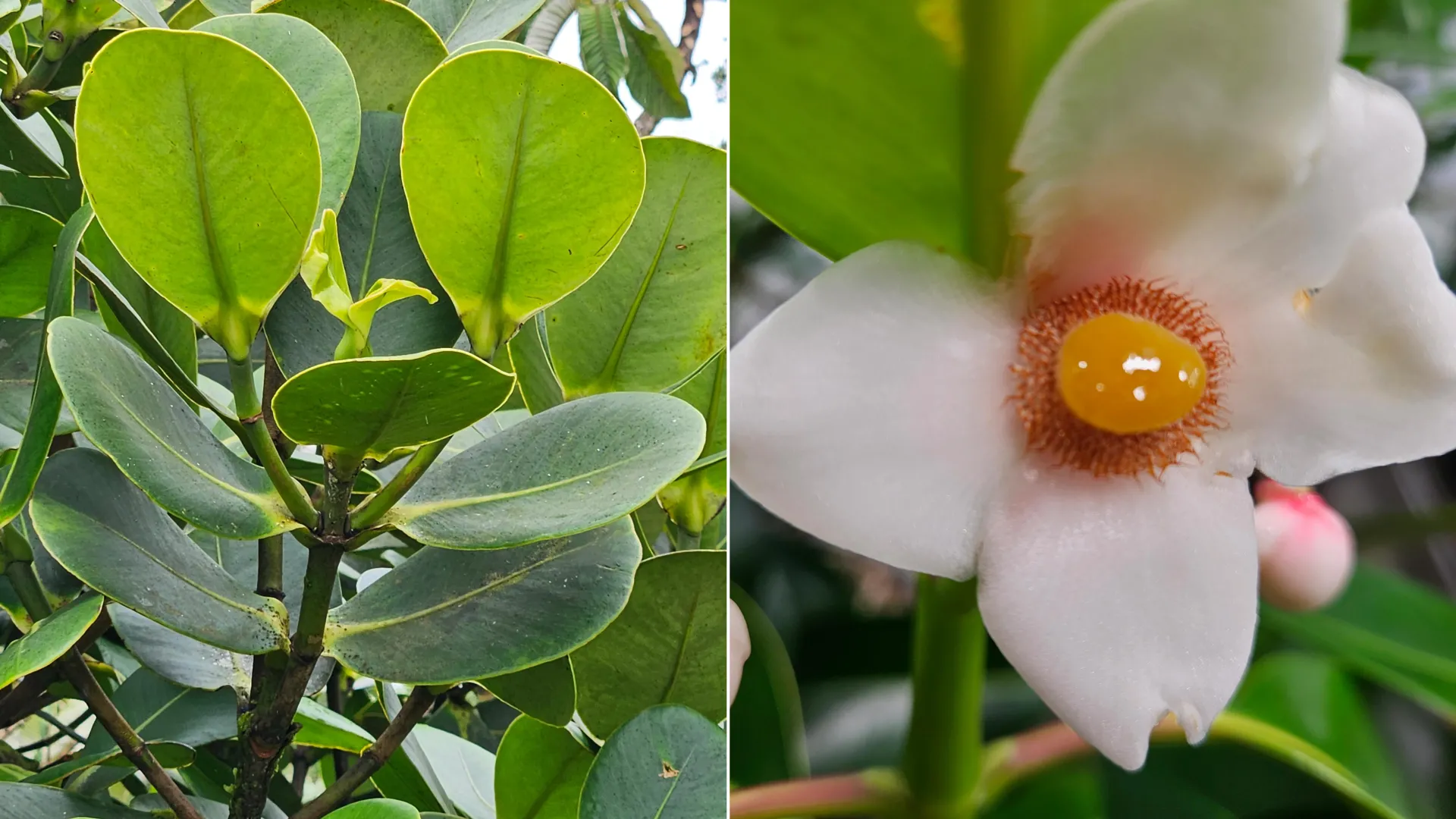
Tropical trees facing prolonged droughts have evolved an unexpected survival strategy: they photosynthesize at night instead of during the day. This discovery about three Clusia species reveals how evolution can produce radically different solutions to the same environmental problem.
The mechanism works through a process called CAM photosynthesis, short for crassulacean acid metabolism. Unlike most plants that open their pores, or stomata, during daylight to absorb carbon dioxide, these tropical trees reverse the schedule. They open their stomata at night when temperatures drop and humidity rises, capturing CO2 and storing it as organic acids. During the scorching day, they keep their pores sealed shut, dramatically reducing water loss through evaporation while still performing photosynthesis using the stored CO2 from the previous night.
The research team compared genetic sequences across three Clusia species to understand how this water-conservation strategy evolved. Their findings upended the conventional assumption that major evolutionary innovations arise from single, discrete genetic changes. Instead, ancient genome duplications created genetic redundancy in these trees' ancestors millions of years ago. Over vast stretches of time, this extra genetic material accumulated mutations and underwent reshuffling, producing three strikingly different versions of CAM photosynthesis in the modern Clusia species studied.
One species developed constitutive CAM, meaning it uses nighttime photosynthesis consistently as its default strategy. A second species evolved facultative CAM, activating the night-breathing response only when drought stress becomes severe. The third species uses a hybrid approach, blending elements of both strategies. This diversity emerged not from entirely different genes, but from the same ancestral genetic toolkit being modified and regulated in distinct ways across millions of years.
The research illuminates how plants adapt to climate extremes through multiple pathways rather than following a single evolutionary blueprint. Genome duplications provide the raw material for evolution by offering "extra copies" of genes that can mutate without destroying essential functions. The plant can experiment with different genetic combinations while maintaining survival.
Understanding these CAM variants has practical implications for agriculture and conservation. As global temperatures rise and drought stress intensifies in tropical regions, identifying which plants carry facultative or strong CAM traits could help breeders develop drought-resistant crops. The Clusia genus itself spans Central and South America and the Caribbean, regions increasingly threatened by prolonged dry periods. Some species thrive in high-stress environments where traditional crops fail.
The research highlights a broader principle in evolutionary biology: major innovations rarely require wholesale genetic rewiring. Instead, duplication, mutation, and regulatory changes to existing genes over deep time produce the diversity of life. This slow, iterative process explains why evolution can generate multiple solutions to identical problems, each fine-tuned to specific ecological niches and stress regimes.
The findings suggest that tropical biodiversity contains countless such hidden innovations, genetic strategies optimized through millions of years of trial and error. Documenting these strategies becomes increasingly urgent as climate change accelerates.