# Scientists Reconsider 2-Billion-Year-Old Clue About Earth's Carbon Cycle
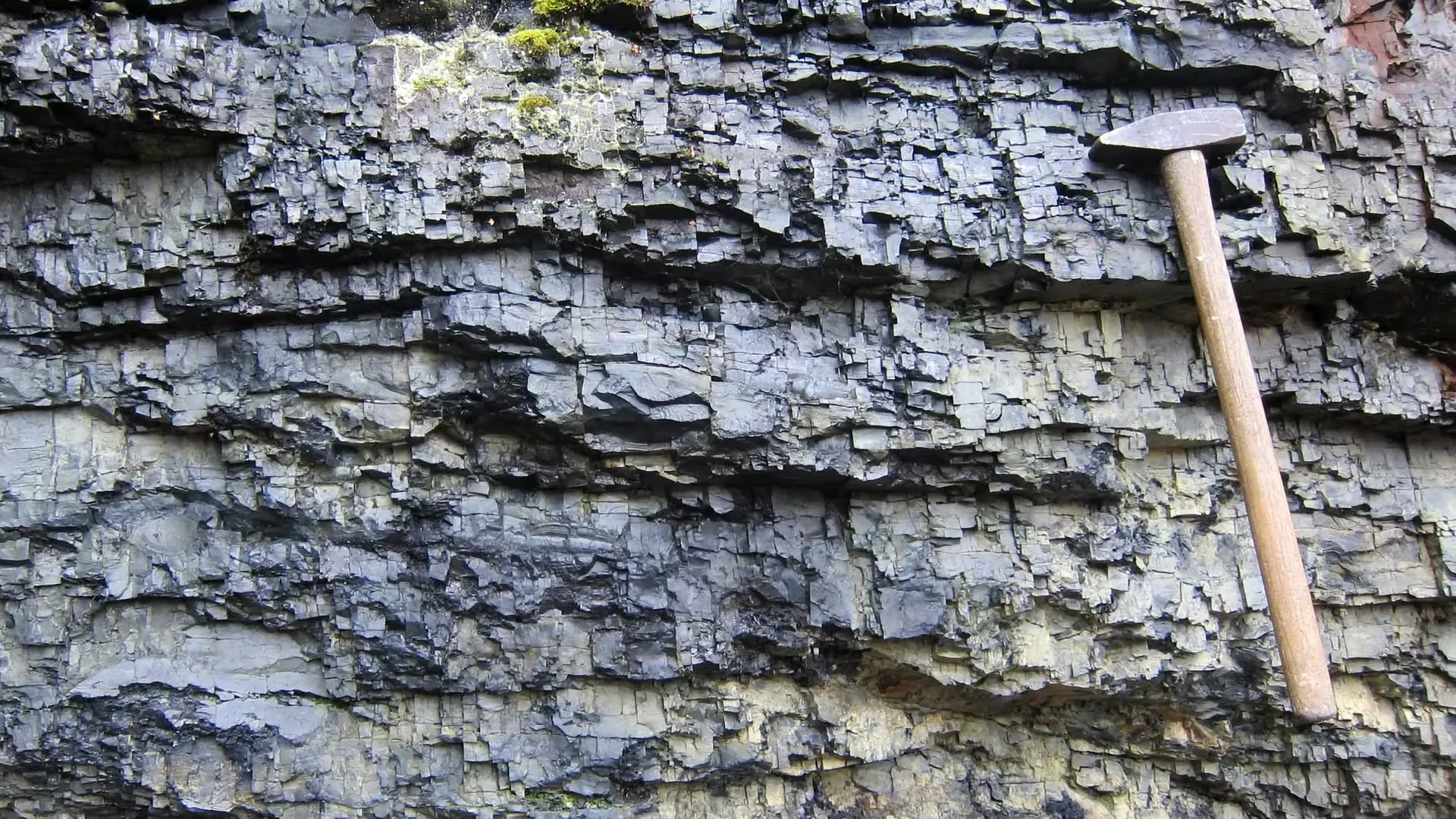
A widely accepted interpretation of ancient geochemical evidence may need revision. Researchers have determined that a prominent chemical signature preserved in 2-billion-year-old rocks, long interpreted as evidence of a massive planetary shift in Earth's carbon cycle, likely originated from local geological processes instead.
The chemical marker in question involves carbon isotope ratios, which scientists use to reconstruct ancient environmental conditions. For decades, geochemists relied on this signature as proof of a dramatic reorganization of how carbon moved through Earth's atmosphere, oceans, and living organisms during the Proterozoic Eon. The conventional narrative suggested this shift reflected a fundamental change in life on Earth and atmospheric chemistry as oxygen levels fluctuated.
The new research challenges this interpretation. Scientists now propose that magma activity, subsurface hydrocarbons, and communities of methane-metabolizing microorganisms produced the isotopic patterns previously attributed to global processes. These local, chemical processes would have created similar patterns to what researchers observed in the rock record without requiring the large-scale environmental transformation that scientists assumed.
This discovery carries implications beyond just correcting one interpretation. The findings highlight how scientists can misidentify the sources of chemical signatures in ancient rocks. A localized phenomenon can leave traces in the geological record that resemble evidence of planetary-scale events. Distinguishing between these scenarios requires careful detective work and potentially new analytical approaches.
The carbon isotope record remains crucial for understanding Earth's early history, particularly the Great Oxidation Event around 2.4 billion years ago and subsequent oxygen fluctuations. As oxygen levels rose, they fundamentally altered planetary chemistry, ecosystems, and the mineral record. Scientists use isotopic evidence, fossil records, and other proxies to reconstruct these transformations. When one line of evidence comes into question, it affects the broader narrative of how Earth's biosphere and atmosphere co-evolved.
The methane-eating microbes mentioned in the research refer to methanotrophs, bacteria that oxidize methane for energy. These organisms have distinct isotopic signatures that differ from autotrophic processes like photosynthesis. Their activity in ancient subsurface environments could have created carbon isotope patterns in surrounding sediments and fluids that miners and geochemists later sampled.
This reinterpretation also demonstrates the self-correcting nature of science. Researchers built hypotheses on the best available evidence decades ago, but newer analytical tools and deeper understanding of microbial and geochemical processes now permit more nuanced interpretations. The findings push the scientific community to examine other supposedly global chemical signals preserved in the ancient rock record.
Understanding Earth's early carbon cycle matters for multiple fields. It informs debates about the habitability of early Earth, the timing and triggers of oxygenation events, and how microbial life shaped planetary chemistry. It also provides context for how life on Earth modified atmospheric composition over billions of years, offering perspective on the interconnections between geology and biology.
The work serves as a reminder that interpretations of Earth's deep past remain provisional. Each new discovery or methodological advance can shift scientific understanding of what ancient chemical signatures actually represent.