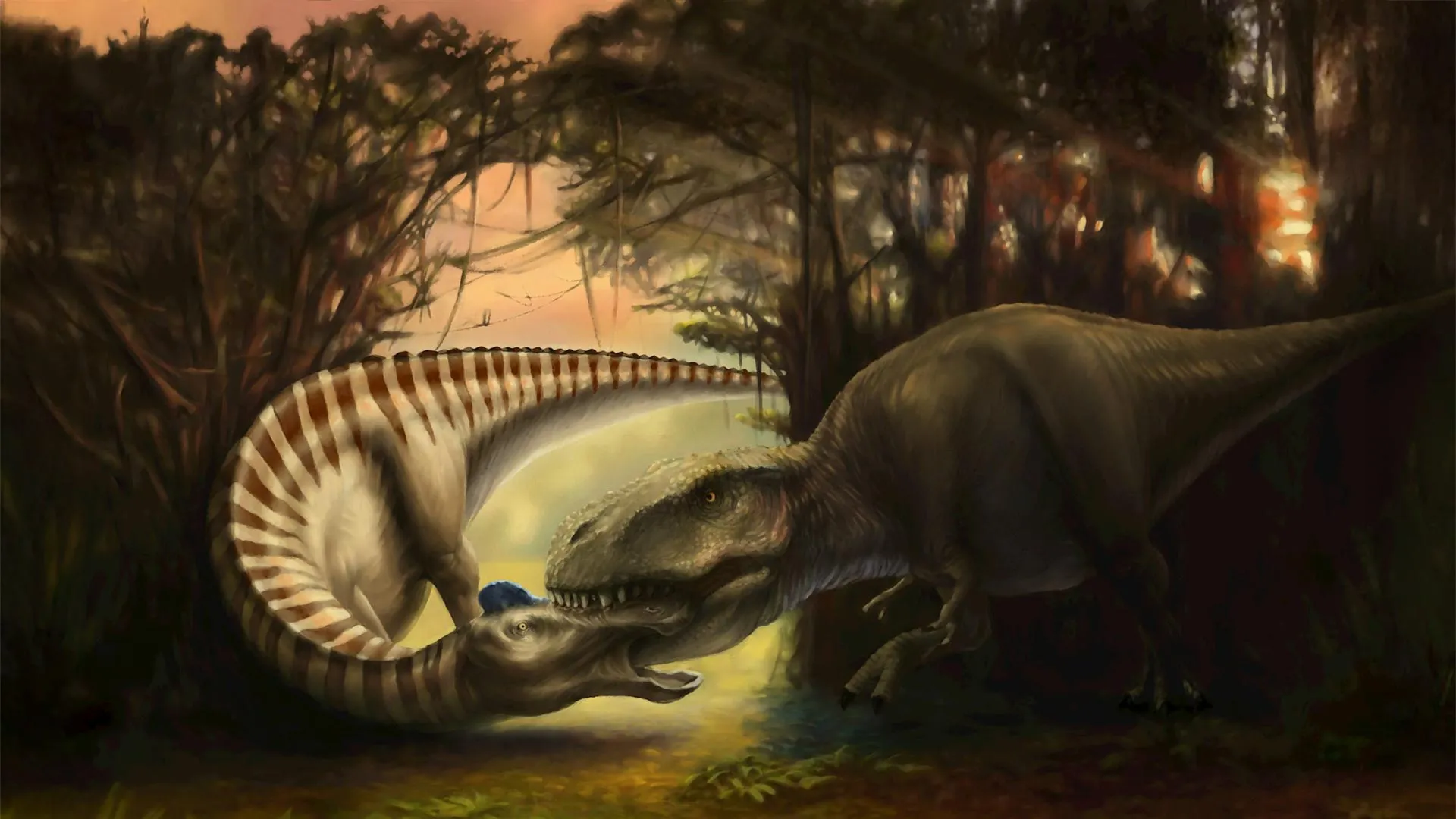
A fossilized Edmontosaurus skull bearing a Tyrannosaurus tooth embedded in its bone has provided paleontologists with direct evidence of a fatal predator-prey encounter from the Late Cretaceous. The discovery offers rare insight into T. rex hunting behavior and bite mechanics.
The specimen shows the tooth penetrated deeply into the herbivore's facial structure, suggesting the carnivore delivered a forceful frontal attack rather than approaching from the side or rear. This behavior contrasts with some hypotheses that T. rex primarily targeted prey from behind or used its bite to disable limbs. The embedded tooth indicates the dinosaur bit directly into the skull during a face-to-face confrontation, demonstrating the predator's confidence in its crushing jaw power.
The Edmontosaurus, a large hadrosaur reaching lengths of 40 feet, would have been a formidable target. Yet the fossil evidence shows T. rex pursued it aggressively, willing to engage in a direct combat scenario. Paleontologists note that the tooth remained lodged in the bone during fossilization, preserving this violent moment across millions of years.
Such direct fossil evidence of predation remains uncommon in the paleontological record. Most inferences about dinosaur hunting come from bite marks on bones, trackway patterns, or skeletal associations, which leave room for interpretation. This specimen presents unambiguous documentation of interaction between predator and prey.
The findings have implications for understanding T. rex biomechanics and behavioral ecology. The fossil suggests these apex predators did not rely solely on ambush tactics or scavenging, but actively hunted large herbivores through direct assault. The bite force required to drive a tooth through thick cranial bone underscores why T. rex dominated its ecosystem for millions of years.
Researchers continue examining the specimen to extract additional details about the attack and