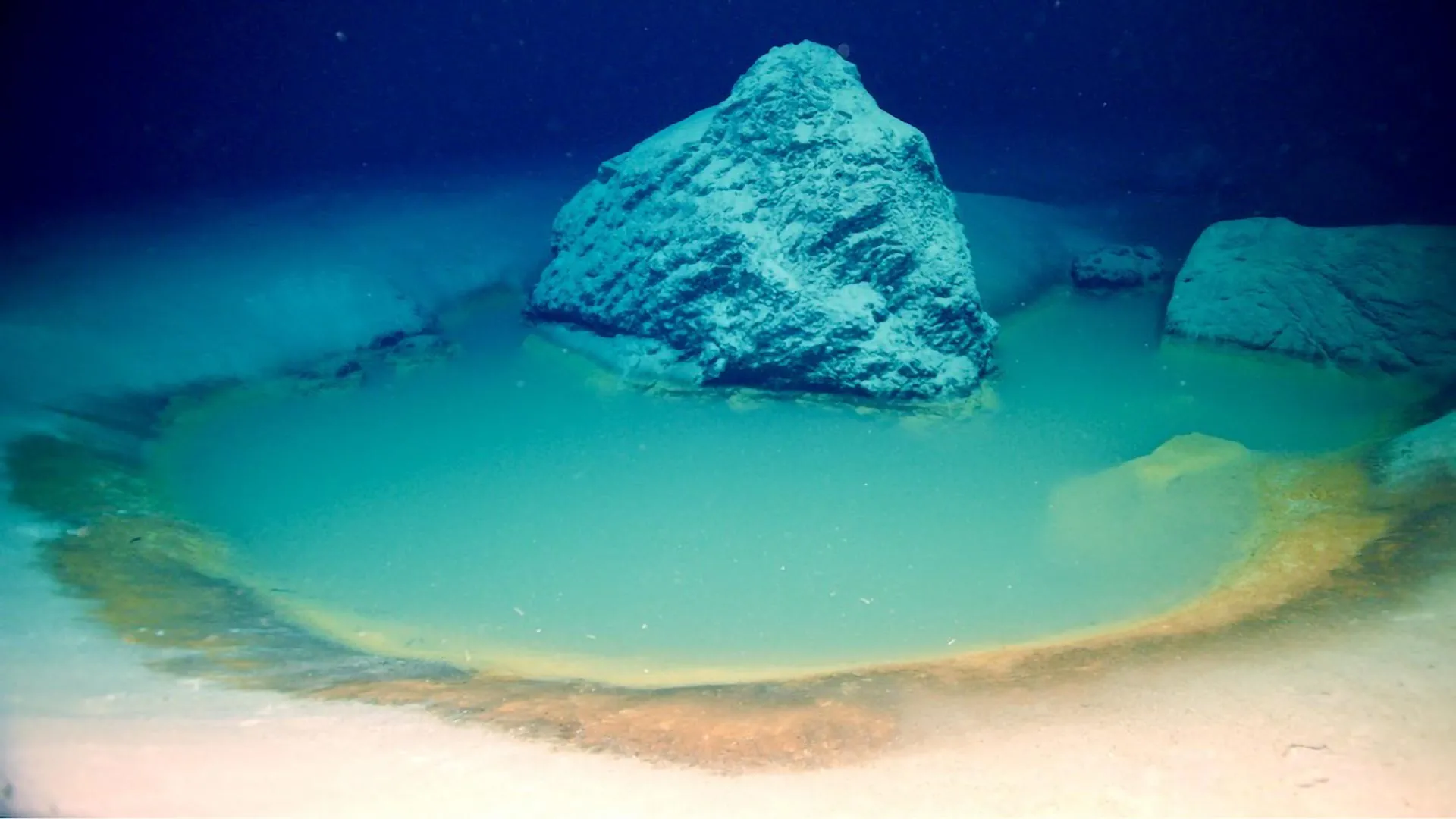
Researchers from the University of Miami Rosenstiel School discovered rare deep-sea brine pools more than a mile beneath the surface of the Gulf of Aqaba in the Red Sea. Sam Purkis, professor and chair of the UM Department of Marine Geosciences, and his colleagues located the pools at a depth of 1,770 meters using a remotely operated underwater vehicle deployed from the OceanXplorer research vessel in collaboration with OceanX.
The pools contain exceptionally high salt concentrations, unusual chemical conditions, and no oxygen, yet support abundant microbial life. The discovery came in the final five minutes of a ten-hour dive. "We were very lucky," Purkis said.
Brine pools serve as records of ancient geological events. The pools' extremely salty waters and lack of oxygen preserve evidence of tsunamis, flash floods, and earthquakes that struck the Gulf of Aqaba thousands of years ago. The researchers previously uncovered evidence of a 500-year-old underwater landslide that likely generated a substantial tsunami.
The findings appear in Communications Earth & Environment, published June 27, 2022, and mark the first documented discovery of brine pools in the Gulf of Aqaba. The study represents the first time such pools have been found in this region.
Purkis noted that understanding microbial life in extreme environments on Earth could guide the search for life on other planets. "Until we understand the limits of life on Earth, it will be difficult to determine if alien planets can host any living beings," he said.