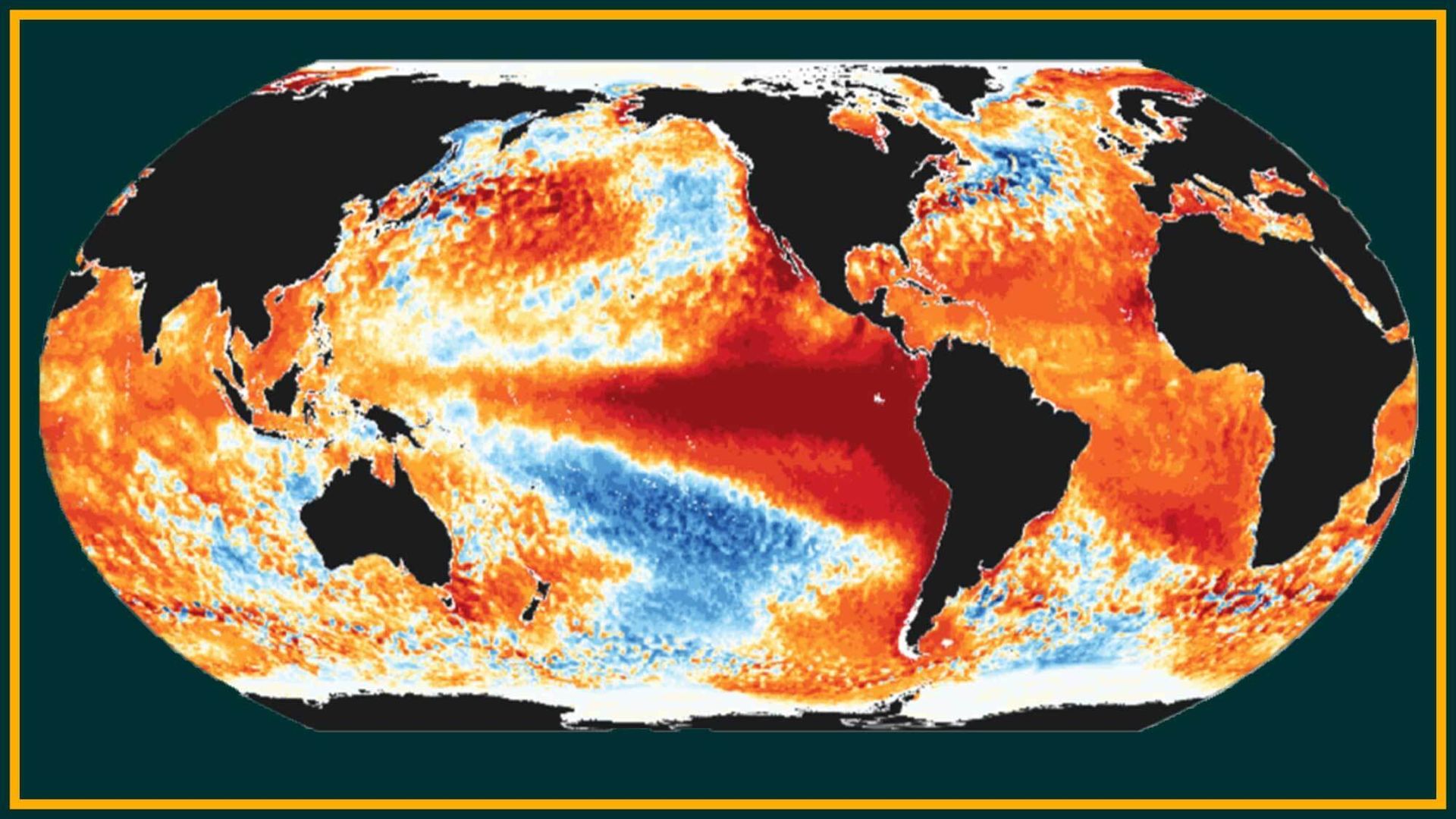
A strong El Niño building in the Pacific is expected to make 2027 the warmest year on record, reaching about 1.7 degrees Celsius above late 1800s levels. The World Meteorological Organization forecasts the central equatorial Pacific will average 3.7 degrees Celsius above normal from October to December, exceeding the previous record of 2.5 degrees Celsius for a monthly average set in 2015.
The event is predicted to trigger widespread extreme weather, including wildfires, droughts and floods across Australia, Africa, Asia and South America. Crop production is expected to fall in major breadbaskets like India and Southeast Asia, disrupting food supplies and raising prices. One forecast suggests over 450,000 heat-related deaths by February from the additional warming.
Researchers should use this extreme event to improve models for predicting strong El Niño events, according to findings from one ongoing research project. The historical temperature record used for planning appears outdated. Studies show that before 1980, an El Niño warming the central Pacific above 3 degrees Celsius occurred roughly once every 1,500 years. From 1980 onward, such events became about once every 60 years, largely because the ocean has retained extra warmth for approximately 1.5 years instead of the previous 1.1 years.
El Niño may also have a natural ceiling. The event grows by weakening trade winds, allowing warm water to spread east. But as the eastern Pacific warms, the temperature difference between west and east shrinks, limiting further El Niño growth. Over 76 years, every 1 degree Celsius of El Niño warming has reduced this difference by about the same amount. At current rates, this difference approaches zero when the central Pacific reaches roughly 4 degrees Celsius above normal in autumn, when El Niño peaks. This year's event came closer than any other while still growing, reaching the smallest recorded difference in September.
Artificial intelligence tools increasingly used for El Niño forecasts have limitations. A 2025 study found that an AI weather model trained without the strongest hurricanes could not forecast them. Similar limits appear in El Niño tests. Models learning only from records lacking extreme events cannot reliably predict how high El Niño can climb. Physics-based models remain the best approach for predicting strong El Niño events, though combining both methods may produce the best forecasts this winter.
Every forecast for this event is being pushed beyond the range it was built and tested on. Where models disagree, they reveal where predictability ends. The U.K.'s Government Office for Science convened scientists, forecasters and industry experts in June, identifying risks to the U.K. through food, farming and energy. Such assessments should become standard for every government.
Before the peak, forecasters, health services, utilities and food agencies should publish their expectations and assess afterward how predictions compared to reality. Measuring the event closely using buoys, floats and satellites watching the Pacific will train the next generation of models. National weather services, government officials, industry representatives and scientists should agree before the peak on what they will measure and how they will judge forecasts.
The 1982-1983 and 1997-1998 El Niños cost the world economy an estimated $9.8 trillion in lost income combined.