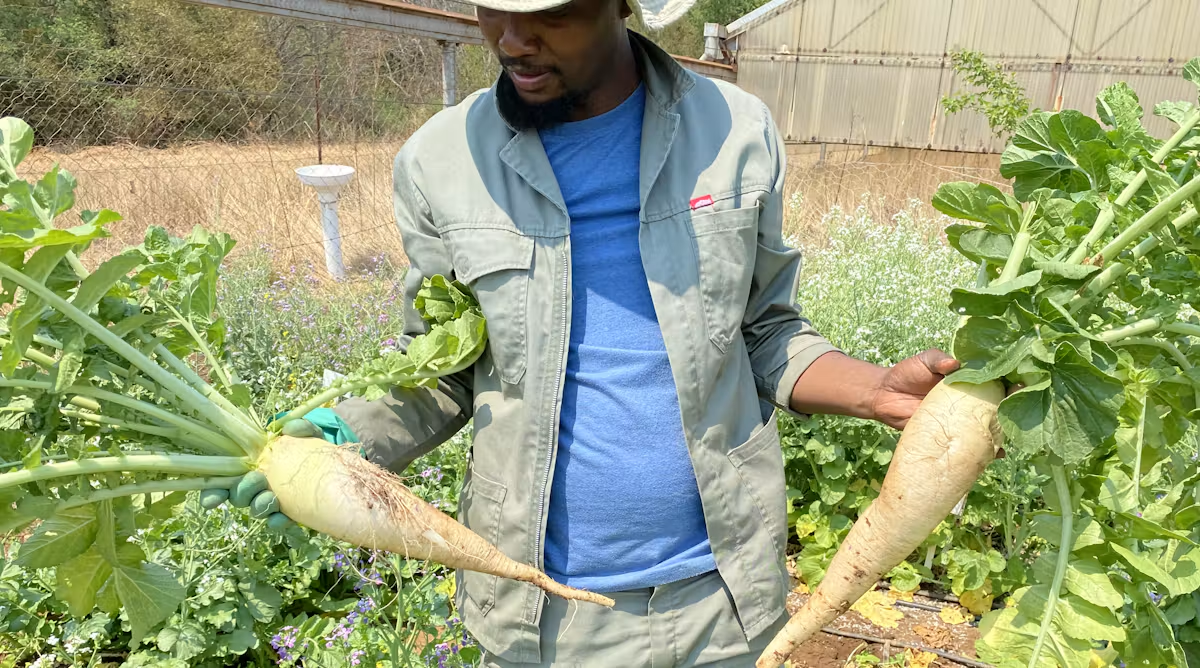
A strengthening El Niño threatens to bring drought and heatwaves to South Africa through early 2027, risking livestock fodder shortages for farmers. Agricultural researchers at institutions including the London School of Hygiene & Tropical Medicine tested when to plant fodder radish, a quick-growing crop with leafy tops and tuber roots used as livestock feed during winter or drought.
The team planted fodder radish over four months at Cedara in the KwaZulu-Natal Midlands using only rainfall and no fertilizer, mimicking conditions for smallholder farmers with limited irrigation access. Results showed that planting timing mattered significantly. December planting produced more tubers, while January planting yielded more leaves and higher protein content. Earlier plantings in December and January also contained higher concentrations of phosphorus, potassium and zinc in the leaves.
Researchers found that farmers should view planting as a window rather than a fixed date, adjusting timing within seasons to match early or late rainfall. This approach allows farmers to use available rainfall more effectively without buying costly supplements for livestock.
The study carries limitations. The experiment ran for only two seasons in one region with specific soil and climate conditions. Results may not apply to other parts of South Africa with different soil types and rainfall patterns, and more trials across different areas and crop varieties are needed.
The researchers note that climate forecasts reaching farmers before planting decisions could improve outcomes. Agricultural advisors, meteorological services and researchers must translate seasonal forecasts into practical planting recommendations for farmers.