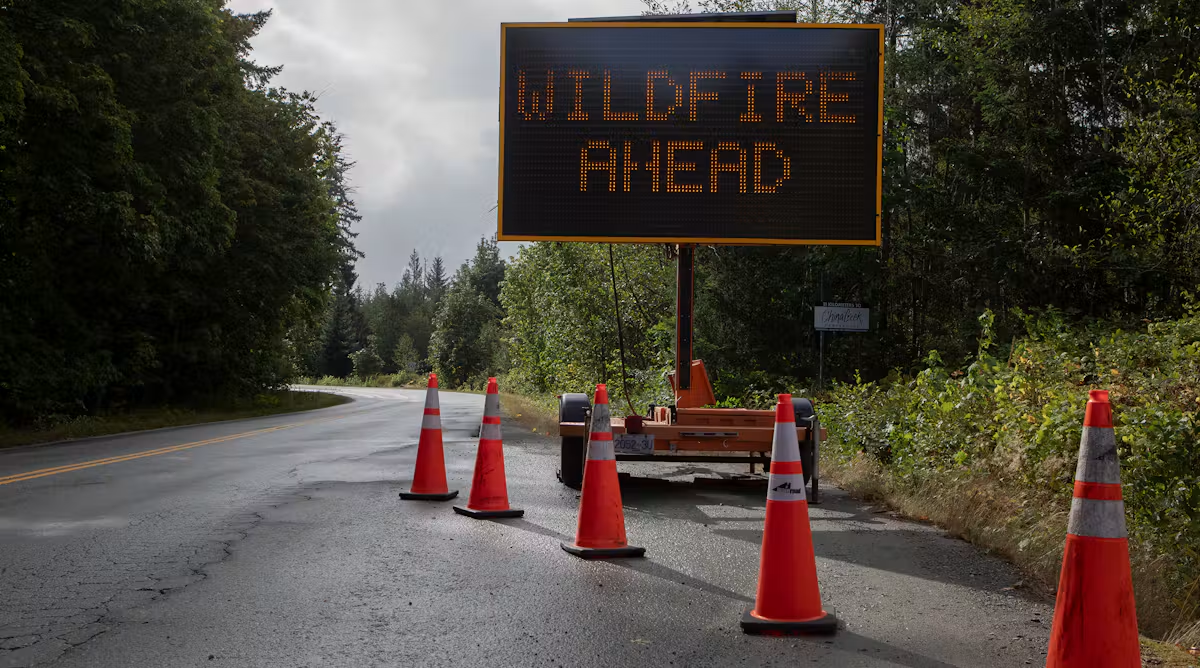
The U.S. National Oceanic and Atmospheric Administration has declared greater than 83 percent probability of strong to very strong El Niño conditions during January to March 2027. Researchers at the University of Calgary warn that this weather phenomenon could create a "polycrisis," a scenario where multiple connected crises occur simultaneously and strain health and energy systems at the same time.
Luke Killam, co-founder and CEO of GreenKey Energy, and physicians at the University of Calgary outline how an El Niño event could trigger cascading failures. Wildfire smoke drives respiratory emergencies to hospitals while extreme heat increases demand for air conditioning, straining the electricity grid. Historical El Niño events in 1982-83, 1997-98, and 2015-16 caused extreme flooding in some regions, severe drought in others, and widespread ecosystem and economic disruption.
Wildfire smoke has contributed to 1,900 premature deaths annually and 18 billion dollars in costs in Canada. The smoke increases all-cause mortality and causes exacerbations of cardiovascular disease, respiratory conditions, and neurologic diseases like multiple sclerosis and migraines. During the 2023 wildfires, Ontario asthma-related emergency visits increased by 23.6 percent.
The energy system faces its own pressures during El Niño conditions. Milder winters reduce hydroelectric inflows and spring runoff. Extreme heat coincides with periods of low wind output and reduces solar capacity by roughly 0.4 percent for every degree above 25°C. Gas turbines also lose capacity to hot-air derating during the hottest afternoons.
Canada's health-care system already operates over capacity on normal days, with hallway medicine and long wait times. A 2025 study ranked Canadian access to care ninth of 10 peer countries, above only the United States. The authors argue that investments in grid resilience, backup power at critical facilities, and cooling centres benefit both energy and health systems simultaneously.