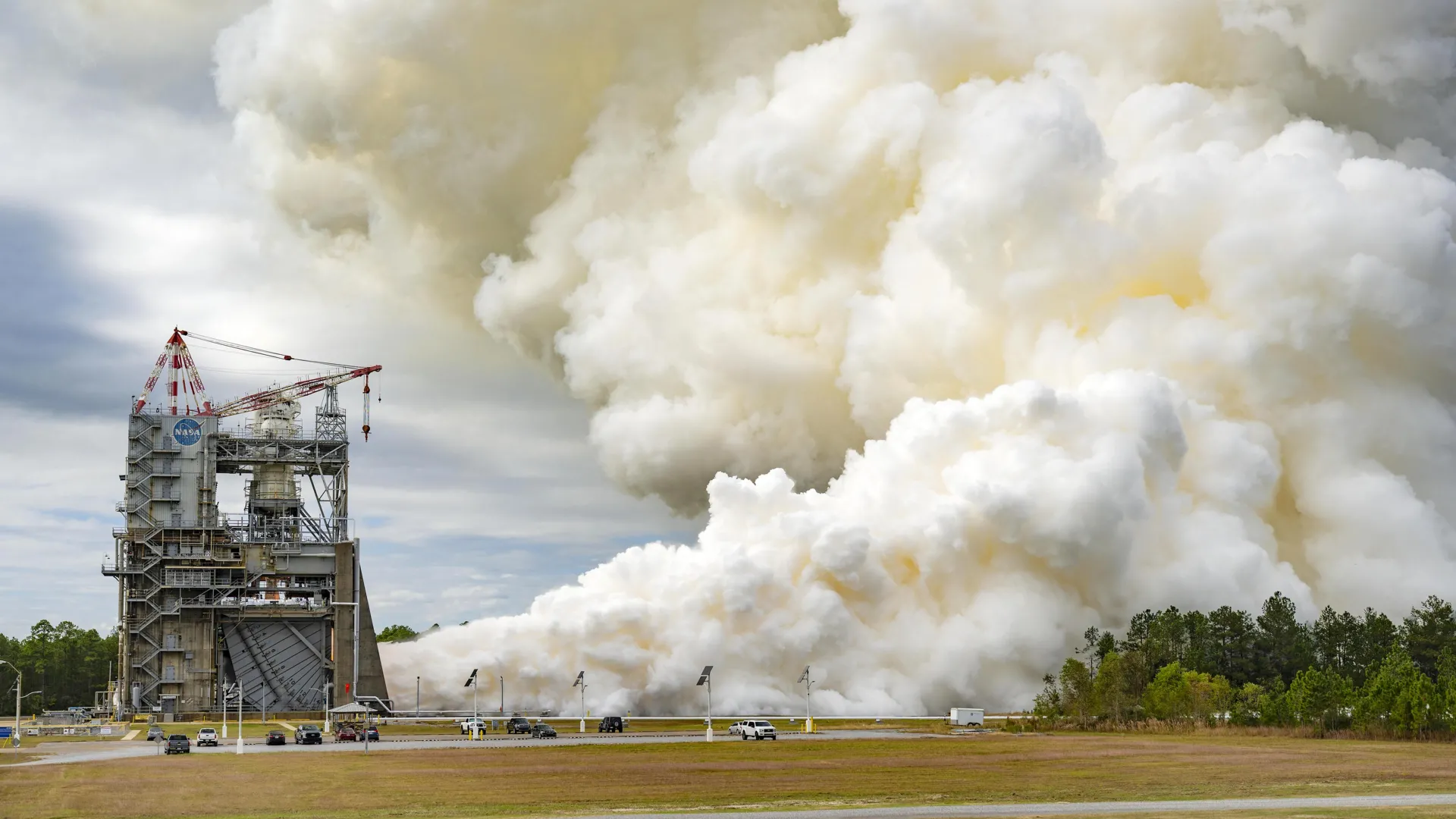
NASA successfully tested RS-25 engine No. 10001 on November 18 at the Fred Haise Test Stand at Stennis Space Center in Mississippi. The developmental engine ran for its full scheduled duration of 200 seconds (three minutes and 20 seconds).
The engine is not intended for spaceflight, but NASA and its primary contractor L3Harris Technologies will use performance data from the test to improve the power, efficiency, and reliability of RS-25 engines for upcoming Artemis missions. Specialists from NASA, L3Harris Technologies, and Nova Space Solutions conduct these tests to verify engines can perform reliably under extreme launch conditions.
Each Space Launch System rocket uses four RS-25 engines, which together generate up to 2 million pounds of thrust. NASA plans to use the SLS to launch Artemis IV in 2028, a mission scheduled to land astronauts on the lunar surface. The agency aims to explore the Moon's South Pole, establish sustained human presence on the Moon, and develop technologies and experience for crewed missions to Mars.