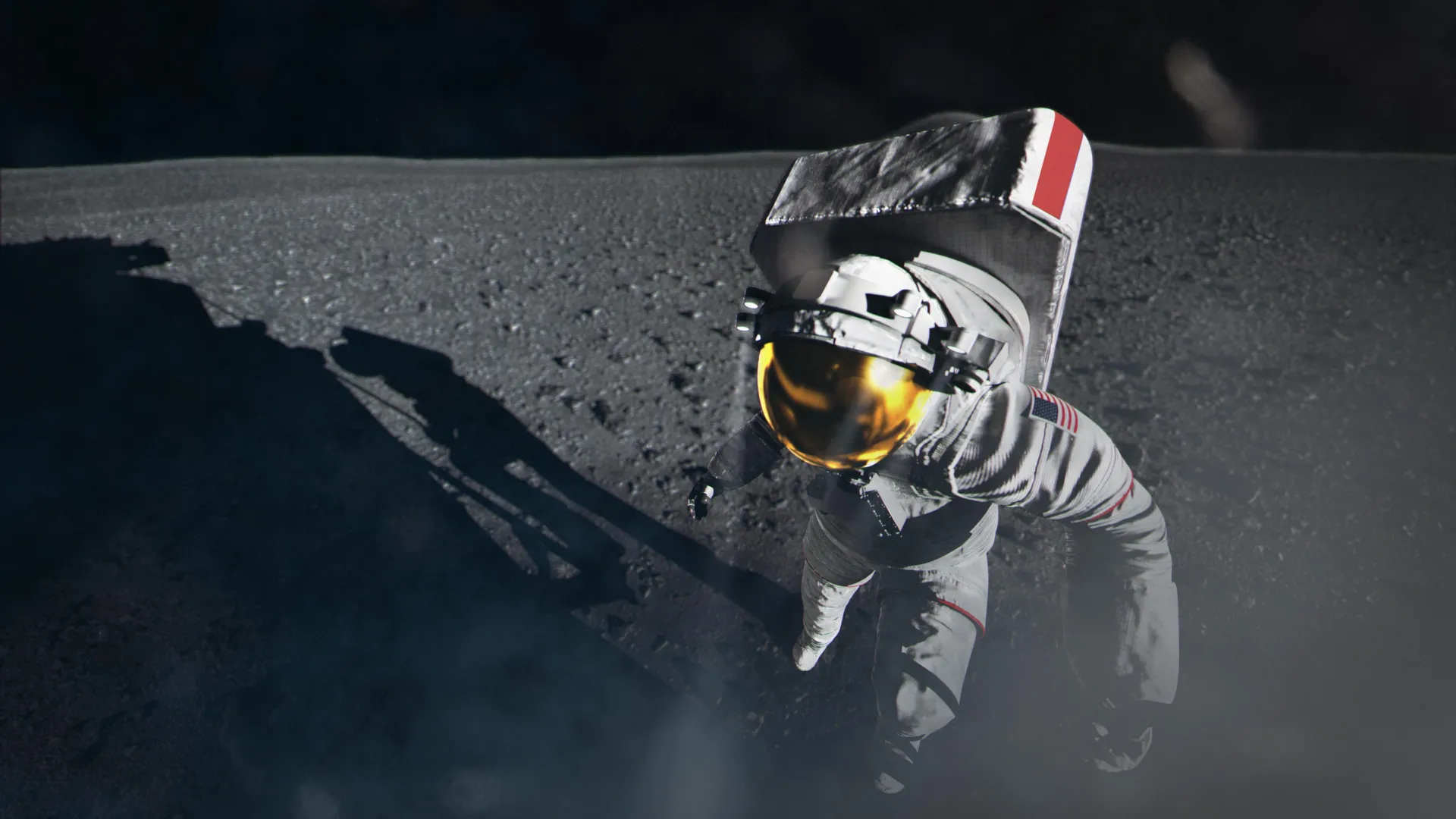
NASA has announced an accelerated plan to land astronauts on the Moon in 2028, featuring new details released by Administrator Jared Isaacman and agency leaders during an October 23 briefing.
The strategy includes two major missions. Artemis III, scheduled for 2027, will test lunar landers in Earth orbit. Four astronauts aboard NASA's Orion spacecraft will practice rendezvous and docking with experimental landers built by SpaceX and Blue Origin. Blue Origin will first launch its Blue Moon test vehicle into orbit. Orion will then dock with it, separate, and dock again with SpaceX's Version 3 Starship lunar lander. This approach tests both systems during one crewed mission before attempting a landing.
Artemis IV in 2028 will attempt the actual Moon landing. Orion will launch from Kennedy Space Center in Florida aboard the SLS rocket. Either SpaceX's Starship or Blue Origin's Blue Moon Mark 2 lander will carry astronauts to the surface. SpaceX plans to refuel Starship in orbit before heading to the Moon. Blue Origin will use additional propulsion stages in Earth orbit to send its lander toward the Moon.
NASA has made several other changes to accelerate the timeline. Hardware preparation times have dropped by approximately 50%. Engineers redesigned and tested a critical rocket fuel-line component in five months at roughly one-tenth the cost of an external vendor's estimate. Jeremy Parsons, the Artemis program manager, noted that "NASA should be expected to do this kind of work" and called it an example of rebuilding internal competencies.
For spacesuits, NASA is working with Axiom Space on a lighter design called the "Sortie suit" for early Moon surface excursions. The suit weighs approximately half as much as Axiom's primary spacesuit. Axiom's larger suit will remain available for future missions requiring longer outside activities.
NASA is also considering two upper stage options for the SLS rocket on Artemis IV. Developing both possibilities preserves flexibility and avoids dependence on a single technical solution. The agency plans to send crews on increasingly challenging expeditions near the Moon's South Pole to establish a lasting human presence.