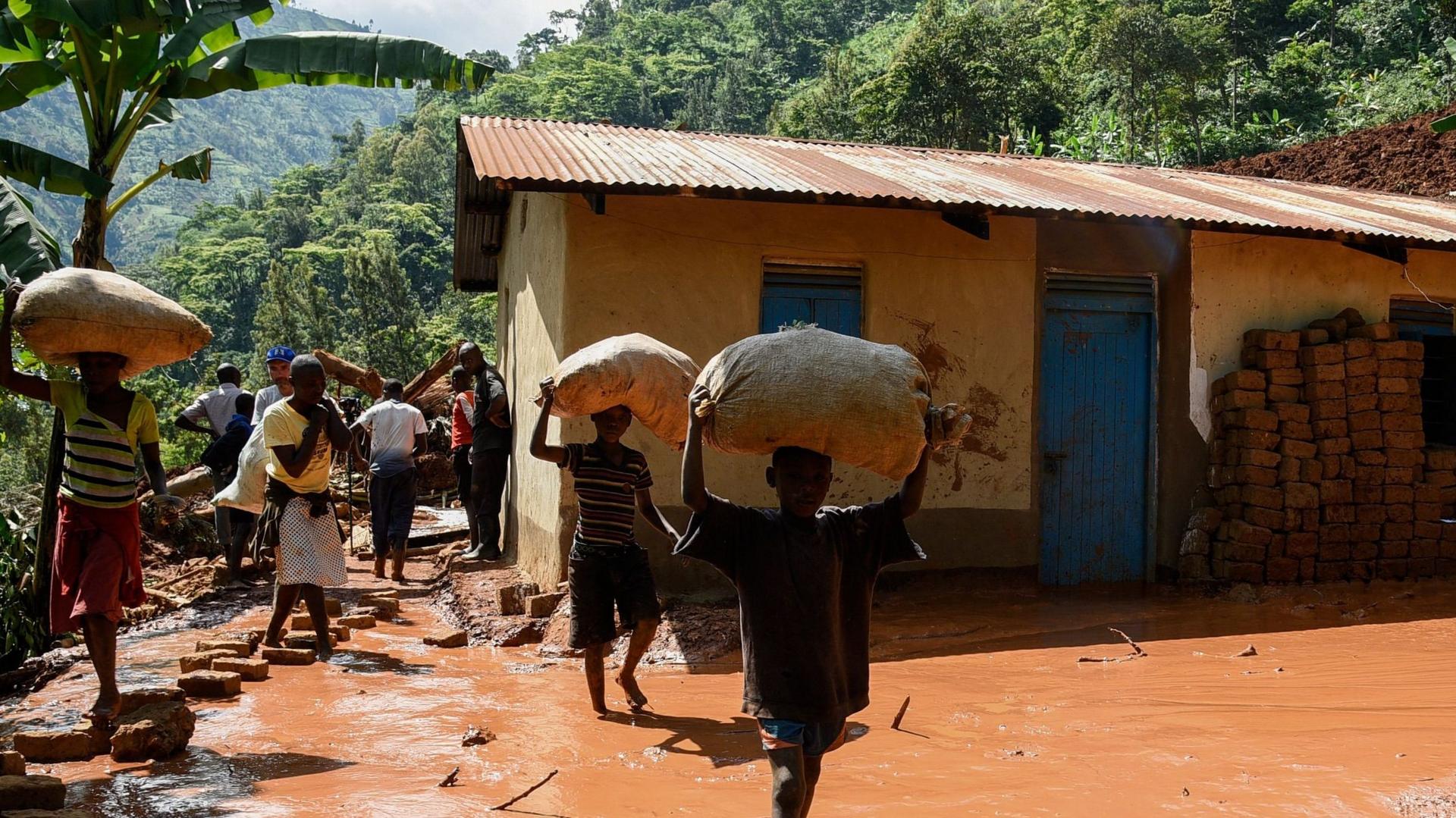
Survivors of a 2019 landslide in Bududa, Uganda that killed more than 50 people have filed a complaint with the UN Human Rights Committee seeking relocation, compensation, and improved disaster management. At least 33 of the 53 people who died were children.
The 48 complainants accuse Uganda's government of violating the country's constitution by failing to implement effective disaster management measures in the mountainous district, which is prone to landslides. They say the government's relocation programme ignores their safety, land rights, and livelihoods.
William Tsama, one of the claimants who lost four family members, said victims ignored by governments can take legal action to compel authorities to help their citizens.
Uganda introduced a resettlement plan in 2011 but progress has been limited. Last month it launched a new programme offering affected households 18 million Ugandan shillings (about $4,300) to relocate. Families can choose between two acres of land valued at 8 million shillings plus 10 million shillings for building, or take the equivalent in cash. Some survivors question whether the amount suffices for relocation costs. The government has given residents of high-risk areas two months, from November to December, to leave or face forced eviction.
The survivors first filed legal action in Uganda in 2020 and received support from environmental organisation Greenwatch three years later. They seek compensation for lost family members and livelihoods, plus emergency measures including accessible early-warning systems.
Samantha Atukunda Kakuru Mwesigwa, Greenwatch Executive Director, said the case aims to change how governments prepare and respond to climate-related disasters. The UN Human Rights Committee will ask the Ugandan government to respond within six months. The complainants say relocation must protect livelihoods, respect land rights, and account for individual needs.