Seventeen million French adults face financial barriers to transportation, often skipping medical appointments or cutting essential expenses to afford fuel, according to the Mobility Barometer from Wimoov, a French nonprofit. Seventy-four percent of France's active population drive to work despite half living less than 9 kilometers from their workplaces.
Free or subsidized public transit and bike hire could address this problem. Studies document that free transport improves commuters' health and can generate collective health savings. A 2025 literature review identified 28 studies on free transport effects, linking free bus travel for elderly people in England to decreased depression symptoms.
The health benefits operate through two pathways. Financial relief allows people to avoid cutting essential expenses like meals or heating to afford fuel. Active mobility through cycling or walking provides documented physical and mental health benefits. In France, increased cycling could prevent about 2,000 deaths and 6,000 chronic disease cases annually, saving the public health system nearly 200 million euros.
However, results require nuance. Most studied populations were elderly or young people. General free transportation has reduced car use less than expected. In Dunkirk, where buses became free in 2018, ridership multiplied 1.7 times in the first year, but only 8% of respondents stopped driving cars. Germany's 9-euro monthly transit pass in summer 2022 increased rail travel 35% while reducing car traffic only 1-5%.
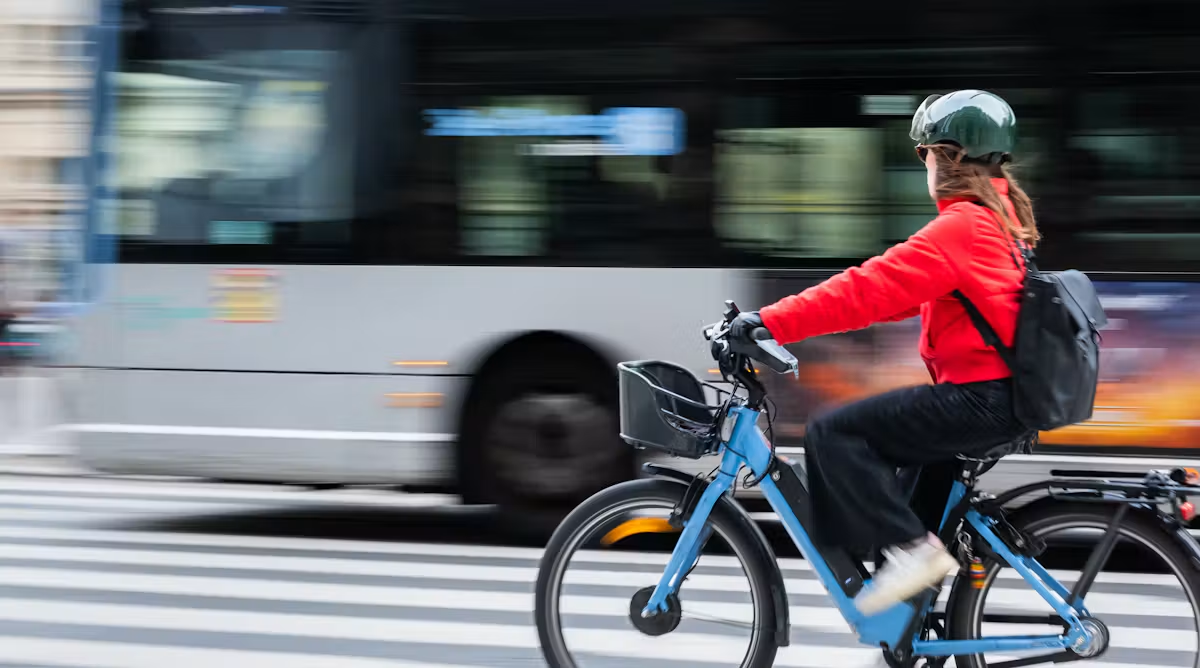
E-bikes present stronger potential for car replacement. A meta-analysis of ten studies showed participants cycled 5 kilometers more daily and drove 2.4 kilometers less by car after gaining e-bike access. This shift was more pronounced among households relying primarily on cars. In Rennes, free self-service bicycle subscriptions targeting low-income users increased 26% in one year.
Current high fuel prices create an opportunity for these alternatives to succeed where previous efforts faltered. Supply needs focus on underserved areas. Cycling infrastructure reaches 16.7% of major city centers but only 8.7% of suburbs and 2% of rural towns. Reclassifying between 61,000 and 325,000 kilometers of small rural roads for cyclists and pedestrians could expand access inexpensively.