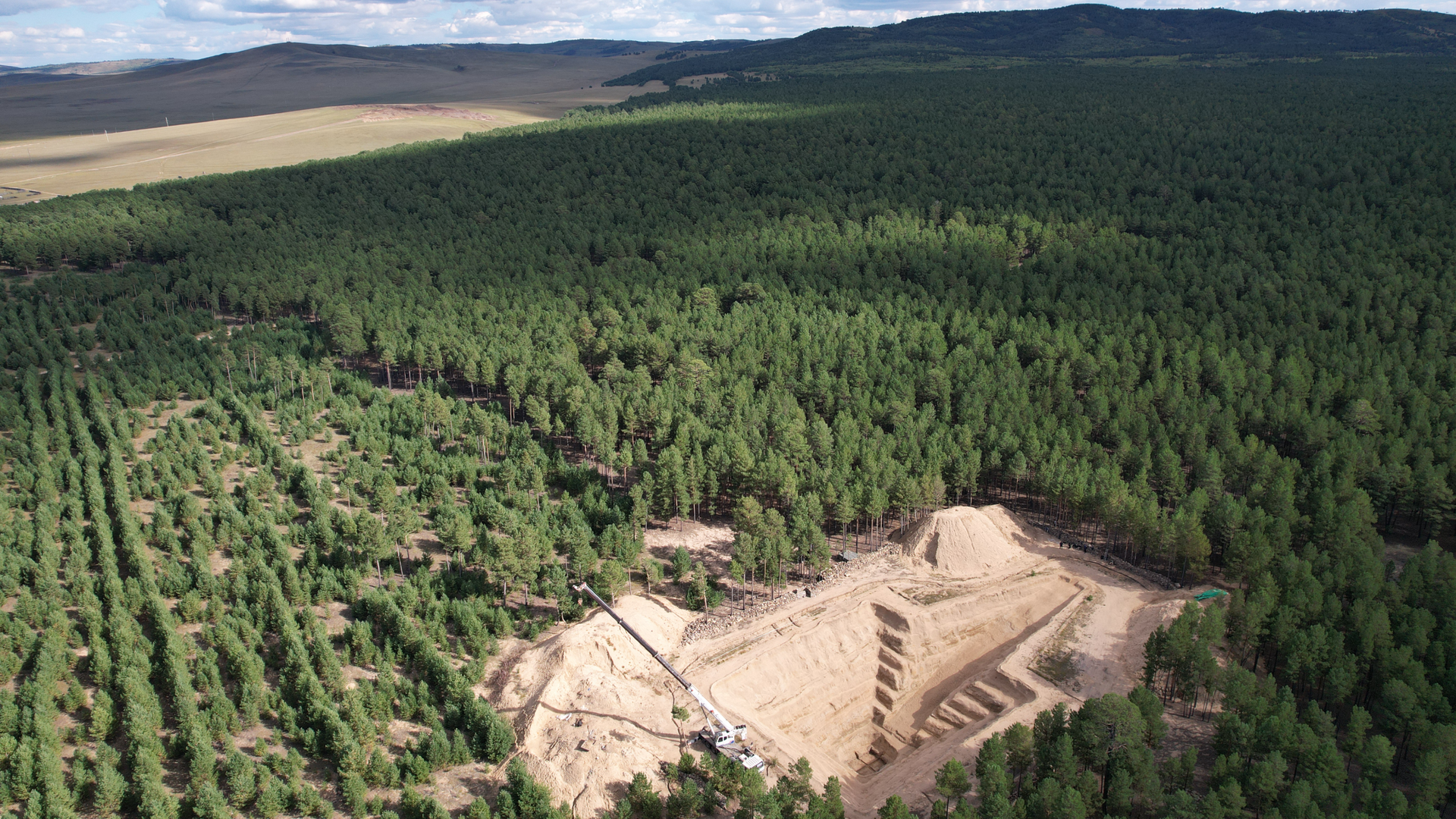
Archaeologists excavating a 2,000-year-old tomb in northern Mongolia have uncovered what may be the largest Xiongnu elite burial ever found in the country. The nine-level tomb at Duurlig Nars, discovered during a four-year project led by the National Museum of Korea in cooperation with the Institute of Archaeology of the Mongolian Academy of Sciences and the National Museum of Mongolia, contained more than 400 grave goods.
The tomb measures roughly 240 feet long including its passageway and extends about 48 feet deep. It features nine concentric layers of stone arranged in an inverted pyramid shape. Archaeologists found a wooden burial chamber with a coffin in the central chamber.
Artifacts recovered from the tomb reveal the Xiongnu's connections across Eurasia. Among the finds were silver-and-quartz horse decorations and a wheel from a lacquered horse-drawn carriage, indicating the occupant held high social status. A transparent glass cup with a handle, possibly manufactured in the Roman Empire, was also recovered, though additional testing is needed to confirm its origin.
The tomb also contained 15 flat, overlapping pieces of jade on the coffin's bottom. Unlike typical circular Han dynasty jade "bi" disks, these pieces are irregular with elaborate engravings, suggesting the Xiongnu adopted Han burial practices but adapted them. The burial chamber is smaller than other elite Xiongnu tombs, which may indicate declining Xiongnu power when the tomb was created in the late first to second century A.D.
Archaeologists plan to use DNA analysis on recovered teeth and hair to determine the occupant's sex and whether they were related to others buried at the Duurlig Nars complex.