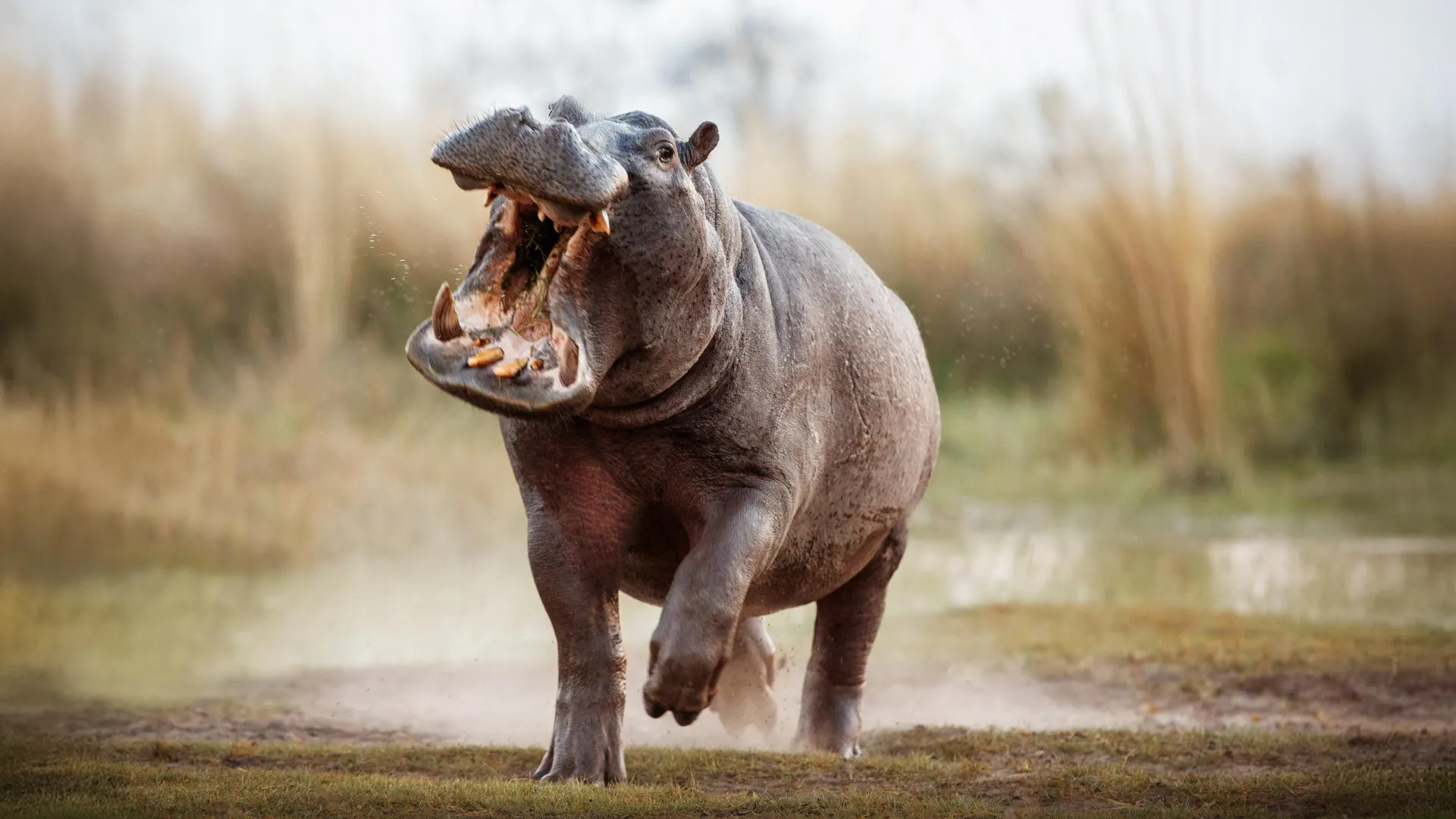
Researchers have uncovered evidence that hippos, long-horned buffaloes, camels, and other large animals roamed an ancient lake in what is now the Arabian Desert 125,000 years ago. The discovery comes from Uruq al-Julaybah, a lakeside site in southern Saudi Arabia's Mundafan region.
The Saudi Heritage Commission, King Abdullah University of Science and Technology (KAUST), and Griffith University jointly investigated the site. Their findings appear in Science.
Using satellite-based terrain modeling, scientists reconstructed an ancient freshwater lake covering approximately 340 square kilometers with depths reaching 29 meters. The region during this period, called Green Arabia, featured open grasslands and vegetation rather than desert.
Researchers identified more than 500 plant and animal fossil specimens across more than 130 locations. They recovered 5,511 stone tools measuring more than 2 centimeters, with over 98% made from flint using Levallois techniques.
Microscopic and chemical analyses of tool surfaces revealed plant residues including traces of toxic compounds. Some stone tips appear to have been attached to handles or shafts for hunting weapons. Other residues point to processing of tubers, bushes, and palm leaves.
The findings raise the possibility that prehistoric hunters incorporated poisonous plant compounds into their hunting technology, though this interpretation remains tentative. The discoveries include some of the region's earliest known evidence of palm-related vegetation.
Professor Chris Clarkson of Griffith University stated that the combination of animal remains, stone tools, and plant material in a single dated context makes this discovery significant. Professor Frans van Buchem of KAUST noted that collaboration among specialists allowed reconstruction of a complete picture of prehistoric life at the site.