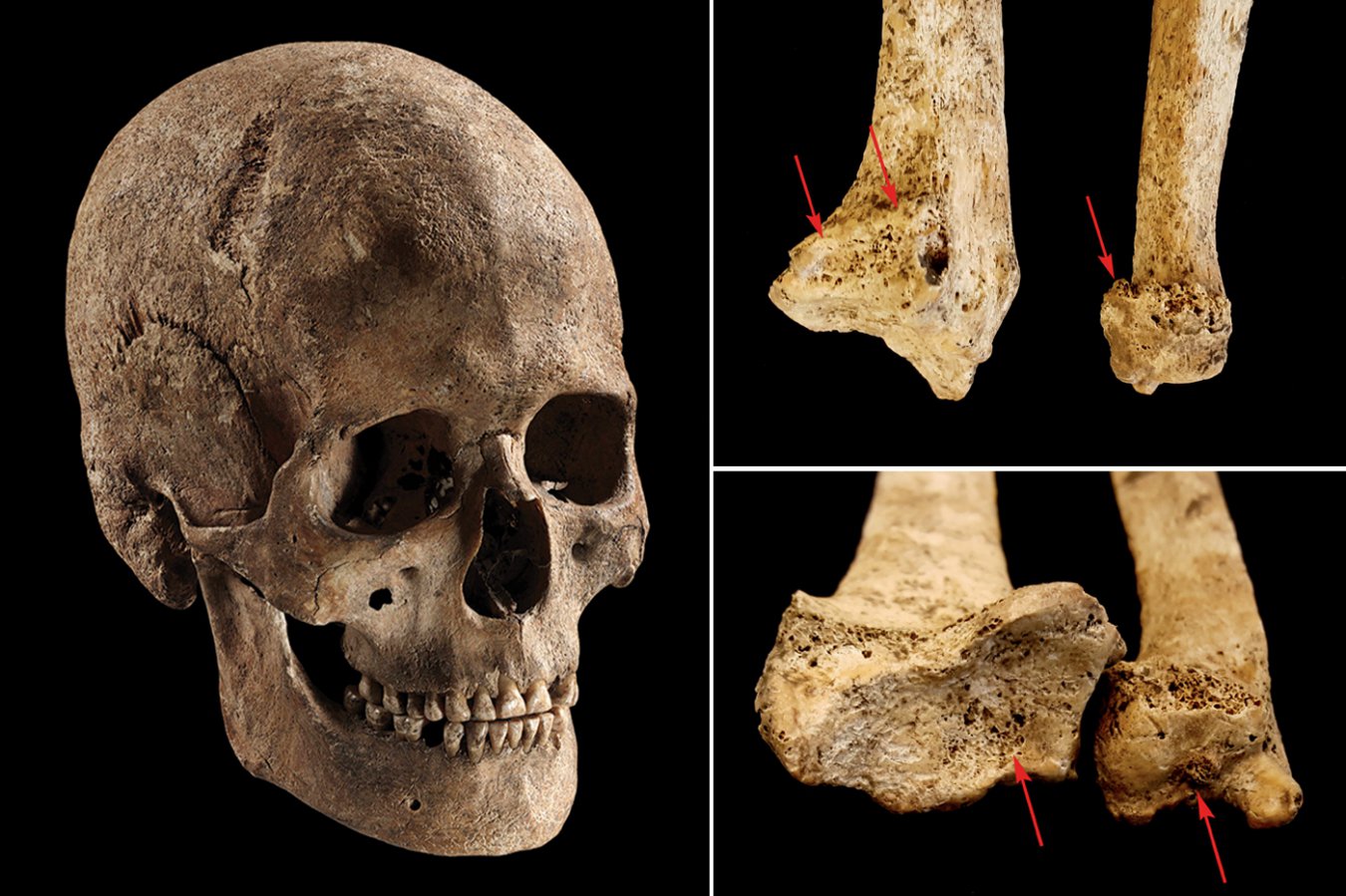
Analysis of a skeleton from Denmark nicknamed "Rødhals Man" reveals that an individual who lived around 3800 to 3900 BC experienced the transition from hunter-gathering to farming in Europe.
The skeleton was discovered in the 1950s on the small island of Sejerø in Denmark. Rødhals Man belonged to the local Mesolithic Ertebølle culture of hunter-gatherers based on his genetic ancestry. Yet a 1981 study found he ate mainly seafood, which was unusual for someone living near the start of the Neolithic period, when diets in the area shifted toward farmed terrestrial foods.
Anders Fischer at the University of Gothenburg and colleagues analyzed rare isotopes of carbon, nitrogen and sulphur in multiple bones, which renew at different rates and preserve snapshots of diet over time. They also examined chemical signatures in one tooth, which records childhood diet. The analysis spanned a 30 to 40 year period of Rødhals Man's life.
John Meadows at Kiel University found that for most of Rødhals Man's youth, his primary food came from what the team calls the eelgrass biotype, animals living in sea grass forests in shallow water including molluscs, flatfish or eels. But from around age 11 onward, his diet included increasing amounts of terrestrial, probably farmed, protein unlike any recorded Mesolithic hunter-gatherer.
Rødhals Man's burial resembled Early Neolithic farmer burials more than Late Mesolithic hunter-gatherer burials, featuring a stone frame and lacking ochre staining on bones.
Meadows suggests Rødhals Man interacted with Neolithic farmers and adopted some farmer cultural practices while maintaining his ancestors' way of life. The island spans only 12 square kilometres but lies about 5 kilometres from Zealand, which covers around 7000 square kilometres.
Meadows proposes that Rødhals Man may have spent part of the year in a farming community on Zealand and part on the island eating fish. Marcello Mannino at Aarhus University notes that such dietary changes would be unusual, as diet was typically linked with subsistence practices, religious views and cosmological beliefs. Mannino calls for more human remains spanning the transition to understand how this change occurred.