Earth's ozone hole expanded to its largest size in a decade in 2026, driven primarily by an unusually strong polar vortex over Antarctica. Between September 7 and October 13, the hole covered an average of approximately 9.6 million square miles (25 million square kilometers), ranking as the seventh-largest in 48 years of observations. The maximum extent reached 10.5 million square miles on September 18, about 90 percent of the largest ozone hole ever recorded in 2000.
Paul Newman, a senior scientist at the University of Maryland and leader of NASA's ozone research team at Goddard Space Flight Center, explained that "an unusually powerful polar vortex has extended ozone depletion in the Antarctic this season, allowing the hole to grow to proportions we haven't seen in a decade."
The expansion was driven by weak atmospheric disturbances in August and September that normally break apart the polar vortex. Amy Butler, a research scientist at NOAA's Chemical Sciences Laboratory, stated that this "weak wave action kept the strongest polar vortex winds further from the South Pole by several degrees of latitude, creating a larger area for conditions ideal for ozone depletion to occur."
Despite the dramatic size increase, NASA and NOAA scientists emphasize that the ozone layer continues its gradual recovery. Without international efforts to reduce ozone-destroying chemicals, the 2026 hole could have been 1 to 2 million square miles larger, Newman said. Chlorine concentrations in the Antarctic stratosphere have declined by approximately one-third compared with peak levels in the 1980s, according to Stephen Montzka, a senior scientist at NOAA's Global Monitoring Laboratory.
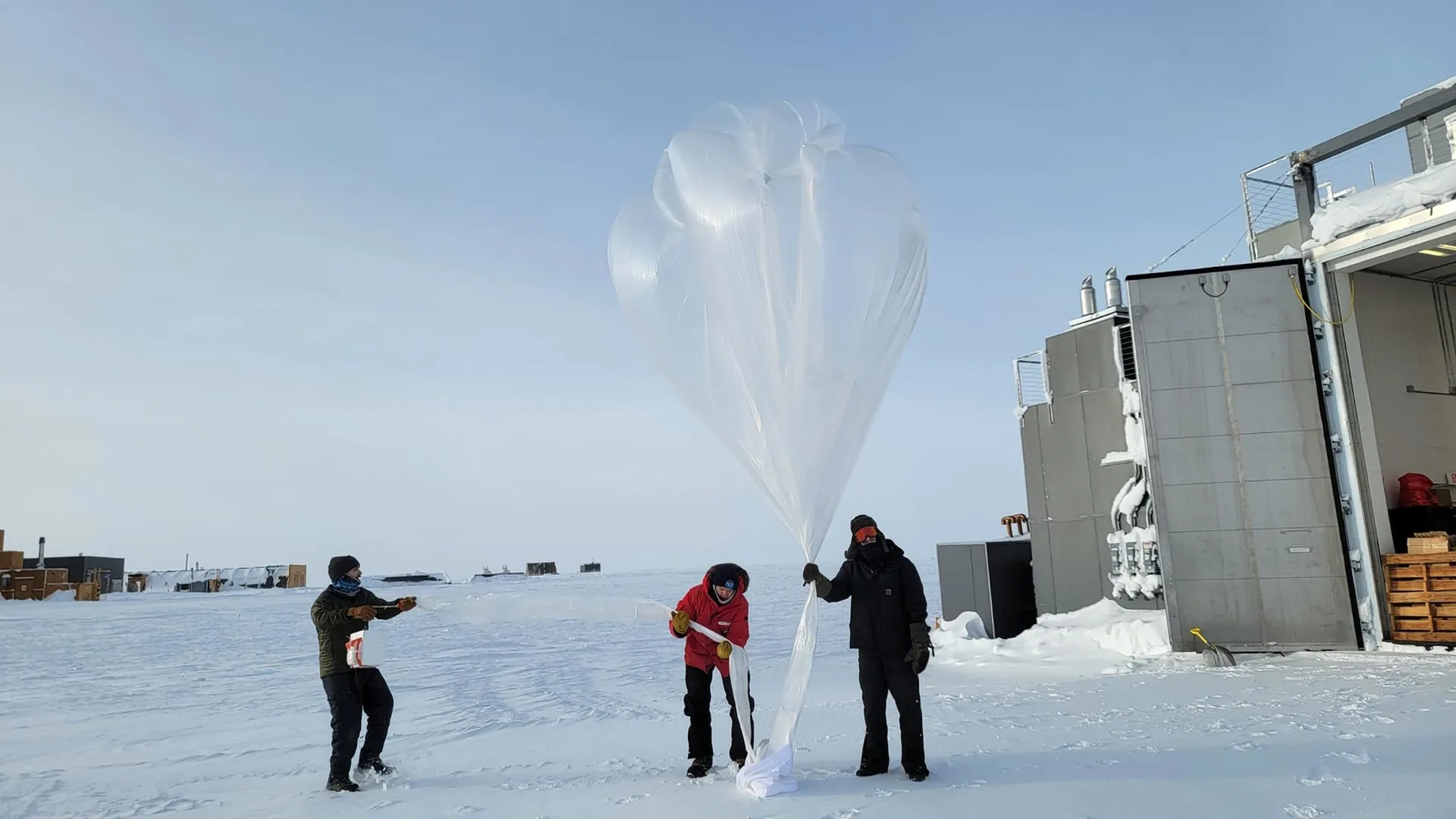
Scientists expect the Antarctic ozone hole to recover by the 2070s. Measurements came from NOAA weather balloons, the Dobson Ozone Spectrophotometer, and satellites including NASA's Aura and NOAA-20.