Researchers at The University of New Mexico found that chemical reactions between rocky pebbles and hydrogen in Earth's early atmosphere could have produced hundreds of oceans' worth of water during the planet's formation.
The study, led by graduate student Susmita Garai and professor Zachary Sharp, was published in Nature Geoscience. The team heated silicate rock samples to 1,200 to 1,400 degrees Celsius in flowing hydrogen gas for 15 minutes to three hours. When hydrogen was present, nearly 80% of the iron oxide in the rocks transformed into metallic iron, releasing water vapor. The same reaction did not occur when helium was used instead.
Sharp explained that the findings challenge the long-held view that Earth's water came primarily from comets and meteorites. "Previous ideas about the source of water to Earth rely on an external source, such as comets or meteorites. Here we show that virtually any Earth-sized planet should have water by this newly identified mechanism," he said.
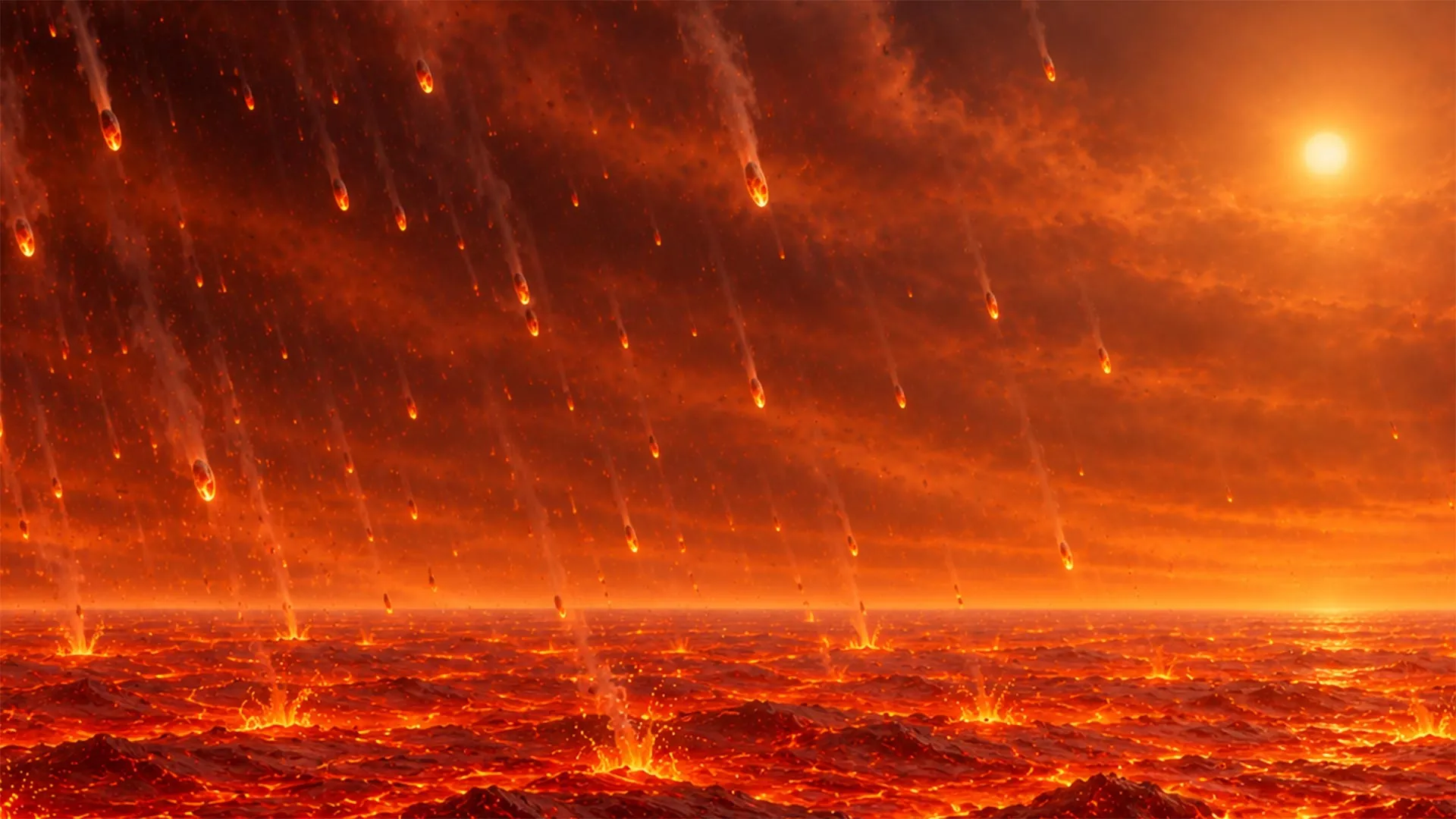
During pebble accretion, the process by which rocky material accumulated to form Earth, the planet developed a dense hydrogen-rich atmosphere with extreme temperatures and pressures. Pebbles falling through this atmosphere could have triggered the water-producing reaction, transforming iron oxide and releasing water vapor in minutes.
The researchers note that their experiments do not establish how much of Earth's current water originated this way versus arriving from space. Sharp stated that "additional research will be needed to determine the contribution of this mechanism compared with water delivered by comets, meteorites, and other sources."
The findings suggest that if other rocky planets developed similar conditions during formation, they could generate water through the same process, potentially making water-bearing worlds more common throughout the universe.