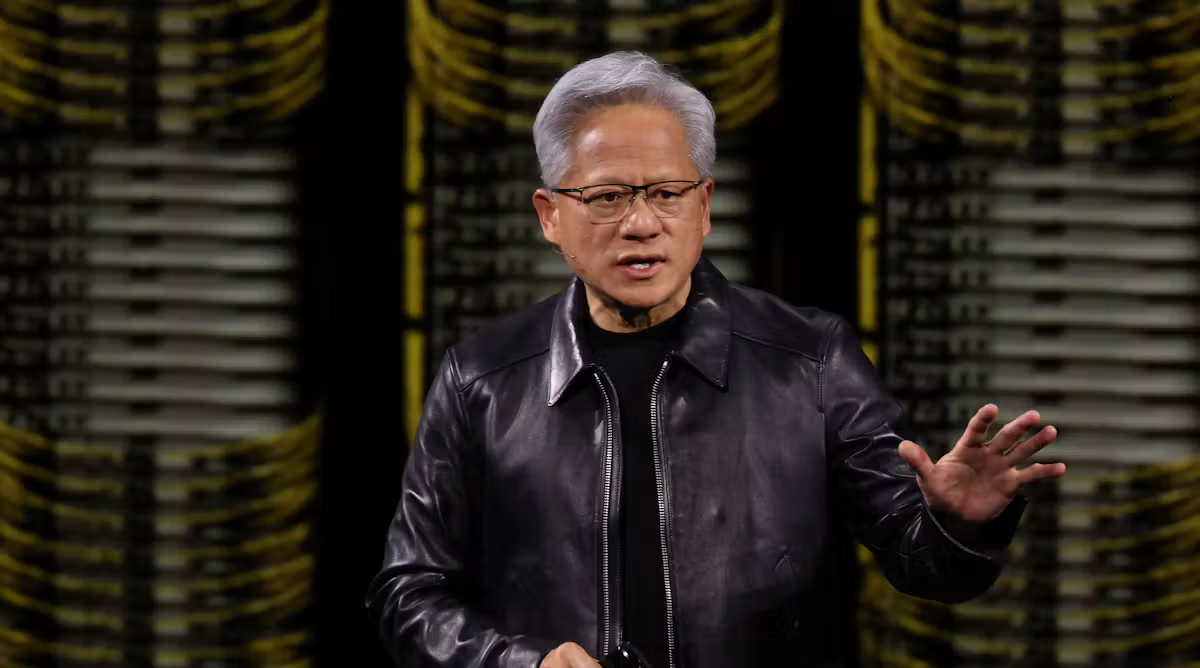
Jensen Huang, chief executive and co-founder of Nvidia, admitted to an extramarital affair with Alice Huang, who has been accused of being a Chinese intelligence agent. The Chinese government rejects espionage claims, though Alice Huang has reportedly been under investigation by the US for years.
Nvidia supplies over 80% of high-end chips used for AI and data centres. The company began making graphics processing units (GPUs) for video games, but these chips proved ideal for training and running AI models. Google and AMD have attempted to compete with Nvidia for speed and efficiency but have not displaced it from its market dominance.
US chip export restrictions on Nvidia's most powerful chips to China began in 2022, though they were somewhat relaxed last year. Nvidia's CEO has lobbied intently for a relaxation of these restrictions. Trade records show over US$3 billion in chips moved from Singapore to China in a single year, with similar volumes from Malaysia.
Nvidia's share price fell after disclosure of the affair. Some analysts question whether the company propped up sales figures by ignoring sanctions. An Nvidia executive reportedly leaned on US officials to halt an investigation into the firm's relationship with Megaspeed, a Southeast Asian company accused of buying Nvidia chips and exporting them to China.
Nvidia now faces criminal investigation. Congress has requested Jensen Huang explain his interactions with Alice Huang and how Nvidia protects itself against foreign espionage.
If Nvidia is forced to guarantee its chips do not reach China, its sales pipeline may halt. Nvidia plays a key role in circular financing within the AI sector, where companies invest in suppliers or customers. OpenAI has delayed a planned stock market listing, and Anthropic's expected share offering faces rumoured "junk bond" rating. Data centre firms are losing value amid community pushback and rising energy costs.