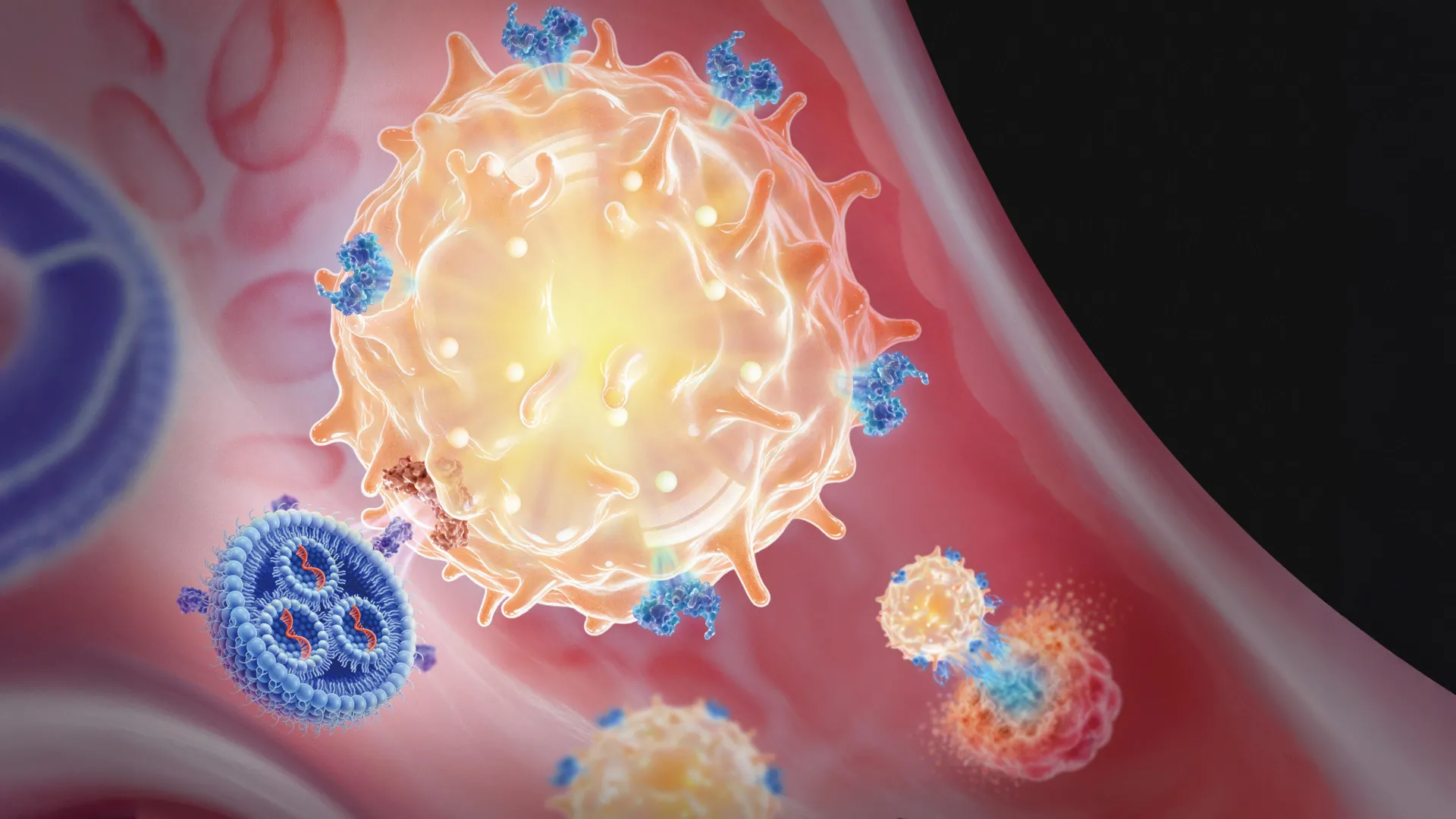
MIT researchers have developed a technique to engineer natural killer (NK) cells into cancer fighters directly inside the body using lipid nanoparticles carrying messenger RNA. The method eliminates the need to extract immune cells from patients and modify them in laboratories.
The nanoparticles deliver genetic instructions that tell NK cells to produce chimeric antigen receptors, or CAR proteins, which help the cells identify and destroy diseased cells. Scientists covered the nanoparticles with antibody fragments to ensure they reached the correct immune cells.
Daniel Anderson, a professor in MIT's Department of Chemical Engineering and member of MIT's Koch Institute for Integrative Cancer Research, led the research published in Nature Biotechnology. Lead authors include postdoctoral researcher Yuang Chen and graduate students Julia Monkovic and Haseeb Mughal. Robert Langer, MIT's David H. Koch Institute Professor, also contributed.
The approach addresses a major manufacturing challenge. "The manufacturing challenges with CAR NK cells are significant. The idea here is you can deliver a nanoparticle that will modify your own NK cells with a CAR construct and teach them to attack tumor cells," Anderson says.
In mice with melanoma, three of five animals treated with the nanoparticles experienced complete remission. In a humanized mouse model of T cell lymphoma, five injections completely eliminated tumors. In mice with autoimmune hepatitis, a single injection eliminated autoreactive T cells and the animals' damaged liver tissue healed.
The researchers successfully modified approximately 80 percent of their targeted NK cells. Results from the in vivo approach matched those from CAR NK cells produced through conventional ex vivo manufacturing.
NK cells avoid a key limitation of CAR T cell therapies. Because both the engineered cells and their targets would be T cells in that approach, modified T cells might destroy one another. NK cells bypass this problem since they are a different immune cell type.
No CAR NK cell therapies have received FDA approval yet, though researchers are actively developing them for cancer and autoimmune disorders.