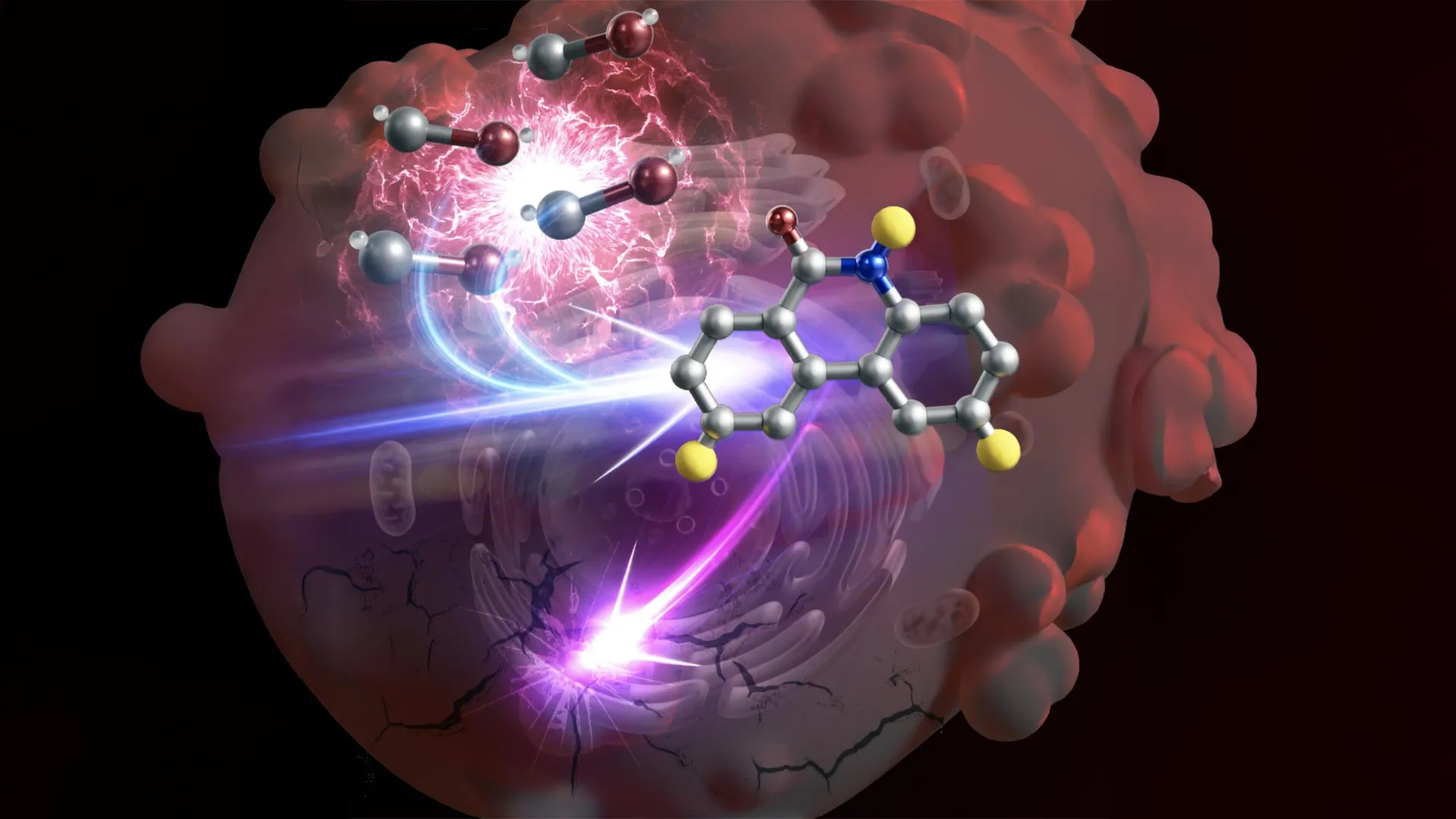
Researchers led by Katsunori Tanaka at the RIKEN Pioneering Research Institute in Japan have developed an experimental cancer treatment that uses carbon monoxide produced by cancer cells to manufacture anticancer drugs inside the cells themselves. The work appeared in Nature Communications.
The approach works by enclosing a metal catalyst called a palladacycle within albumin, a blood protein. When this complex reaches cancer cells, the excess carbon monoxide present in tumors triggers a chemical reaction that produces phenanthridinone, a toxic compound related to existing anticancer drugs. The albumin shell protects the catalyst from being deactivated by substances like glutathione until the complex enters cells.
In laboratory tests on cultured human liver, cervical, breast, and lung cancer cells, the researchers detected phenanthridinone forming only in the cancer cell lines after 48 hours, not in normal cells. They modified the system to generate a particularly potent phenanthridinone derivative, and when introduced into cultured liver cancer cells, the compound formed inside the cells and caused visible cell damage.
The team also tested whether carbon monoxide in the bloodstream could prematurely trigger drug production. Laboratory testing showed no toxic drug formed in blood, likely because carbon monoxide in the blood is bound to hemoglobin and unavailable for the reaction.
Tanaka stated that the work represents "an important advance in therapeutic in vivo synthetic chemistry" by using "molecules naturally present or generated within the body" as "endogenous chemical feedstocks to synthesize therapeutic molecules directly at the site of disease."
The researchers plan to test the approach in animal models. The technique remains at an early stage.