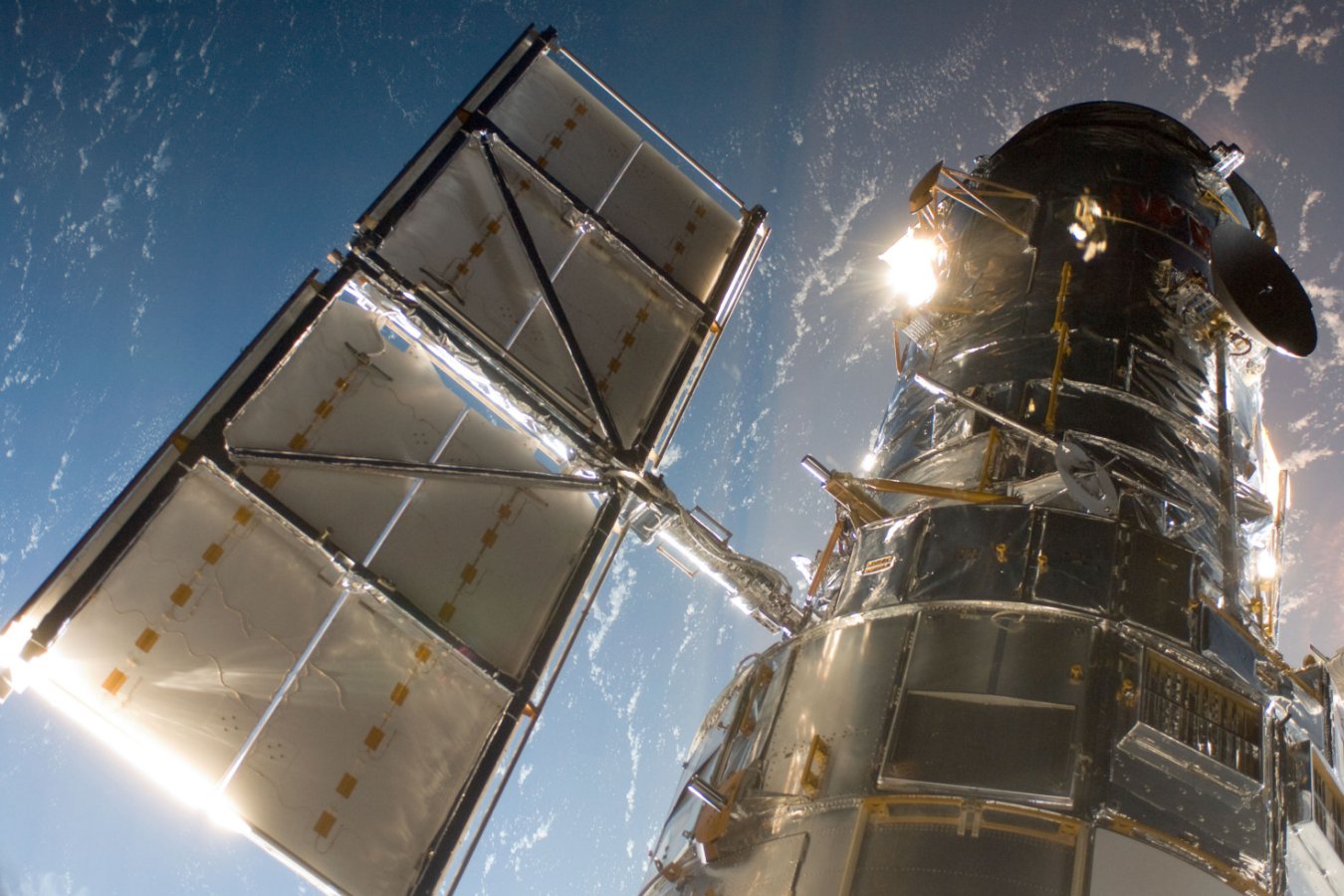
Hubble Space Telescope faces re-entry into Earth's atmosphere as soon as 2032 due to orbital decay caused by atmospheric drag. NASA estimates a 10 percent probability of re-entry by September 2032 and a 50 percent probability by December 2033.
The telescope, launched in 1990, has generated more than 23,000 peer-reviewed scientific papers. It was last serviced in 2002 during the final space shuttle mission to reach it. NASA retired its shuttle fleet and now lacks spacecraft capable of lifting Hubble to a higher orbit.
NASA has invited commercial companies to submit proposals by 30 November for either raising Hubble's orbit to at least 600 kilometres or safely de-orbiting it. The space agency stated that no options are off the table, according to Alise Fisher at NASA. A similar commercial mission by Katalyst Space attempted to boost the orbit of the Neil Gehrels Swift Observatory earlier this year but failed due to a steering problem.
Stephen Wilkins at the University of Sussex said Hubble possesses unique capabilities, particularly in high-resolution ultraviolet imaging, that no other current telescope matches, including the James Webb Space Telescope and the Nancy Grace Roman Space Telescope. Hubble can perform ultraviolet imaging better than anything currently available. NASA aims to launch the Ultraviolet Explorer in 2030, which will cover the same spectrum but with one-tenth the resolution. If Hubble burns up in 2032, a capability gap could persist for a decade or more until the Habitable Worlds Observatory potentially launches in the 2040s, Wilkins said.
Thomas Haworth at Queen Mary University of London, part of a panel advising NASA on Hubble's future, described the telescope as "the greatest telescope of all time" and said re-boosting its orbit was higher on the panel's agenda than extracting maximum science before its end of life. He emphasized that a decision is needed quickly because planning such a mission requires years.
Mark Norris at the University of Lancashire noted that Hubble was designed to be serviced and is fitted with grapple points for robotic arms. The telescope's instruments are gradually degrading from space environment exposure, but Norris said it remains fully functional. He built his career using archived Hubble images for research on ultra-compact dwarf galaxies.