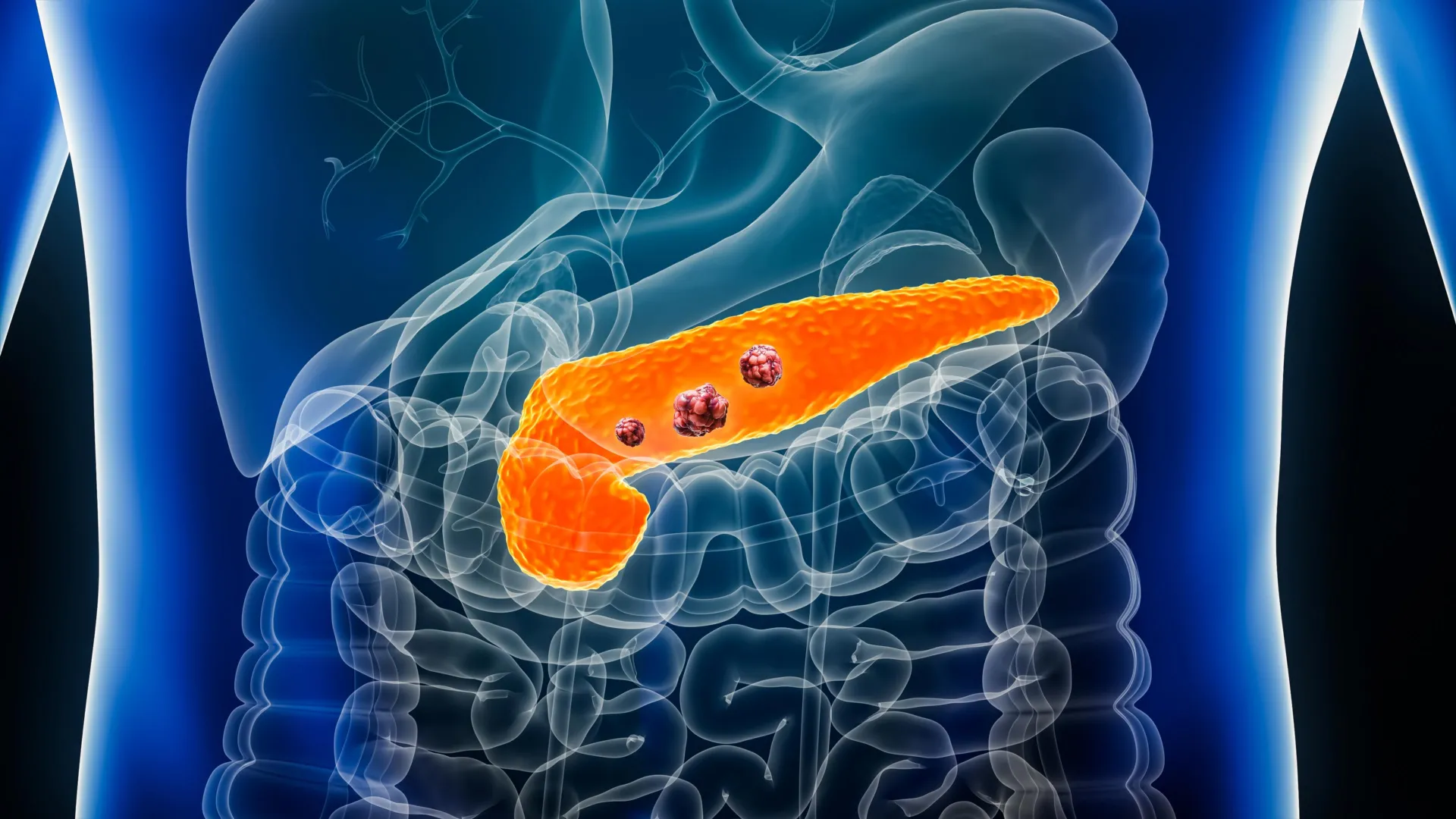
# AI System Detects Pancreatic Cancer Years Before Conventional Diagnosis
A machine learning system called REDMOD has demonstrated the ability to identify pancreatic cancer an average of 475 days before conventional diagnostic imaging can spot the disease. Researchers trained the AI to recognize subtle radiological changes associated with early-stage pancreatic cancer, achieving sensitivity rates nearly double those of experienced radiologists reviewing the same imaging data.
Pancreatic cancer ranks among the deadliest malignancies, with a five-year survival rate below 12 percent when diagnosed at advanced stages. Early detection remains the strongest predictor of survival outcomes. When pancreatic cancer is caught at Stage 1, survival rates exceed 30 percent, but fewer than 10 percent of cases receive early diagnosis because the disease typically produces no symptoms until tumors have grown large.
The REDMOD system analyzes existing medical imaging, likely computed tomography (CT) or magnetic resonance imaging (MRI) scans, to detect parenchymal changes and other radiological features associated with malignant transformation. Rather than requiring new imaging protocols, the technology works by reanalyzing scans patients have already undergone for other reasons. This approach reduces barriers to implementation and cost.
The 475-day lead time represents a substantial window for intervention. Earlier detection would allow surgeons to perform resection when tumors remain small and localized, before cancer cells have invaded surrounding tissues or metastasized. Surgical resection remains the only potentially curative treatment for pancreatic cancer. Chemotherapy and radiation improve outcomes significantly when combined with resection in early-stage disease.
Researchers trained REDMOD on retrospective imaging datasets, likely including thousands of cases with known diagnostic outcomes. The system learned to associate specific radiological patterns with subsequent pancreatic cancer diagnosis. Validation testing against experienced radiologists showed the AI consistently outperformed human readers, a common finding when machine learning systems analyze high-dimensional imaging data.
Several limitations require acknowledgment. Retrospective validation does not guarantee prospective clinical performance. Selection bias in historical imaging datasets may not reflect broader populations. The study likely included patients in healthcare systems with robust imaging archives and documented cancer diagnoses. Socioeconomic disparities in healthcare access could reduce real-world sensitivity in underserved populations.
The technology represents one example of an expanding field of AI-driven cancer detection systems. Similar approaches have shown promise for lung cancer, breast cancer, and colon cancer screening. Each system builds on the principle that artificial neural networks can identify patterns in imaging data that human radiologists miss, particularly when analyzing thousands of images during training.
Clinical translation remains uncertain. REDMOD would require validation in prospective trials before hospitals and insurance systems integrate it into standard workflows. Regulatory approval from agencies like the FDA would be necessary. Implementation challenges include integrating the system into existing radiology software, training radiologists to trust AI recommendations, and addressing liability questions when the technology identifies cancers radiologists initially missed.
If REDMOD successfully transitions from research to clinical practice, it could transform pancreatic cancer outcomes by catching more cases while still surgically curable. The technology would not replace radiologists but augment their diagnostic capabilities, functioning as a second reader for every scan.