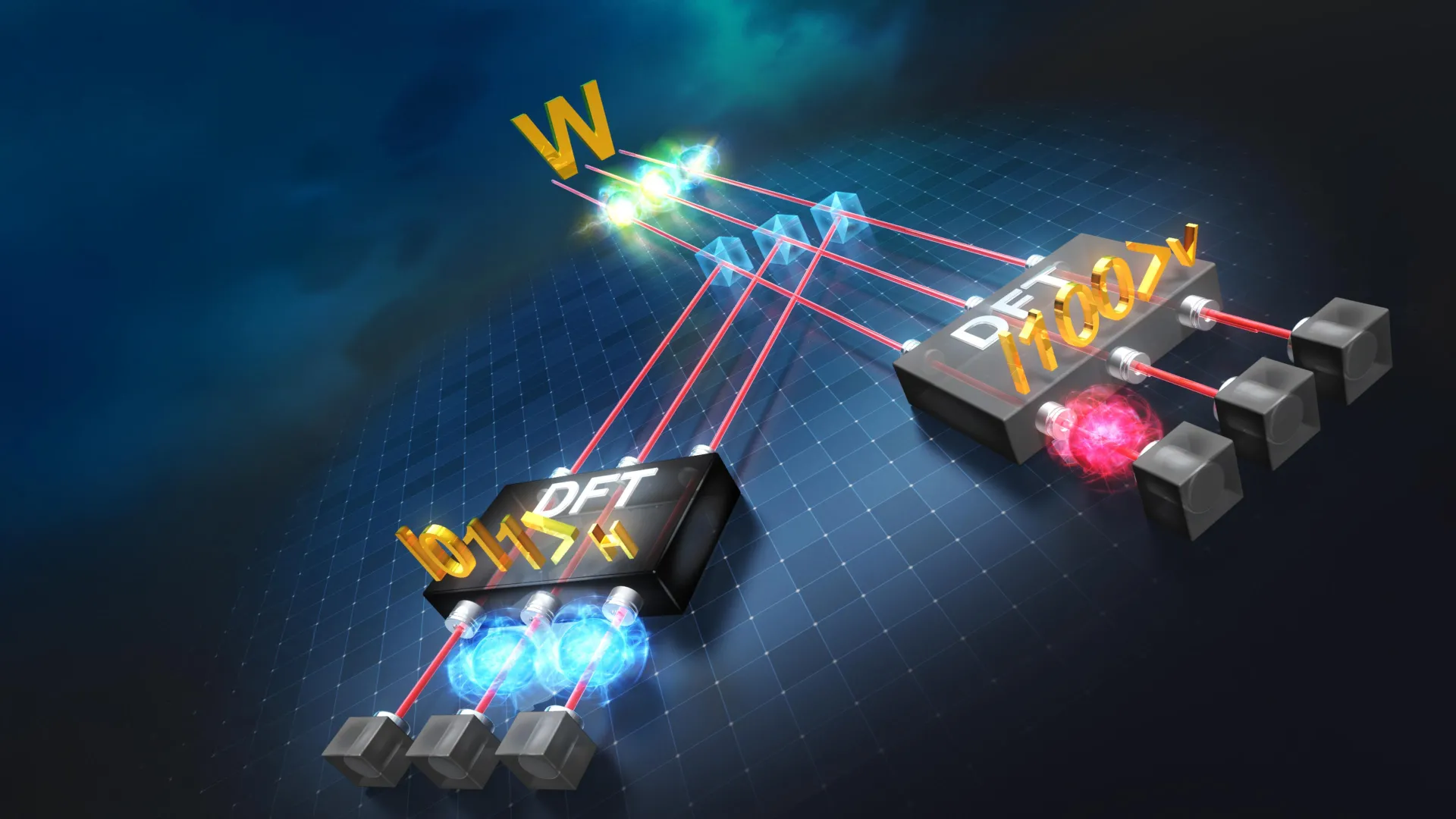
Researchers have solved a quarter-century puzzle in quantum physics by developing a practical method to identify W states, a complex form of multi-photon quantum entanglement that has resisted reliable detection since its theoretical prediction in 1999.
W states represent a specific pattern of quantum entanglement involving three or more photons arranged in a particular configuration. Unlike other entangled states, W states possess a unique property: if you measure one photon and find it in a specific state, the remaining photons collapse into a predictable pattern. This characteristic makes them valuable for quantum information processing, yet scientists lacked an efficient way to experimentally verify when they had actually created one.
The breakthrough addresses a fundamental bottleneck in quantum technology. Previous methods for identifying W states were indirect, requiring complex measurements and mathematical reconstructions that were prone to error. The new technique, experimentally demonstrated by the research team, allows scientists to directly detect W states with far greater reliability and efficiency. This capability transforms W states from theoretical objects into practical tools for real quantum systems.
The implications ripple across multiple quantum technology domains. In quantum teleportation, the process by which quantum states transfer between distant particles, W states could enable new protocols that transmit information more robustly than current methods allow. Quantum communication networks relying on secure entanglement-based protocols gain a more reliable foundation when W states can be verified. Quantum computers built on photonic systems now have access to resource states that researchers can confidently identify and manipulate.
The research team's experimental demonstration validates the method's feasibility in real laboratory conditions rather than purely theoretical settings. This transition from concept to working technique represents the kind of incremental but essential progress that moves quantum technologies from research benches toward practical applications. The ability to reliably work with multi-photon entangled states removes a technical ceiling that previously limited the complexity of quantum systems scientists could confidently build and control.
The 25-year gap between W states' theoretical prediction and reliable experimental identification reflects the broader challenge in quantum physics: theory often outpaces experimental capability. Developing new detection methods requires creativity in physics design, careful engineering to minimize noise and errors, and rigorous validation that the technique actually works as intended.
The advancement comes as quantum computing and communication technologies accelerate toward commercial viability. Companies and government agencies worldwide have invested billions in quantum development, treating quantum advantage as both a scientific milestone and a strategic necessity. Each technical breakthrough that simplifies working with quantum systems removes barriers to scaling up from laboratory prototypes to larger, more capable quantum devices.
Future work will likely focus on making the W state detection method more efficient, more reliable at different scales, and practical for integrated quantum systems that combine multiple technologies. Researchers will explore whether the technique extends to even more complex entangled states or whether it enables new types of quantum protocols previously considered impossible or impractical.