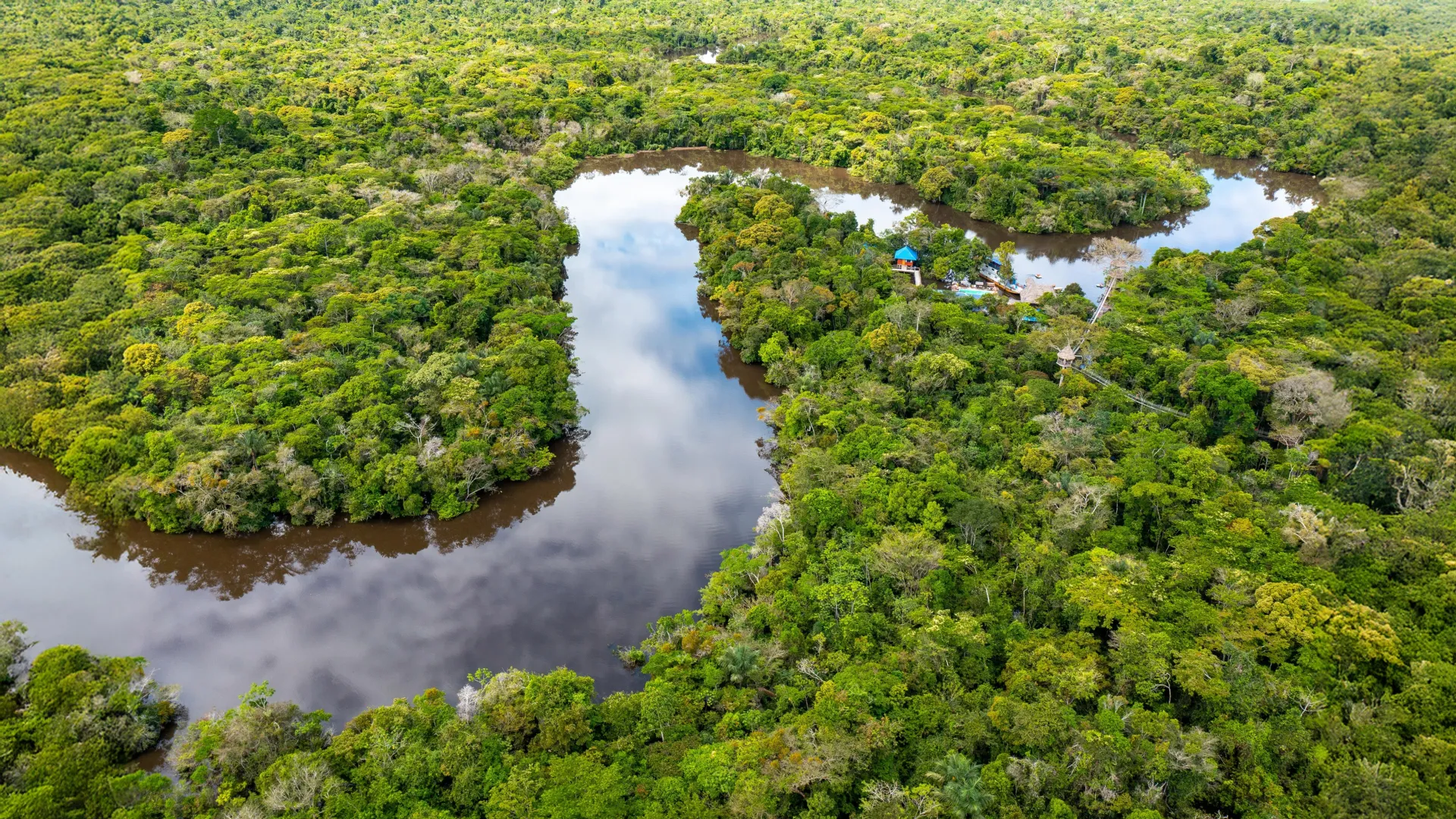
# Study Maps Most Effective Amazon Conservation Strategies
Protecting existing Amazon forests outperforms restoration efforts as a conservation strategy, according to a large-scale study that compared multiple approaches to safeguarding both biodiversity and carbon stores. Preventing wildfires and logging in intact forests delivered the greatest benefits for wildlife while nearly equaling deforestation prevention for carbon protection, researchers found.
The research evaluated four main conservation pathways: stopping deforestation, preventing wildfires and logging damage, restoring already-cleared land, and combining multiple approaches. Protecting standing forests emerged as the dominant strategy across both conservation goals.
"Preventing damage from wildfires and logging delivered the greatest biodiversity benefits," the study states. These interventions protect existing ecosystems without the lag time required for forest regeneration. Intact forests harbor established wildlife populations, complex ecological networks, and mature carbon stores that took decades to accumulate.
Deforestation prevention ranked nearly equally for carbon protection but proved less effective for biodiversity than preventing fire and logging damage. This distinction matters because Amazon forests face multiple threats simultaneously. While chainsaw-based clearing remains a primary driver of forest loss, wildfires have intensified in recent years as climate change and human activity have dried the landscape.
Restoration work retained importance in the study's analysis, particularly in regions where forests have already been heavily cleared. Replanting efforts can rebuild ecosystem function and reestablish wildlife corridors in degraded zones. However, the research found restoration was considerably more expensive than protection and delivered weaker results on its own. A restored forest takes years or decades to match the biodiversity and carbon sequestration of primary forest.
The cost differential proved decisive. The study measured conservation efficiency across multiple scenarios. Protecting existing forests delivered conservation benefits at substantially lower cost per hectare than restoration alone. This economic reality carries major implications for conservation budgeting in the developing world, where funding constraints force prioritization.
The findings do not dismiss restoration entirely. A hybrid approach combining protection of intact forests with strategic restoration in degraded areas performed well in the analysis. This mixed strategy balances immediate protection of existing biodiversity hotspots with long-term ecosystem recovery in cleared zones.
The Amazon holds approximately 10 percent of Earth's biodiversity and stores roughly 150 billion tons of carbon. Forest loss accelerates climate change while triggering species extinctions across taxonomic groups. Brazil controls approximately 60 percent of the Amazon, though the forest spans nine countries including Peru, Colombia, and Bolivia.
Global conservation funding has historically favored restoration projects, partly because they generate visible progress and carbon credits that fund ongoing work. This study suggests that approach requires recalibration. The most efficient use of limited conservation dollars involves maintaining forest cover in the first place.
The research provides data-driven guidance as governments and conservation organizations negotiate climate agreements and biodiversity targets. The message remains straightforward: standing forest offers greater conservation value than either cleared land or land undergoing restoration. Preventing damage to already-intact ecosystems should rank first in conservation priority.