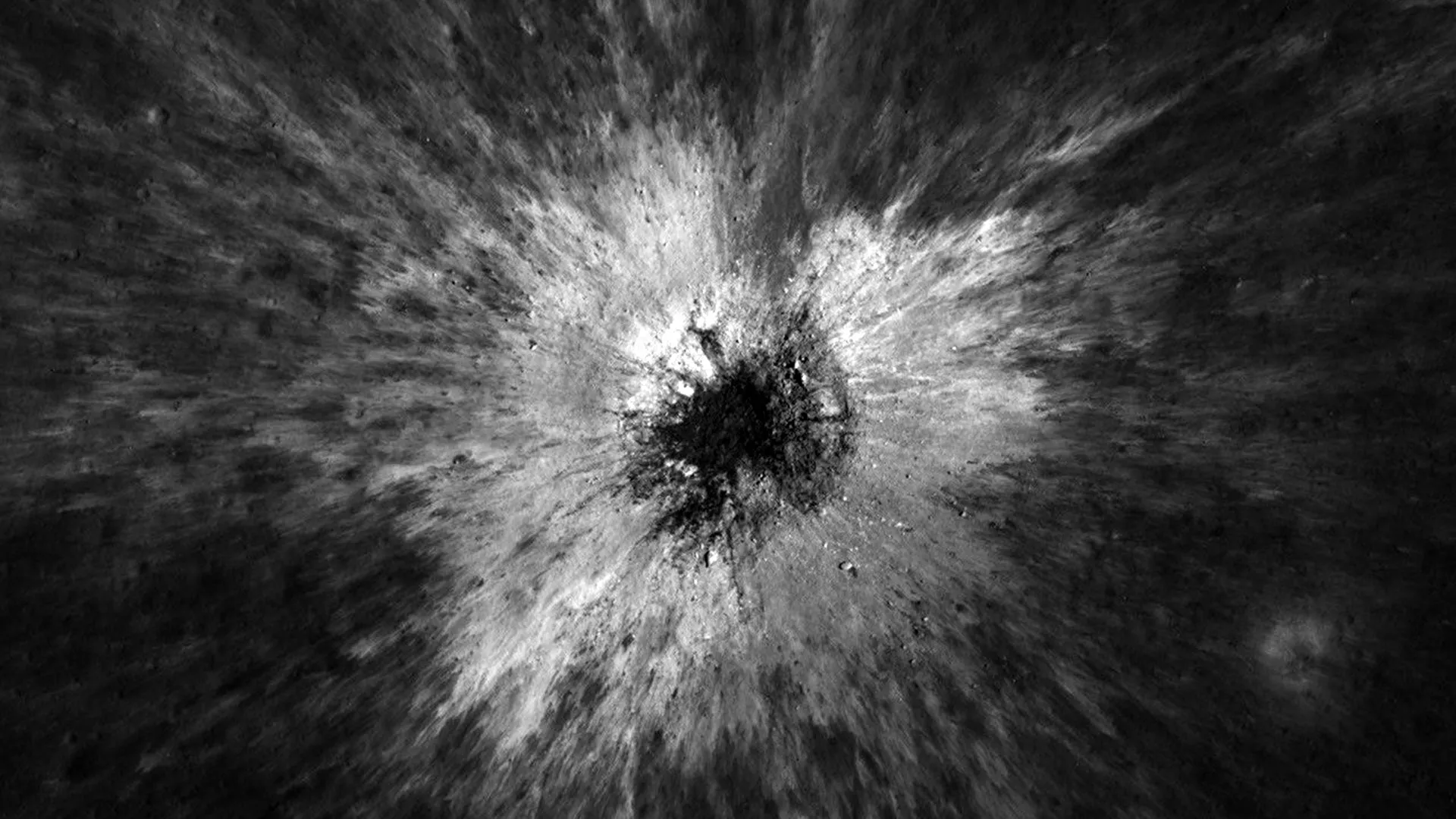
NASA's Lunar Reconnaissance Orbiter has discovered a 728-foot-wide crater that formed on the Moon during 2024, marking the largest newly created impact basin ever detected in the solar system. The collision occurred with enough force to disturb the lunar surface across several miles, leaving behind an unexpectedly expansive cold zone that scientists are now studying to understand the dynamics of planetary impacts.
The Lunar Reconnaissance Orbiter, or LRO, operates from lunar orbit and continuously monitors the Moon's surface for changes. The spacecraft's imaging capabilities allowed researchers to detect this fresh crater by comparing recent photographs with previous observations. The crater's discovery underscores how even in the absence of an atmosphere, the Moon remains geologically active and subject to bombardment from asteroids and meteoroids traveling through space.
The cold zone surrounding the impact provides researchers with valuable data about how impacts transfer energy into the lunar surface. When a space object strikes the Moon at hypervelocity, the resulting explosion excavates material, ejects it across the landscape, and can alter the thermal properties of the surrounding terrain. The unusually large frigid zone associated with this crater suggests the impact event released tremendous energy and involved a larger impactor than researchers might typically expect for a crater of this size.
Understanding lunar crater formation matters for multiple reasons. First, it refines scientific models of how impacts shape planetary bodies throughout the solar system. Second, it provides practical information for lunar exploration planning. Future NASA missions, including Artemis missions aimed at returning humans to the Moon, require detailed knowledge of lunar hazards and terrain conditions. Astronauts and equipment will need to navigate and operate in regions potentially affected by recent impact activity.
The discovery also contributes to the broader scientific effort to catalog lunar surface changes. By tracking where and how frequently new craters form, scientists can better estimate the flux of impactors in near-Earth space. This information has implications for understanding asteroid trajectories and collision risks for Earth itself. The Moon serves as a natural laboratory for studying impact processes because its lack of weather and erosion preserves impact signatures that would be destroyed on Earth within geological timescales.
The LRO mission, launched in 2009, has proven invaluable for this type of continuous monitoring. The spacecraft carries the Lunar Reconnaissance Orbiter Camera, or LROC, which captures high-resolution images of the lunar surface. By taking photographs repeatedly over time, mission scientists can identify fresh craters that did not exist in previous imaging passes. This particular crater formed sometime between LRO observation passes in 2024, giving researchers a narrow timeframe for when the impact occurred.
The discovery highlights how much remains unknown about the Moon despite decades of study. While craters cover the lunar surface extensively, identifying precisely when new ones form requires sophisticated orbital observation and careful image analysis. Each newly discovered crater adds to the database of impact events and helps constrain the current rate of lunar bombardment. This data ultimately strengthens humanity's understanding of the dynamic processes that shape worlds throughout the solar system.