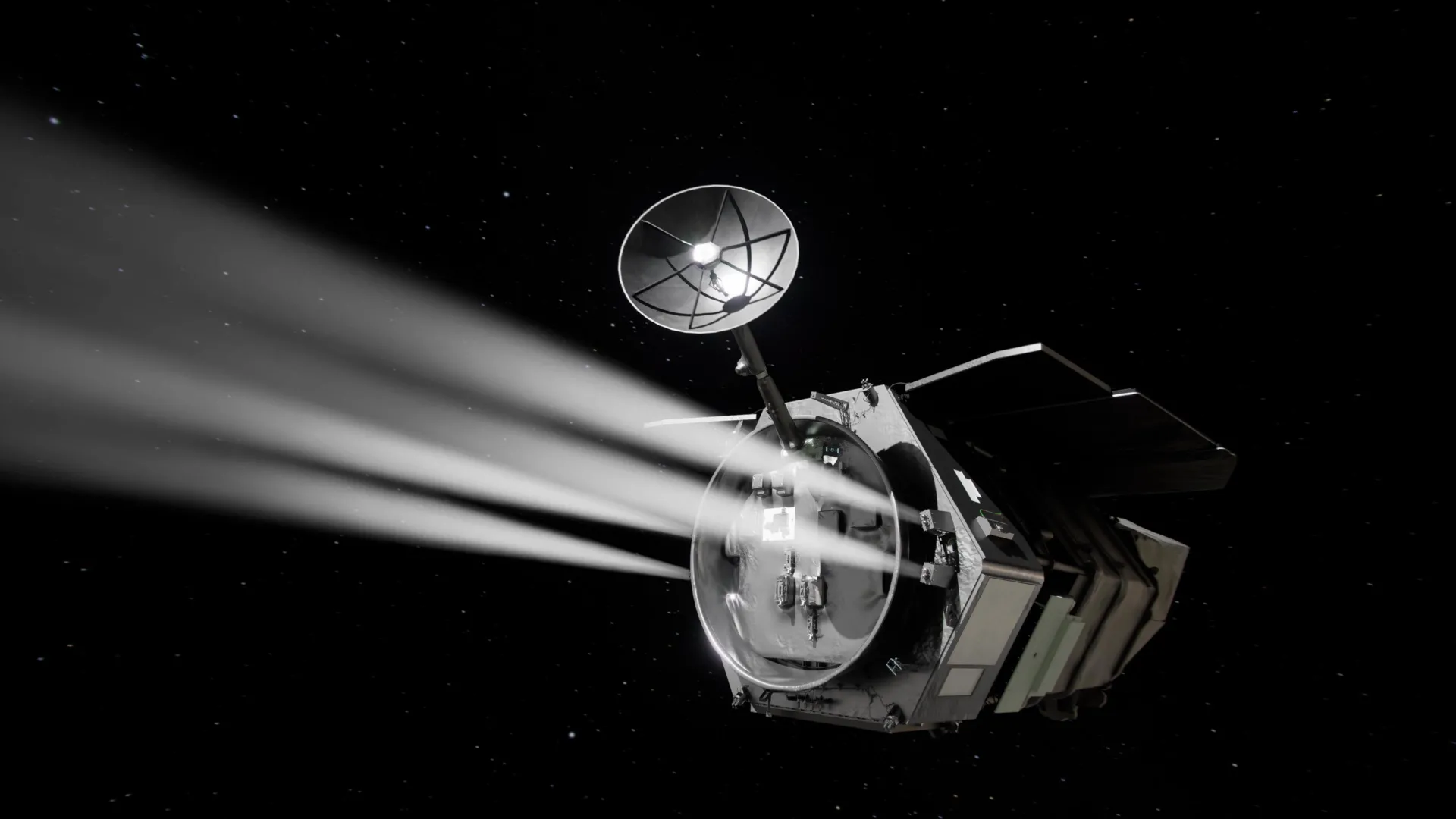
NASA's Roman Space Telescope will carry enough propellant to operate for at least 22 years, according to recent fuel assessments from the space agency. This extended timeline more than doubles the observatory's original 10-year design mission, opening the door to extended science operations that could reshape our understanding of dark energy, exoplanets, and cosmic expansion.
The extension stems from three converging factors. First, mission planners executed an extremely precise course correction trajectory during launch, minimizing fuel waste during the spacecraft's journey to its destination at the Sun-Earth L2 Lagrange point, roughly one million miles from Earth. Second, Roman launched with extra propellant reserves beyond its baseline requirements. Third, engineers identified additional fuel-efficiency measures through operational planning that will preserve consumables throughout the mission.
Roman, named after astronomer Nancy Grace Roman, represents NASA's next major flagship astrophysics mission after the James Webb Space Telescope. The observatory will observe roughly 200 million galaxies during its lifetime, map the large-scale structure of the universe, and search for Earth-like exoplanets around distant stars. Its unprecedented sensitivity in infrared wavelengths will enable scientists to study objects spanning billions of years of cosmic history.
The 22-year operational window carries substantial implications for mission planning and scientific return on investment. NASA budgeted approximately $5 billion for Roman's development and operations, making the potential for extended observations a significant advantage for the astronomical community. A decade of additional data collection could substantially improve constraints on dark energy models, refine measurements of cosmic expansion rates, and expand the exoplanet catalog available for future biosignature studies.
Extended missions have proven scientifically valuable across NASA's portfolio. The Hubble Space Telescope, launched in 1990 with an intended 15-year lifespan, continues observations today. The Mars rovers Spirit and Opportunity far exceeded their initial designs before eventual decommissioning. Roman's extended fuel budget positions it similarly for long-term contributions to astrophysics.
However, several caveats apply to the 22-year estimate. The assessment assumes nominal operations without unexpected mechanical failures, degradation of optical components, or solar activity impacts on the spacecraft's thermal systems. Cosmic ray radiation exposure over two decades could degrade some instruments, though Roman's design includes radiation-hardened components. Fuel usage for orbital adjustments may differ from current projections if unexpected course corrections become necessary.
Mission controllers at NASA's Goddard Space Flight Center and project engineers at Ball Aerospace will monitor propellant consumption throughout Roman's operational life. Actual extended mission duration will depend on instrument health assessments conducted during regular servicing reviews, typically conducted every five years for major NASA observatories.
The Roman Space Telescope is scheduled to launch in the mid-2020s, following the successful deployment of the James Webb Space Telescope. Its extended endurance profile strengthens NASA's long-term astrophysics strategy, ensuring continuous observational capabilities as the agency plans subsequent missions for the 2030s and beyond.