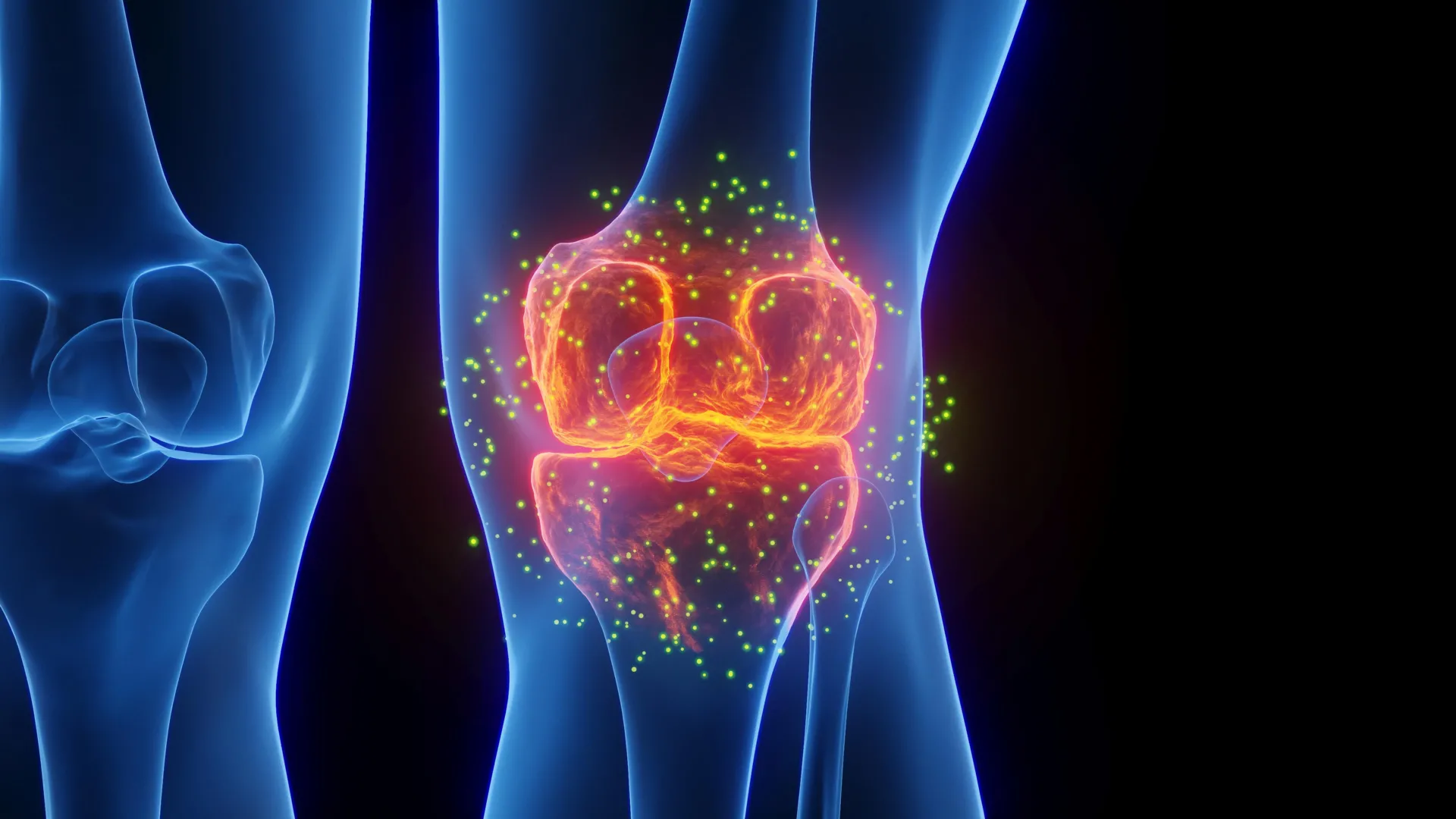
A new study of 615 adults reveals that ultra-processed foods drive fat accumulation inside thigh muscles, a hidden type of tissue damage linked to knee osteoarthritis risk. Researchers used MRI scans to measure intramuscular fat and found the association held firm even after controlling for total calories consumed, exercise levels, body mass index, and other confounding variables.
The study examined participants at risk for knee osteoarthritis, a degenerative joint condition affecting millions globally. Intramuscular fat, also called myosteatosis, differs from subcutaneous fat visible under the skin. This interior fat infiltration weakens muscle function and reduces the structural support muscles provide to joints. The knee joint depends heavily on strong thigh muscles, particularly the quadriceps, to maintain stability and distribute load properly.
The research team found that higher consumption of ultra-processed foods correlated with increased intramuscular fat deposits in the thigh. Ultra-processed foods typically contain added sugars, refined grains, unhealthy fats, and chemical additives while lacking whole food nutrients. Examples include sugary beverages, packaged snacks, fast food items, and mass-produced baked goods. The association persisted across multiple statistical models, suggesting the effect operated through mechanisms independent of simple calorie excess or sedentary behavior.
This finding addresses a gap in osteoarthritis research. Most studies focus on body weight and weight loss as interventions, yet this work suggests food quality matters separately from quantity. Two people consuming identical calories may experience different muscle fat buildup depending on whether they eat whole foods or ultra-processed alternatives. This distinction has clinical implications for prevention strategies.
The mechanism likely involves metabolic inflammation triggered by ultra-processed food consumption. These foods promote insulin resistance, dysbiosis in gut bacteria, and chronic low-grade inflammation throughout the body. Inflammation may drive fat infiltration into muscle tissue. Additionally, ultra-processed foods often contain low micronutrient density, depriving muscles of vitamins and minerals needed for healthy metabolism and mitochondrial function.
The study's strength lies in its objective outcome measurement through MRI imaging rather than relying on participant self-reporting. Weaknesses include its cross-sectional design, which establishes association but not causation. The researchers cannot confirm whether ultra-processed food consumption directly causes intramuscular fat accumulation or whether an unmeasured third factor influences both. Participants at risk for osteoarthritis may differ from the general population, limiting generalizability.
Future research should employ longitudinal designs following participants over time and randomized trials testing whether dietary changes reduce intramuscular fat and improve knee function. Mechanistic studies could clarify whether inflammation, insulin resistance, or nutrient deficiency drives the fat infiltration. Researchers should also investigate whether this phenomenon affects other joints and muscle groups.
The findings support existing public health recommendations to limit ultra-processed food consumption. For individuals concerned about joint health, shifting dietary patterns toward whole foods may offer protection beyond simple weight management. Whether through reduced inflammation, improved nutrient status, or enhanced metabolic function, the quality of what people eat appears to shape the health of their muscles in ways that matter for joint longevity.