# Giant Brazilian Dinosaur Reveals Ancient Continental Connections
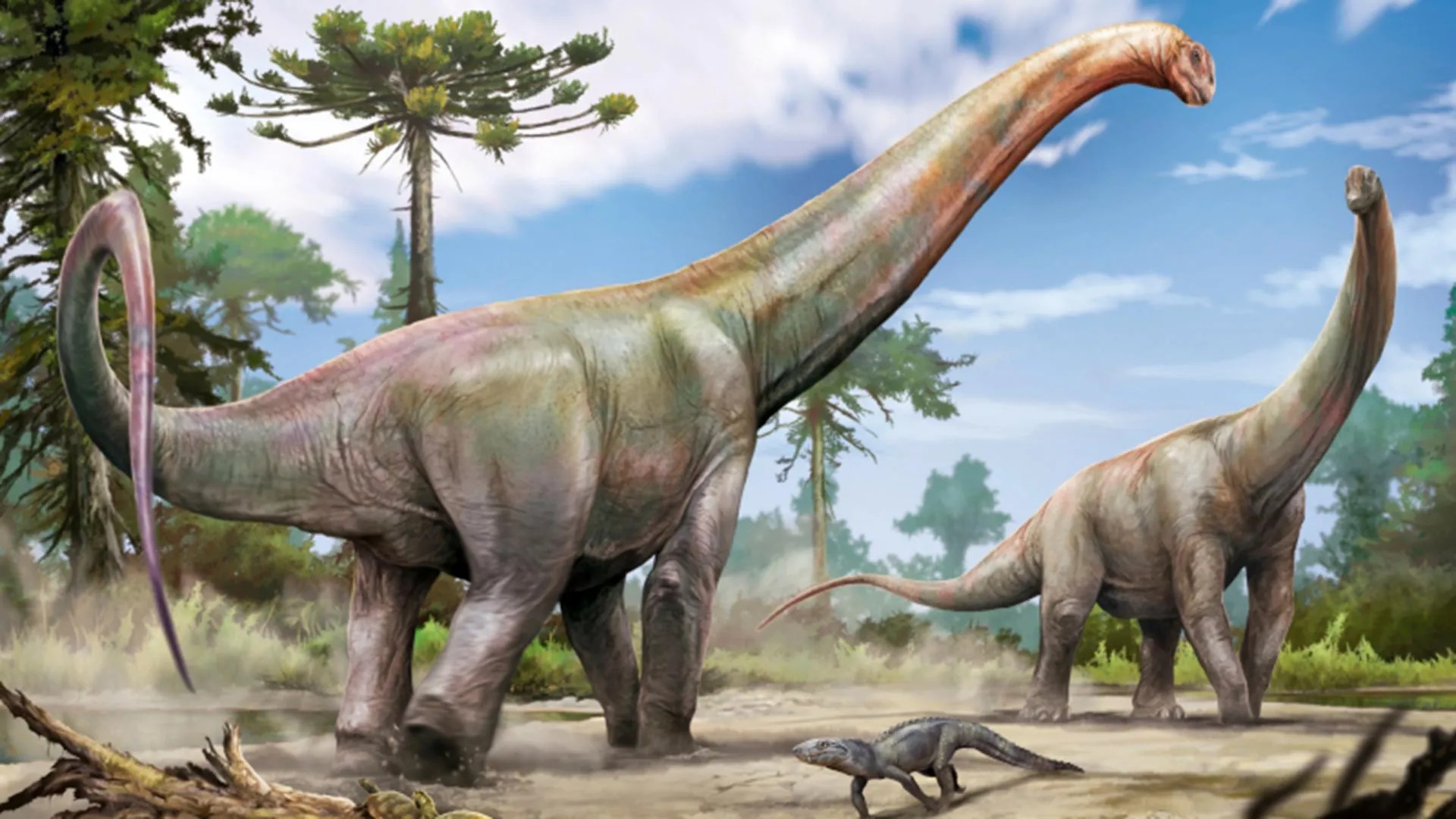
Paleontologists have identified a new long-necked dinosaur species in Brazil that challenges prevailing understanding of how giant sauropods dispersed across the supercontinent Gondwana during the Early Cretaceous period. The creature, which stretched approximately 20 meters in length, lived roughly 120 million years ago and displays unexpected evolutionary links to a previously identified Spanish dinosaur, suggesting complex migration patterns that scientists are still working to fully map.
The discovery emerged from excavations at a construction site in Brazil, where researchers uncovered fossilized remains that belonged to this previously unknown species. The dinosaur belongs to the sauropod family, a group of long-necked herbivores that dominated terrestrial ecosystems during the Mesozoic Era. What makes this find particularly compelling is not merely its size or age, but the evolutionary narrative embedded in its skeletal anatomy.
The Spanish connection originated with Europatitan africanus, a massive sauropod discovered in 2014 in Spain and originally thought to be a separate lineage. By analyzing bone structure, size ratios, and anatomical features shared between the Brazilian specimen and Europatitan africanus, paleontologists have established that these dinosaurs shared a common ancestor. This relationship indicates that sauropod lineages traversed landmasses that connected Europe, Africa, and South America during the Cretaceous.
Gondwana, the southern supercontinent that existed millions of years ago, began fragmenting during the Early Cretaceous as tectonic forces pushed continents apart. However, during this transition period, temporary land bridges and narrow straits still permitted animal migration between what are now distant continents. The Brazilian dinosaur's kinship with its Spanish relative provides concrete evidence that sauropod populations exploited these connections before oceanic separation became complete.
The timing of this discovery aligns with intensified Brazilian construction and development projects that have unearthed numerous paleontological treasures in recent decades. These infrastructure expansions, while economically driven, have inadvertently created opportunities for scientists to recover fossils that might otherwise remain buried and unknown. The construction site context underscores how modern development and paleontological work intersect in unexpected ways.
The classification of this new species remains under scientific review as researchers complete their analysis and prepare formal peer-reviewed publication. Once officially named and described, the dinosaur will join a growing roster of Cretaceous sauropods that demonstrate the complex biogeography of ancient terrestrial ecosystems. Understanding how these enormous herbivores moved between continents refines models of animal dispersal during periods of continental drift.
These findings carry implications beyond simple taxonomic cataloging. They reveal that sauropod evolution unfolded across interconnected landmasses rather than in isolated regions. Migration capabilities and adaptation to diverse environments shaped which species survived as Gondwana fragmented into modern continents. The Brazilian specimen thus serves as a biological record of Earth's dynamic geological history, written in bone and preserved for millions of years beneath Brazilian soil.