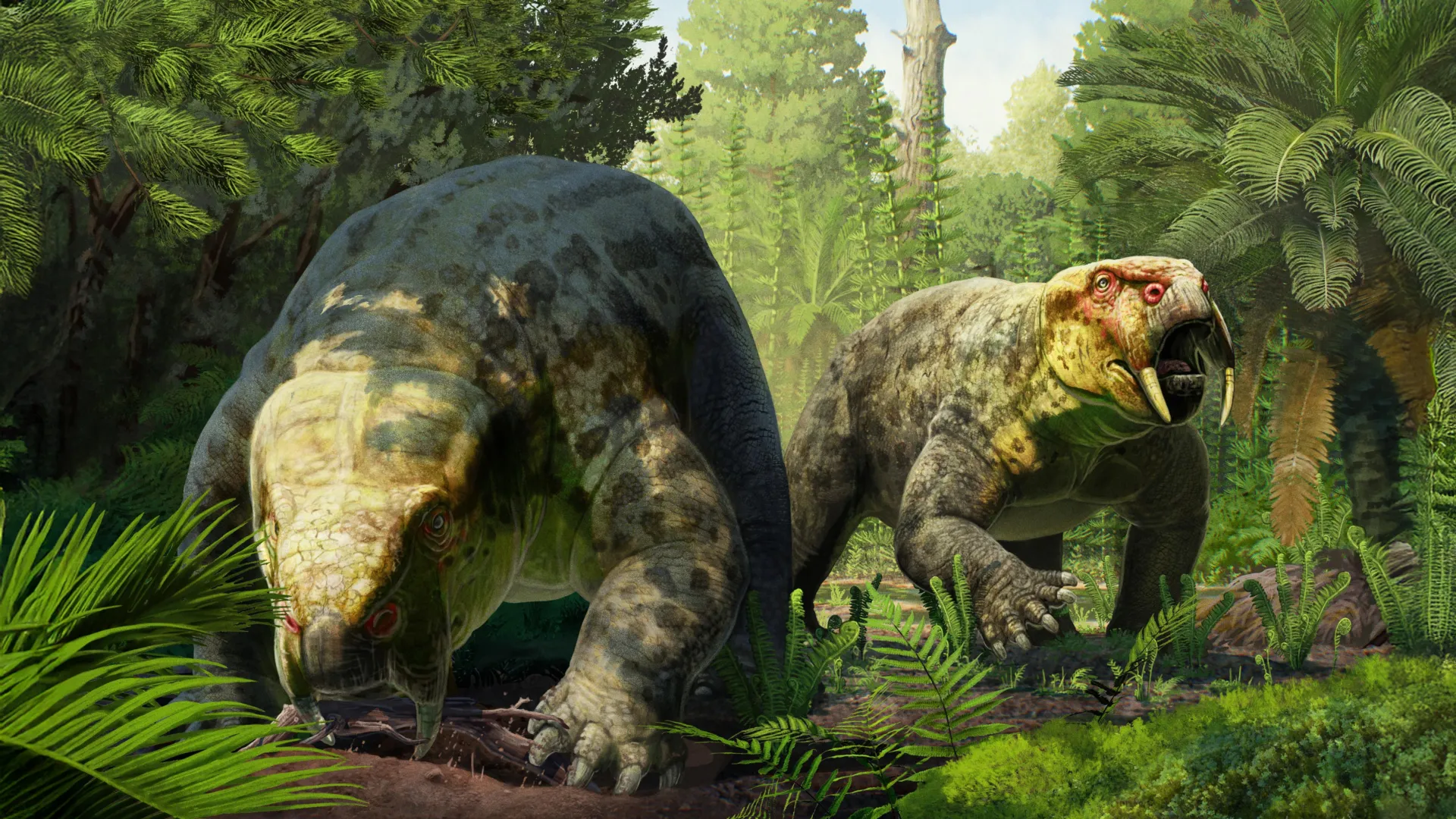
Scientists have identified a 240-million-year-old fossil from Tanzania that fundamentally reshapes understanding of when dinosaurs first emerged and how they spread across the ancient world.
The specimen, named Dinodontosaurus isiyavamanda, belongs to a dicynodont group previously documented only in South America. Its discovery in Tanzania establishes the first known link between fossil deposits on these two continents during the Early Triassic period, roughly 240 million years ago.
The find carries profound implications for Africa's paleontological record. Researchers now believe that Tanzania's supposedly oldest dinosaur fossils may be millions of years younger than previously dated. This recalibration forces a reassessment of how and when dinosaurian lineages colonized different landmasses after the catastrophic Permian-Triassic extinction event that wiped out 96 percent of marine species and 70 percent of terrestrial vertebrate species roughly 252 million years ago.
Dinodontosaurus isiyavamanda belongs to the dicynodonts, a group of synapsids that thrived before and after the end-Permian extinction. Dicynodonts were herbivorous creatures with beaked, tooth-bearing skulls adapted for grinding vegetation. They dominated Triassic ecosystems on multiple continents before eventually disappearing. Their presence in both Tanzania and South America at the same time period provides concrete evidence of continental connections and animal migration routes that paleontologists had theorized but never confirmed through fossil evidence.
The discovery emerges from fieldwork in Tanzania's Ruhuhu Formation, a sedimentary rock layer rich in Early Triassic fossils. The researchers responsible for naming and describing the specimen conducted careful stratigraphic analysis to pinpoint the fossil's precise age and geological context. By comparing Dinodontosaurus isiyavamanda to known South American dicynodont species, scientists established that the Tanzanian animal lived contemporaneously with its American cousins, indicating that these groups maintained geographic connections despite living on separate continents.
This timeline adjustment matters because paleontologists use fossil distributions to reconstruct ancient plate tectonics and understand how organisms responded to environmental changes. If Tanzania's dinosaur record begins later than previously believed, it suggests that non-dinosaurian reptiles like dicynodonts occupied ecological niches longer into the Triassic than dinosaurs colonized those same spaces. This reshapes narratives about dinosaurian success and the mechanisms driving their eventual dominance.
The Permian-Triassic boundary represents one of Earth's most dramatic biological transitions. Following the extinction event, surviving lineages rapidly diversified to fill empty ecological roles. Dicynodonts achieved remarkable success during this recovery period, becoming the dominant large herbivores. Dinosaurs emerged during the same window but remained relatively minor players in Triassic ecosystems for millions of years. Understanding when and where each group appeared helps explain why dinosaurs eventually outcompeted dicynodonts and other synapsids for resources.
The work underscores the value of continued paleontological fieldwork in understudied regions. African fossil deposits remain relatively underexplored compared to sites in South America, North America, and Europe. Each new specimen from Tanzania or neighboring countries has potential to overturn established chronologies and reveal unexpected continental connections that shaped vertebrate evolution.