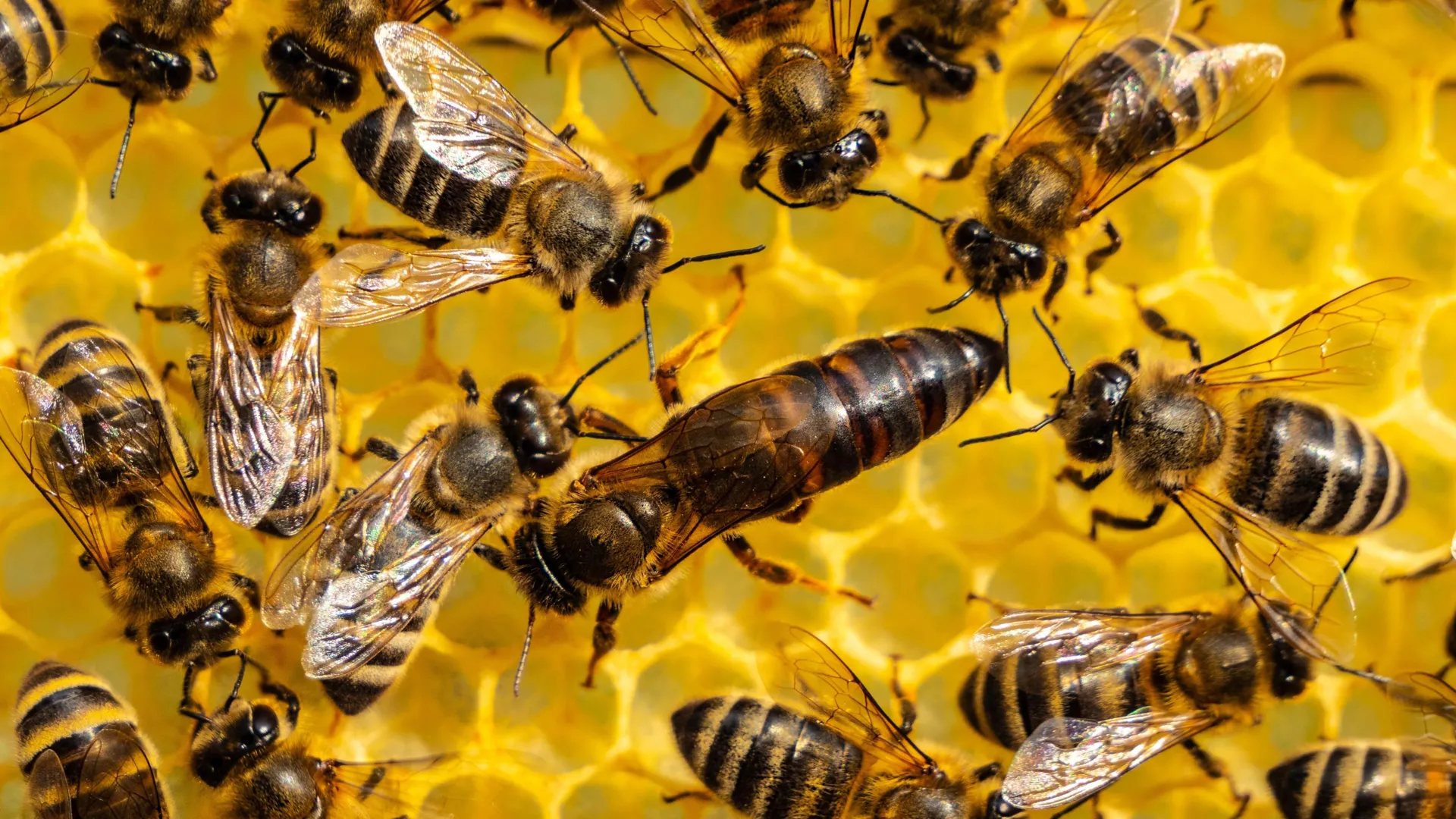
# Queen Bees Transfer Pesticide Contamination to Eggs as Survival Mechanism
Honeybee queens exposed to pesticides employ a previously unknown survival strategy. They transfer pesticide contamination into their eggs, protecting themselves while potentially endangering developing offspring and colony health. Researchers discovered this mechanism through controlled exposure studies that tracked how pesticide residues move through queen bee physiology.
The finding emerges from recent research examining how Apis mellifera queens metabolize neonicotinoid pesticides, a widely used class of insecticides linked to pollinator decline. When queens absorb these chemicals, they face a biological choice: store toxins in their own tissues or route them elsewhere. The new research shows queens actively shift contamination into developing eggs, a process that reduces pesticide burden on the queen's vital organs while concentrating toxins in the next generation.
This mechanism appears counterintuitive from an evolutionary standpoint. Queens prioritize their own survival over offspring survival, even though colony success depends on worker bee populations. The trade-off reflects the immediate pressure queens face: death from pesticide toxicity means colony collapse regardless. By offloading contaminants, queens preserve their capacity to lay eggs and maintain the colony structure, even if those eggs face elevated toxin exposure.
The implications extend beyond individual bee genetics. Larvae developing in pesticide-contaminated eggs show reduced survival rates and impaired cognitive development. Worker bees emerging from these eggs display decreased learning capacity and foraging efficiency, traits essential for colony viability. A weakened worker cohort cannot adequately provision the colony or respond to environmental stressors, potentially cascading into population-level decline.
Researchers conducted controlled laboratory experiments exposing queens to realistic field-level pesticide concentrations. They measured pesticide residues in queen tissues, eggs, and developing larvae across multiple timepoints. The data revealed a clear pattern: as pesticide levels increased in queen hemolymph (bee blood), egg contamination rose proportionally while queen organ accumulation decreased. Chemical analysis identified the specific mechanisms queens use to transport pesticides into eggs, involving carrier proteins that normally move nutrients.
The discovery adds complexity to pesticide risk assessment for pollinators. Current regulatory frameworks evaluate toxicity to individual bees but rarely account for transgenerational effects or maternal transfer mechanisms. A queen exposed to sublethal pesticide doses may appear healthy and productive while simultaneously poisoning her offspring. This creates a hidden pathway for pesticide impacts to erode colony genetics and worker quality across multiple generations.
Honeybee populations already face pressure from habitat loss, disease, and nutrition stress. Pesticide contamination represents an additional burden that interacts unpredictably with other stressors. The queen's egg-transfer mechanism effectively extends pesticide effects beyond the exposed generation, potentially degrading colony fitness for months or years after initial contamination exposure.
These findings strengthen the scientific case for restricting neonicotinoid use in regions where honeybee colonies operate. They also highlight the need for new regulatory approaches that model pesticide effects on colony development and population dynamics rather than focusing solely on acute toxicity. Understanding how queens make this biological trade-off could inform strategies to protect both individual bees and the agricultural systems that depend on their pollination services.