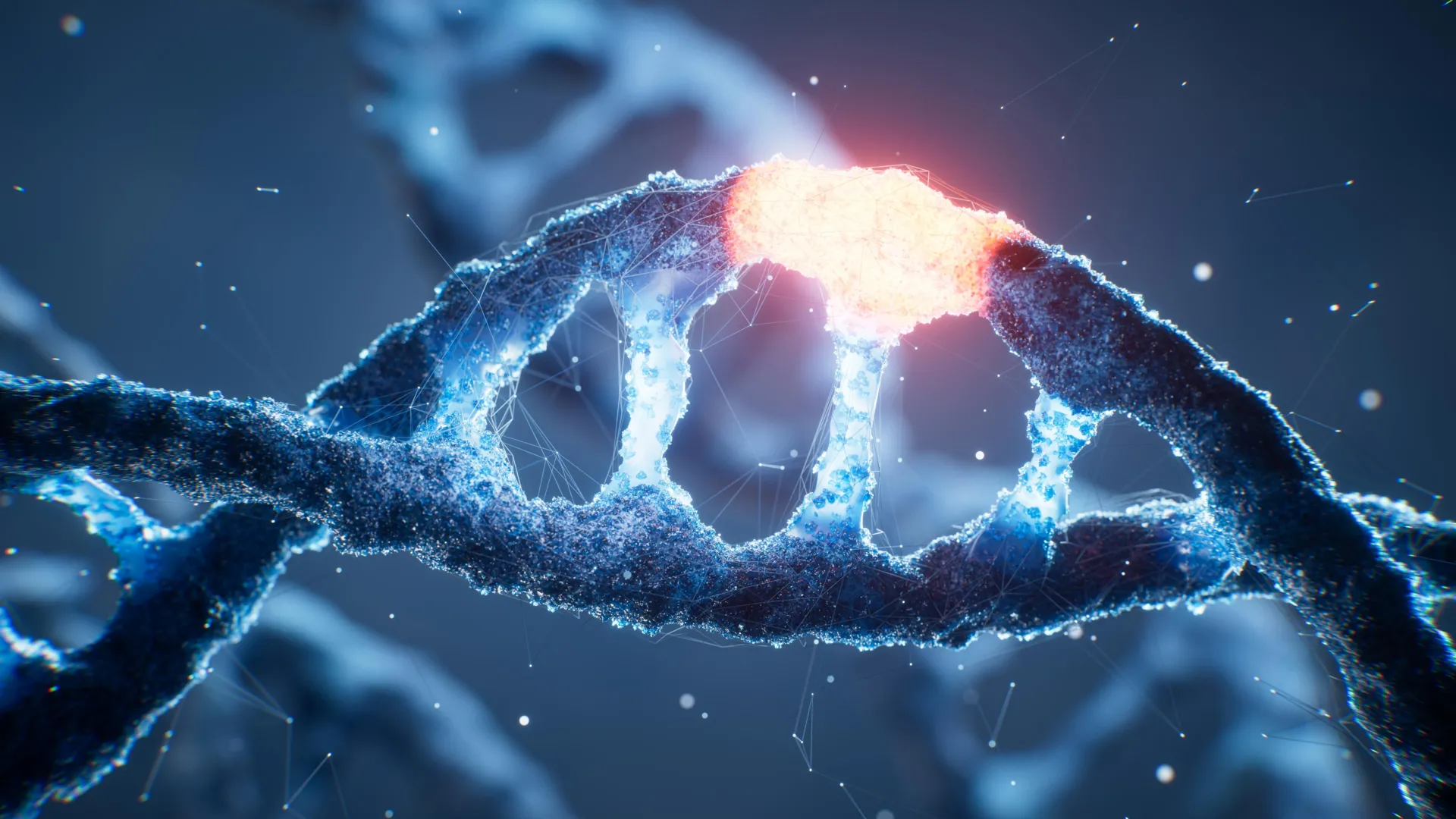
Researchers have cracked open one of genetics' most elusive puzzles. A team used artificial intelligence to identify the DNA signature of a genetic initiator that activates roughly 60 percent of human genes, marking a major step toward understanding how cells control when genes turn on.
The discovery centers on what scientists call the initiator, a short DNA sequence that sits near the start of genes and acts as an "on switch." Unlike promoters, which have well-studied patterns, initiators have remained poorly understood because they lack obvious visual patterns in DNA sequences. This invisibility to traditional analysis methods has made them harder to decode.
The research team trained an AI model on approximately 500,000 DNA sequences to find the initiator signature. The model succeeded in identifying this genetic switch in about 60 percent of human genes. This coverage rate represents a substantial portion of the human genome and opens new avenues for understanding gene regulation.
The work stems from decades of research into gene control. Scientists know that genes do not simply activate randomly. Instead, cellular machinery recognizes specific DNA sequences that tell it when and where to turn genes on. Promoters were the first such signals to be discovered and characterized. But cells use multiple types of regulatory sequences, and initiators represent one of the most important yet elusive ones.
The AI approach proved superior to conventional methods because machine learning can detect subtle patterns that humans and traditional sequence analysis tools miss. Rather than looking for an obvious, repeating code, the model learned the statistical characteristics of initiator regions across hundreds of thousands of real human genes. This pattern recognition allowed it to identify initiators even when they appeared in varied forms.
Understanding initiators holds practical implications. Mutations in these regions can have severe consequences because they prevent genes from activating properly. If researchers can reliably identify where initiators sit in the genome, they gain the ability to predict which mutations would disrupt gene activation and cause disease. This knowledge could improve genetic testing and risk assessment for inherited conditions.
The breakthrough also represents progress toward a larger goal: creating a comprehensive "instruction manual" for gene regulation. The human genome contains roughly 3 billion base pairs, but the sequence alone tells only part of the story. Equally important is understanding the regulatory code that determines which genes activate in which cells and at which times. Initiators form one piece of this puzzle. Enhancers, silencers, and other regulatory elements form others.
Future work will likely focus on refining the initiator model and integrating it with knowledge about other regulatory sequences. This could eventually enable researchers to predict how genetic variants affect gene expression and disease risk with greater accuracy. The technique may also transfer to other organisms, helping scientists understand gene regulation across different species.
The study highlights how artificial intelligence reshapes biological research. Machine learning excels at finding patterns in enormous datasets that would overwhelm human researchers. As genomic datasets grow and AI models improve, such discoveries will probably accelerate. This particular breakthrough demonstrates that some of biology's hidden switches yield to the right computational approach.