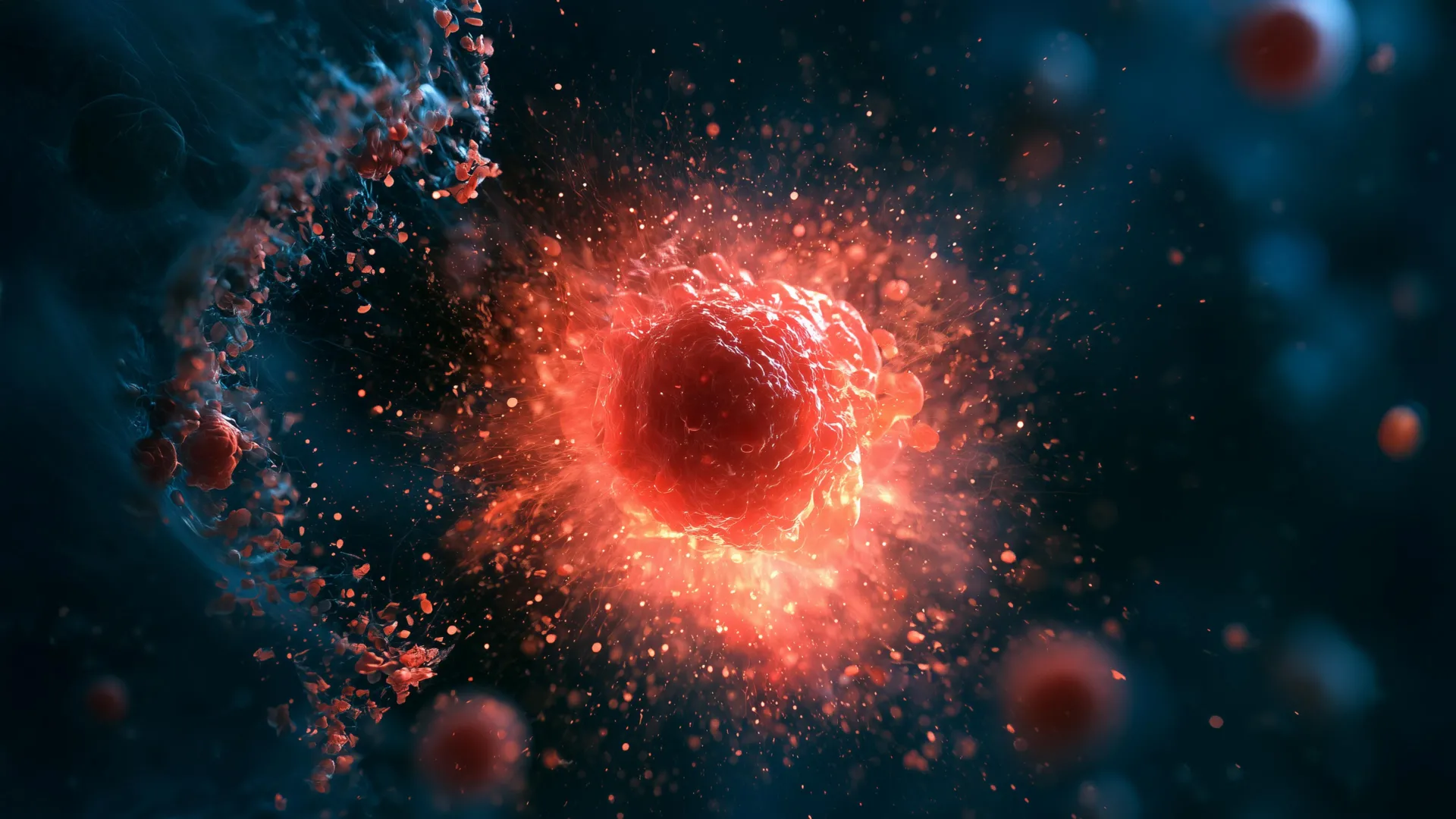
Stanford researchers have discovered a striking immune defense mechanism in flatworms: specialized cells that detonate like miniature explosives to destroy bacteria and foreign invaders. The cells burst within minutes of encountering threats, releasing their contents in a localized attack that kills pathogens before the cell itself disintegrates entirely.
The research team, working at Stanford University, identified these explosive immune cells during studies of flatworm biology. The cells operate through a mechanism far faster than conventional immune responses. Rather than lingering or recruiting other defenders, they sacrifice themselves almost instantly upon detecting danger, concentrating their destructive force at ground zero.
This suicide-bombing approach offers distinct tactical advantages. The rapid, localized nature of the attack prevents pathogens from spreading while minimizing collateral damage to surrounding healthy tissue. The cells leave no persistent inflammatory debris that could trigger broader immune complications.
The findings open therapeutic possibilities. Researchers believe understanding this mechanism could inform development of targeted treatments for infections resistant to conventional antibiotics. The approach also holds potential for cancer therapies, where similarly directed cellular weapons might selectively destroy tumor cells without harming nearby healthy tissue.
Flatworms serve as valuable model organisms for immune research because their cellular systems share fundamental features with more complex animals. What Stanford scientists observe in these organisms often reveals principles applicable across species.
The explosive immune cells represent an alternative evolutionary strategy to the prolonged inflammatory responses characteristic of mammalian immunity. Rather than mounting sustained defenses, these cells opt for immediate, decisive action.
Further research will focus on identifying the specific molecular triggers that activate the cells and the proteins responsible for their explosive discharge. Scientists will also investigate whether similar mechanisms exist in other organisms and whether they can be engineered into human immune cells for therapeutic benefit.