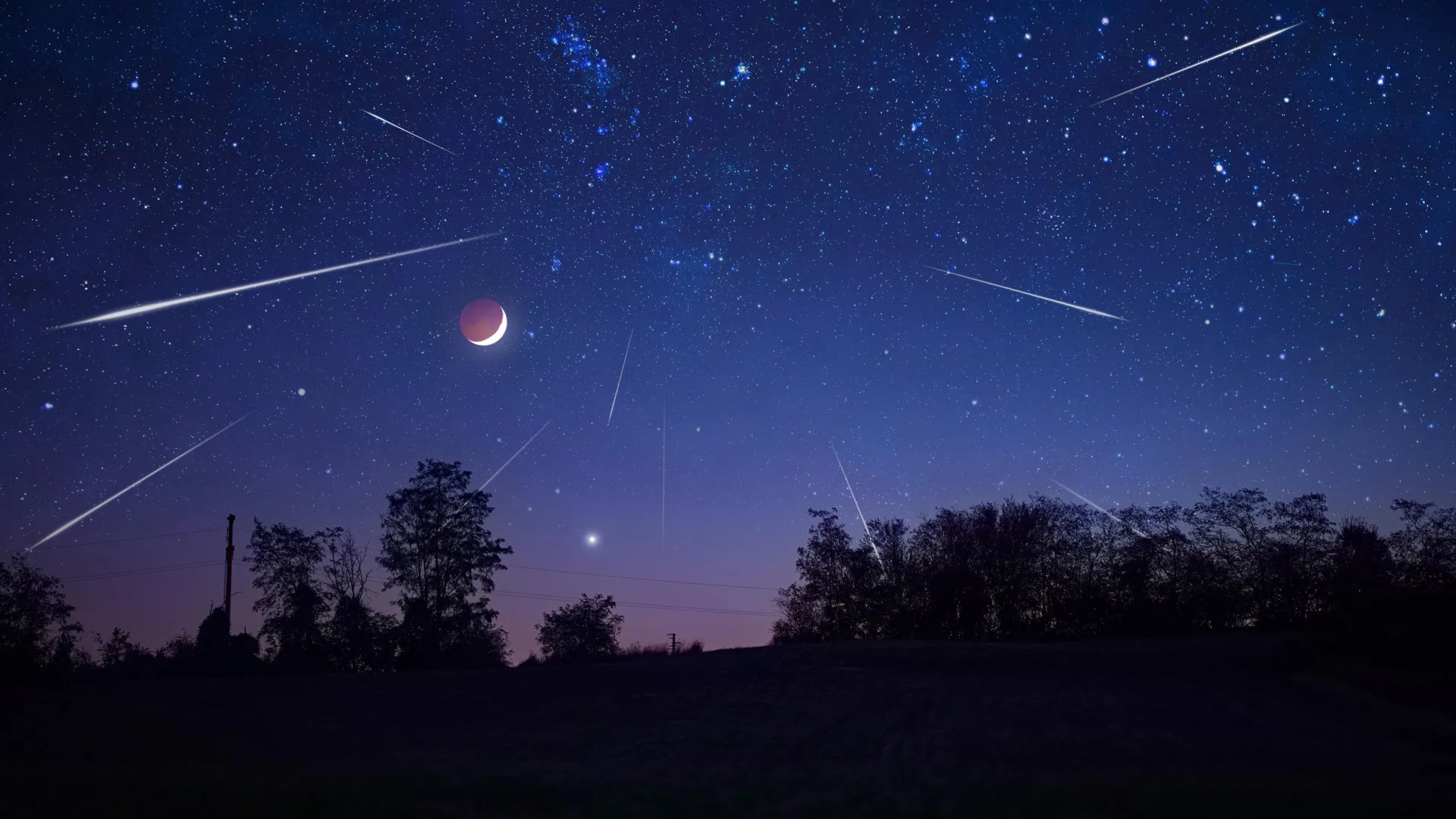
A rare celestial alignment will treat stargazers to multiple astronomical events on August 12. A solar eclipse and the peak of the Perseid meteor shower occur on the same day, creating an unusual opportunity for observers in the right locations.
The solar eclipse will be partial for most viewers in North America and Europe, with the Moon blocking a portion of the Sun's disk during daylight hours. The exact visibility depends on geographic location, with some regions experiencing deeper obscuration than others.
The Perseid meteor shower peaks simultaneously, with astronomers expecting heightened activity as Earth passes through debris from Comet Swift-Tuttle. The dark skies created by the New Moon during the eclipse will enhance visibility of meteors, allowing observers to see fainter streaks that would normally wash out under moonlight. Typical Perseid displays produce 50 to 100 meteors per hour at peak conditions.
August's celestial calendar includes additional events. Venus will reach exceptional brightness in the western sky after sunset, making it easily visible to the naked eye throughout the month. The planet's high altitude and brightness create ideal viewing conditions for casual observers.
The month concludes with a partial lunar eclipse on August 27. This eclipse will darken most of the Moon's surface as Earth's shadow crosses the lunar disk. Unlike solar eclipses, lunar eclipses require no special equipment and are safe to observe directly.
The convergence of eclipse and meteor shower remains uncommon. The New Moon timing, necessary for a solar eclipse, typically coincides with the darkest skies, which enhances meteor visibility. Observers planning to watch both events should identify locations with minimal light pollution and clear weather forecasts. Eclipse glasses will be essential for safely viewing the solar event, while meteor watching requires only patience and darkness.