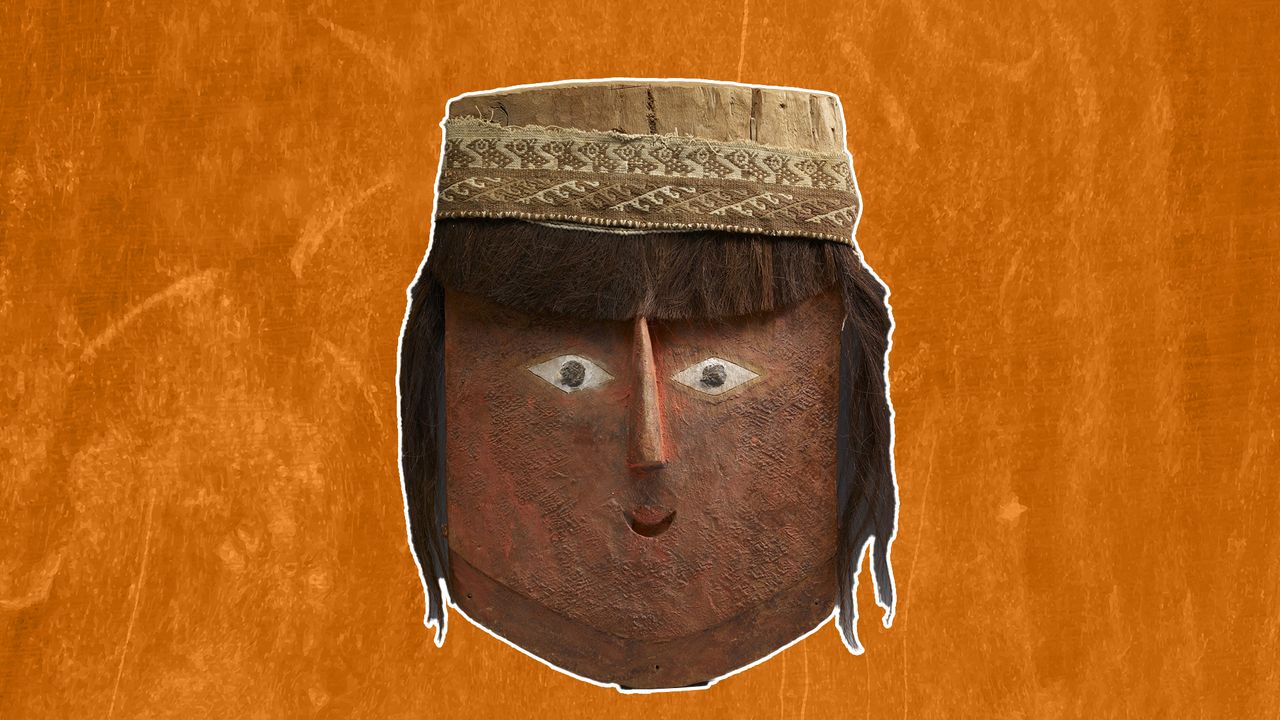
Archaeologists in Peru have uncovered a 1,000-year-old mummy mask crafted with genuine human hair and toxic red cinnabar pigment, revealing sophisticated burial practices among pre-Inca civilizations. The artifact, often called a "false head," was positioned atop a mummified body to create an idealized representation of the deceased.
The mask combines practical and symbolic elements. Artisans wove real human hair into the construction, likely harvested from family members or ancestors, creating an intimate connection between the living and dead. The red cinnabar coating, a mercury sulfide compound, served multiple purposes. Beyond its visual impact, the toxic pigment had antimicrobial properties that helped preserve the mask and the remains beneath it.
Pre-Inca Andean cultures, particularly those in coastal Peru, invested tremendous resources in death rituals. These mummy masks represent a level of craftsmanship and cultural sophistication that archaeologists continue to document. The use of cinnabar specifically indicates contact with valuable trade networks, as the pigment required access to mercury sources found primarily in remote highland regions.
The "false head" concept reflected religious beliefs about the afterlife. Communities believed the mask would serve the deceased in the spiritual realm, providing them with an enhanced or idealized form. This practice persisted across generations, with similar masks appearing in burial sites throughout pre-Columbian Peru.
Researchers face challenges studying these artifacts due to the toxicity of cinnabar residue. The mercury content requires careful handling and analysis to extract information without exposing excavators to harmful compounds. Despite these obstacles, such discoveries continue illuminating how pre-Inca peoples understood mortality, identity, and spiritual transformation.
The mask demonstrates that Andean civilizations created elaborate material culture long before Spanish contact. These burial traditions, refined over centuries, reflected complex theological systems and skilled artisa