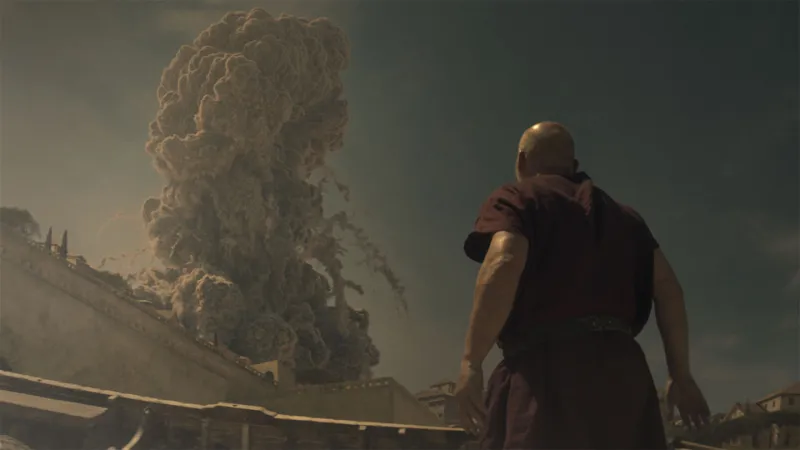
A new documentary series uses dramatic reconstruction and actor Tom Hiddleston's narration to resurrect three real inhabitants of Pompeii who died in the volcanic eruption of 79 AD. The show, titled "Pompeii: Out of Time," blends historical evidence with fictional storytelling to imagine the lives and final moments of these ancient Romans.
The series focuses on individuals whose remains were preserved by the eruption of Mount Vesuvius. By combining archaeological findings, scientific analysis, and dramatic reenactment, the filmmakers recreate plausible scenarios for how these people lived and experienced the catastrophe that buried their city in ash and pumice.
The approach reflects modern documentary trends that prioritize narrative engagement alongside factual content. Rather than presenting dry archaeological data, the series attempts to humanize the archaeological record by constructing coherent life stories around skeletal remains, artifacts, and environmental evidence from excavation sites.
Pompeii has long captured public imagination as one of the most intact Roman settlements from antiquity. The volcanic eruption preserved buildings, streets, and human remains in remarkable detail, providing historians and archaeologists with an extraordinary window into daily life nearly 2,000 years ago. Previous research has revealed insights into Pompeian society, from diet and disease to social hierarchies and occupations.
This documentary represents a popular format for science communication, though it raises questions about the line between education and entertainment. The mixing of confirmed facts with reconstructed fiction requires careful handling to avoid misleading audiences about what archaeologists actually know versus what they reasonably infer or imagine.
Hiddleston's involvement as host lends mainstream appeal to the project, potentially reaching audiences beyond typical history documentary viewers. The series premieres at a time when public interest in ancient Rome remains high, fueled by streaming platforms investing in historical content.