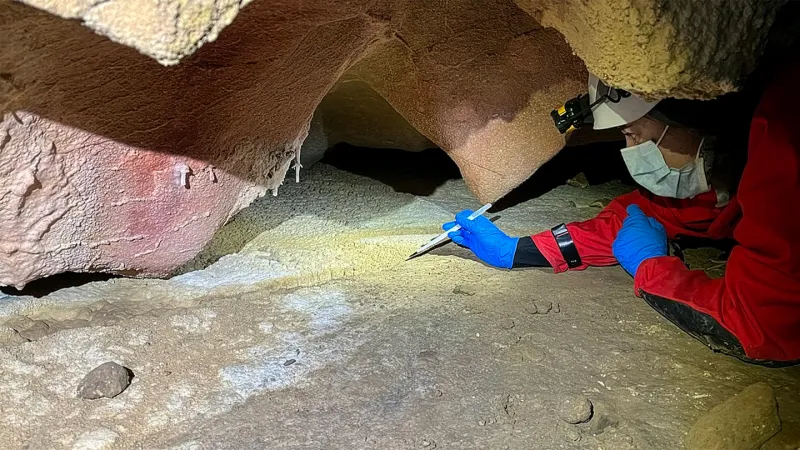
Researchers have extracted ancient human DNA directly from cave walls, opening a new pathway to identify who created prehistoric paintings thousands of years ago.
A team of scientists isolated DNA fragments from sediment and mineral deposits on cave surfaces in Spain and France. The genetic material came from skin cells, sweat, and blood that accumulated on walls as people touched and worked on them over millennia. By sequencing this DNA, researchers can now determine the sex, ancestry, and genetic relationships of individuals who inhabited these caves.
The breakthrough emerged from work examining Neanderthal and human occupation sites. Scientists found that DNA preserved in cave wall sediment remained stable enough to extract and analyze, even after tens of thousands of years. This represents a significant advancement over previous methods that required bone or tooth samples.
The implications extend beyond simple identification. Researchers can now correlate DNA profiles with specific artworks and determine whether paintings in different caves were created by related populations. They can also track whether the same individuals returned to caves repeatedly or whether different groups created art in the same location across generations.
The method has limitations. DNA recovery depends on environmental conditions. Caves with stable temperatures, low humidity, and acidic sediments preserve genetic material better than exposed sites. Contamination from modern visitors poses challenges, requiring strict protocols during sample collection.
Lead researchers emphasized that refined techniques could eventually link specific individuals to their artistic output. This work transforms how archaeologists understand prehistoric social structures and cultural transmission. Instead of relying solely on pottery styles, tool designs, or pigment analysis, scientists now access direct biological evidence connecting artists to their work.
The findings appeared in journals documenting archaeological methodology and paleogenomics. Future applications may include extracting DNA from other cave surfaces, potentially revealing family structures among ancient artists and migration patterns across Ice Age populations. This genetic archaeology promises to humanize prehistoric societies in unprecedented ways.