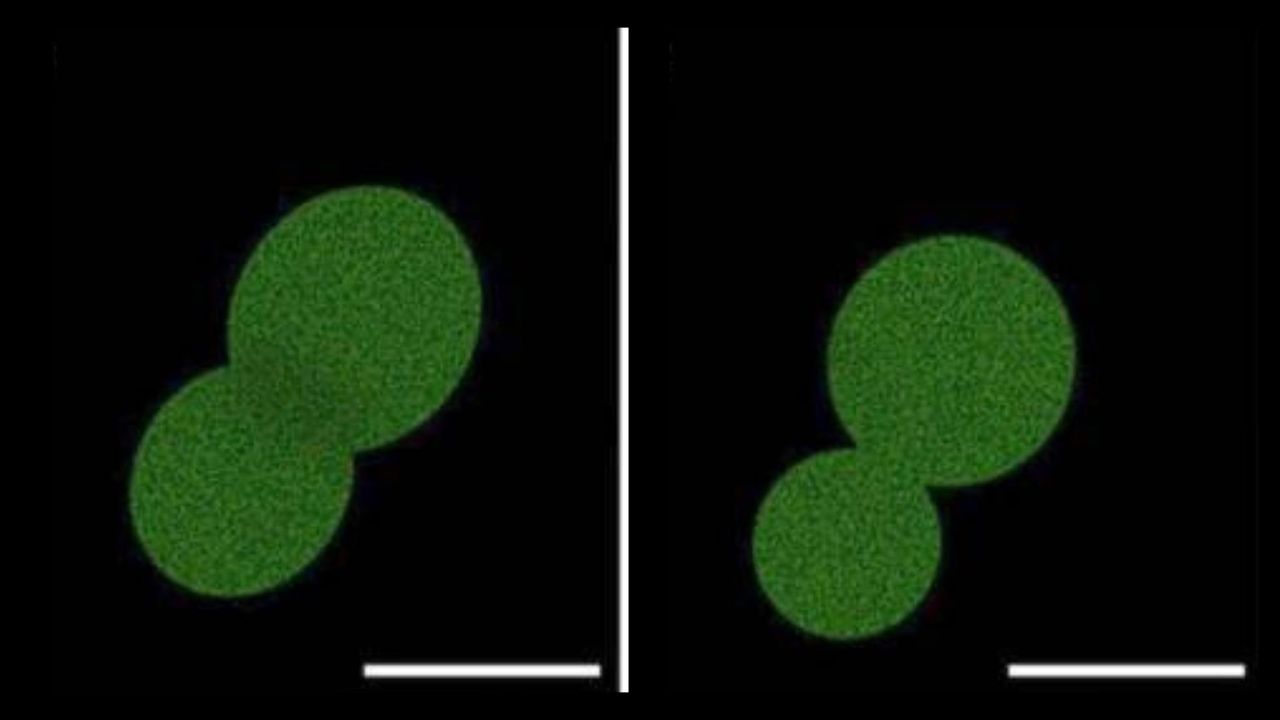
Researchers have engineered SpudCell, a synthetic cell-like structure that performs fundamental biological functions without being alive. The platform exhibits core cellular behaviors: it feeds on nutrients, grows in size, and divides into daughter structures, mimicking essential processes of natural cells.
SpudCell represents a major advance in synthetic biology, though scientists acknowledge it remains an incomplete recreation of actual cellular machinery. The system operates through engineered compartments and biochemical pathways that researchers designed to replicate self-sustaining behavior. This distinguishes it from earlier synthetic cell models, which typically demonstrated only isolated functions rather than integrated, self-replicating systems.
The research team did not disclose complete details in available reporting, but the breakthrough emerged from ongoing efforts in bottom-up synthetic biology, where scientists assemble cellular components from scratch rather than modifying existing cells. This approach has proven difficult because cells require thousands of coordinated molecular processes to function.
SpudCell's ability to feed demonstrates that researchers successfully engineered nutrient uptake mechanisms. Its capacity to grow indicates controlled material accumulation and organization. Its division capability, perhaps the most complex feat, suggests the platform contains instructional information and mechanical means to partition resources between daughter structures, though the details remain unclear from current reporting.
Scientists view such platforms as tools for understanding life's fundamental requirements. By identifying which components and processes prove essential for cell-like behavior, researchers can determine what qualifies as "living." The work also carries practical applications. Engineered cells might eventually manufacture medicines, break down pollutants, or sense environmental conditions better than current biotechnology allows.
However, SpudCell lacks attributes central to natural life. It probably cannot respond to environmental changes, repair damage, or evolve through mutation. It requires external maintenance in laboratory conditions. These limitations suggest the platform represents a functional model rather than artificial life.
Future iterations might incorporate additional cellular features. Researchers could add metabolism networks, sensing