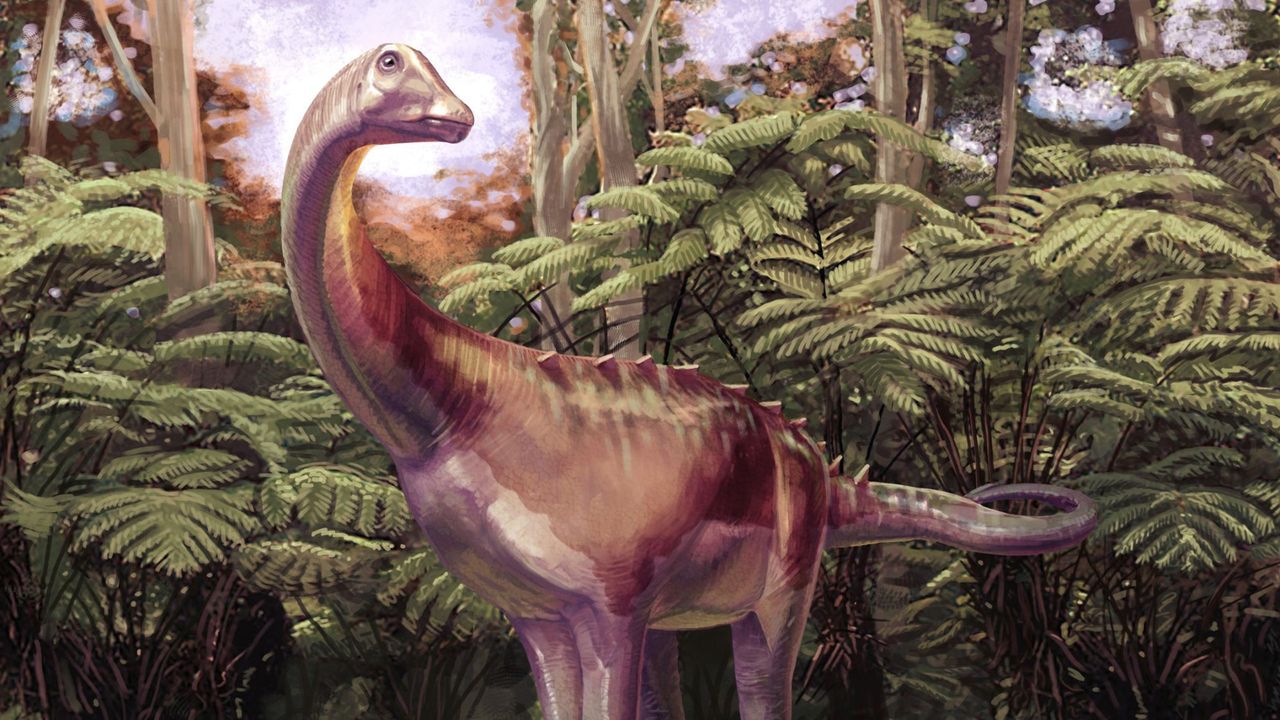
Scientists have identified Antarctica's first dinosaur fossil as a titanosaur, one of the largest land animals ever to walk Earth. The discovery, announced by researchers studying paleontological finds from the frozen continent, marks a watershed moment for understanding dinosaur distribution across the ancient supercontinent Gondwana.
Titanosaurs represent a branch of sauropod dinosaurs known for their enormous body mass and long necks. These herbivores dominated terrestrial ecosystems during the Cretaceous period and roamed across multiple continents. The presence of a titanosaur fossil in Antarctica extends the known geographic range of these giants and provides new evidence about prehistoric climate conditions on the continent.
The fossil likely dates to the Cretaceous period, when Antarctica maintained a warmer, more temperate climate than today. During this era, the continent hosted diverse plant and animal life before cooling dramatically millions of years ago. Titanosaurs thrived in such environments, feeding on abundant vegetation that covered lower latitudes of Gondwana.
Paleontologists have recovered relatively few dinosaur fossils from Antarctica compared to other southern continents like Argentina and Australia, partly due to the harsh terrain and limited accessibility of fossil-bearing rock formations. This discovery suggests untapped fossil potential remains locked beneath Antarctica's ice sheets and exposed rock faces. As climate change accelerates ice melt in certain regions, previously inaccessible fossil sites may yield additional remains.
The identification relied on comparative anatomy with titanosaur fossils from other continents, allowing researchers to confirm the specimen's classification despite potentially fragmentary preservation. Such analysis demonstrates how paleontologists extract maximum information from limited material using modern phylogenetic techniques.
This finding contributes to broader understanding of how Gondwanan fauna migrated and adapted across vast distances. It also underscores Antarctica's role in global paleontological research and highlights the continent's continued importance for studying ancient life. Future