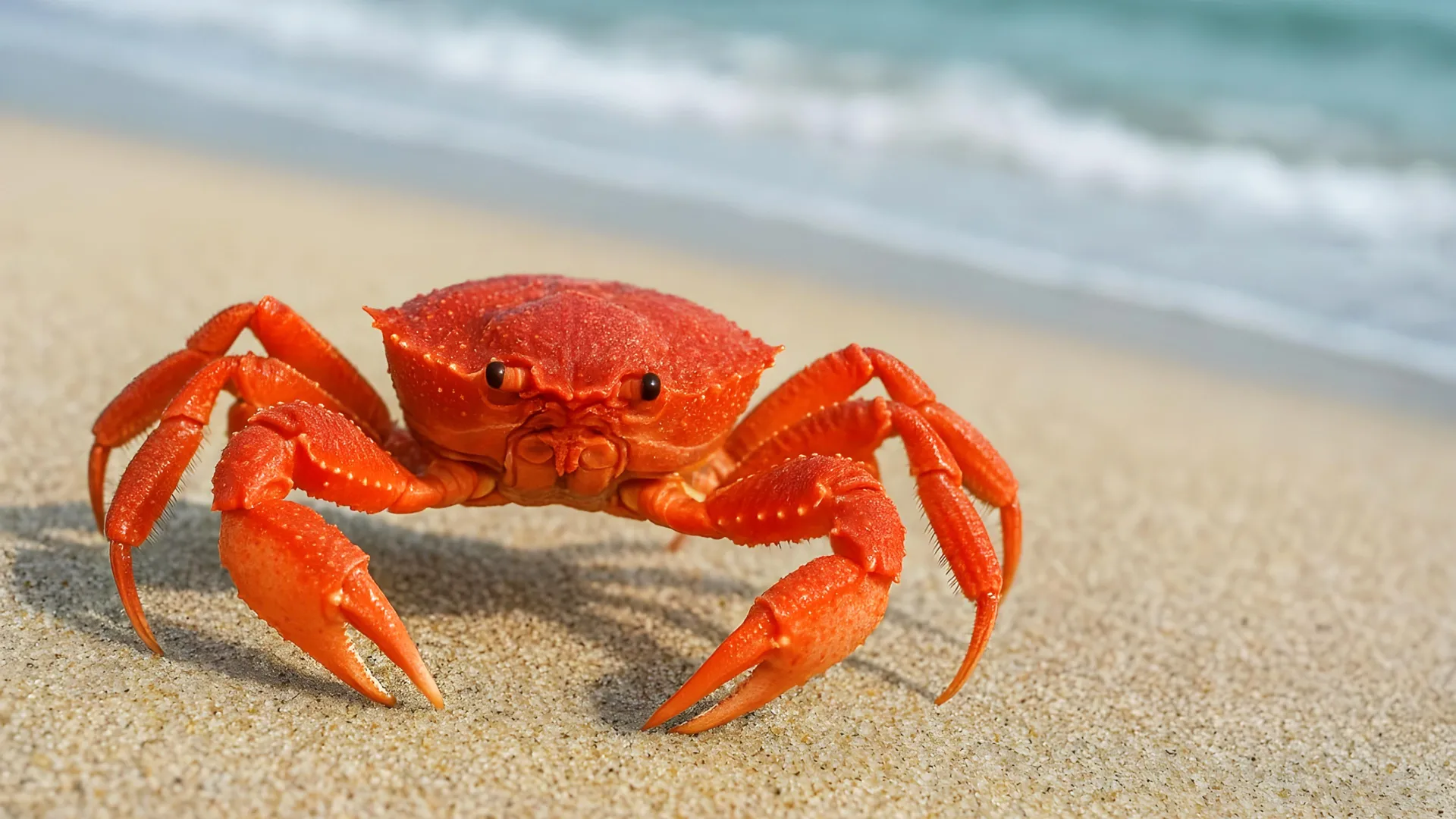
Researchers have traced crabs' distinctive sideways walk to a single evolutionary event occurring roughly 200 million years ago. A team of scientists discovered that the vast majority of modern crabs inherited this locomotion trait from one common ancestor, establishing it as a dominant behavior across the group.
The sideways gait provides crabs with a practical advantage. The movement enables them to execute quick, unpredictable bursts of speed that help them evade predators. This survival benefit likely explains why the trait persisted and spread throughout crab populations rather than disappearing over evolutionary time.
The research documents a rare example of behavioral evolution. Most behavioral traits evolve repeatedly across different species lines as organisms independently adapt to similar environmental pressures. The crab's sideways walk stands apart because it originated once, then became nearly universal among crabs without being re-invented by separate lineages.
The study connects modern behavioral patterns to deep evolutionary history, showing how a single adaptive advantage can shape an entire group's characteristics across hundreds of millions of years. The sideways walk has become so embedded in crab biology that it now defines how we recognize and identify these creatures.
Scientists used comparative analysis across crab species to establish this evolutionary timeline. By examining fossil records and genetic relationships between species, researchers could pinpoint when the behavior emerged and track its inheritance through crab lineages.
This work highlights how evolution doesn't always require organisms to reinvent solutions independently. When an adaptation works well enough, it can become locked into a species' fundamental physiology and behavior patterns. For crabs, one ancestral mutation or developmental shift 200 million years ago set the entire group on a sideways trajectory that continues today.
WHY IT MATTERS: Understanding how single evolutionary innovations can dominate entire animal groups reveals how evolution works in practice and why creatures move the way they do.