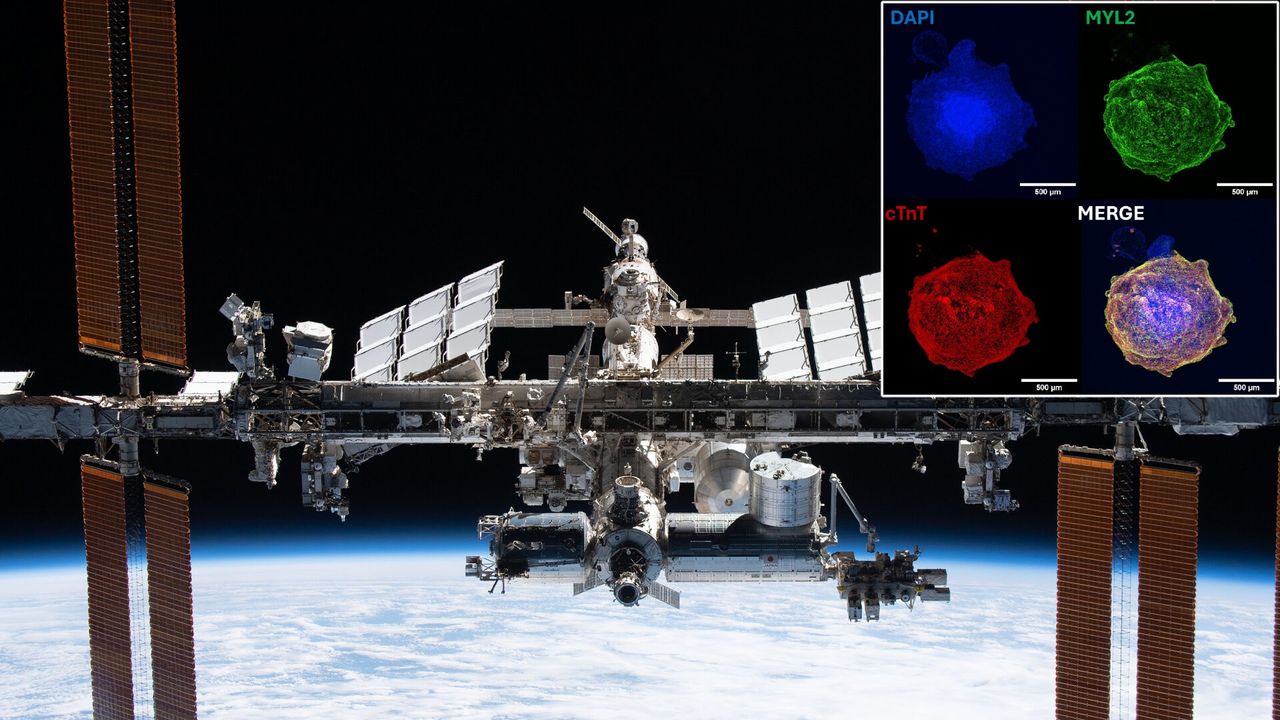
Researchers discovered that lab-grown mini-hearts develop faster in microgravity than on Earth, even as human hearts physically shrink during spaceflight. Scientists cultured heart tissue from human stem cells aboard spacecraft and observed accelerated growth compared to identical samples in terrestrial laboratories.
The finding presents a paradox. Astronauts experience cardiac atrophy from prolonged weightlessness, losing muscle mass and experiencing weakened heart function. Yet the engineered heart tissue responds differently to the space environment, suggesting that microgravity removes certain mechanical constraints that slow development in Earth's gravity.
This discovery has immediate implications for regenerative medicine. Growing replacement heart tissue in space could eventually produce organs faster and potentially more efficiently than current methods. Such advances matter for patients waiting for transplants and those with heart disease.
Researchers plan next steps that include analyzing why microgravity accelerates cardiac tissue growth at the cellular level. Understanding the mechanism could reveal ways to replicate these conditions in Earth-based bioreactors, making space-grown tissue technology practical for hospitals and clinics without launching samples into orbit.