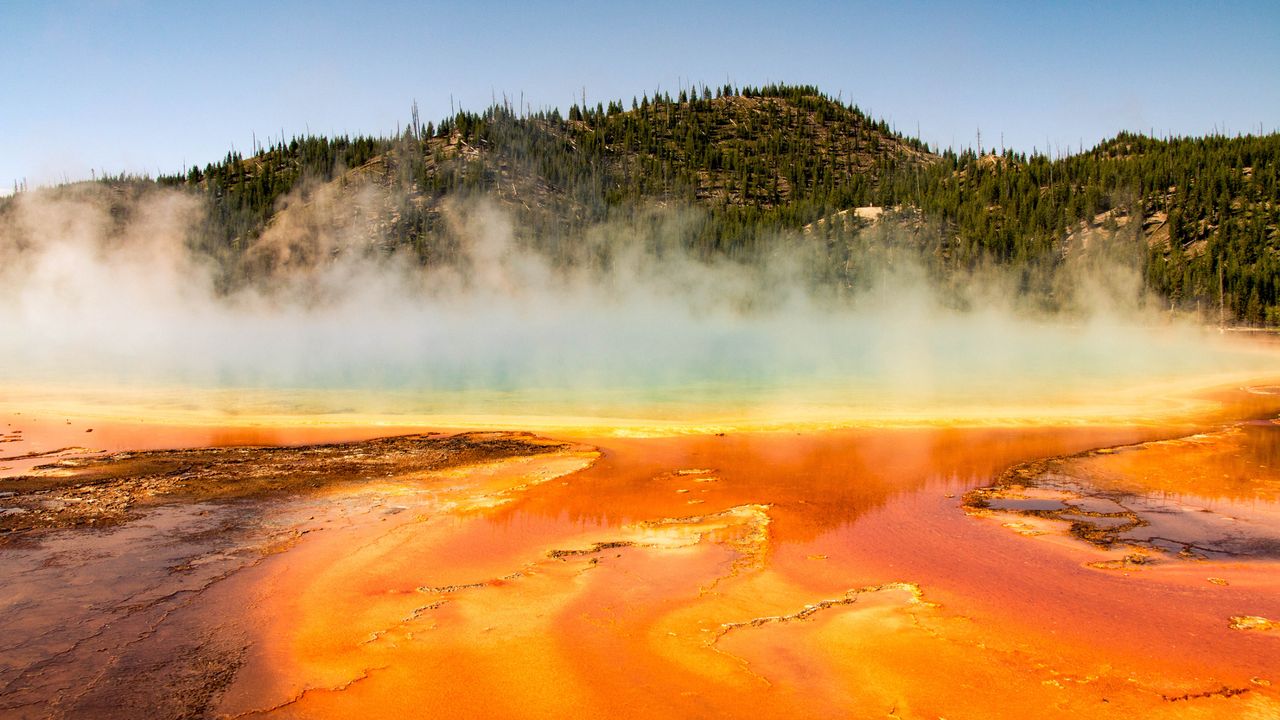
Scientists have discovered that Yellowstone's volcanic eruptions may originate from crustal shifts rather than a massive magma reservoir beneath the surface, challenging decades of geological assumptions.
Researchers studying the Yellowstone caldera found that movements in Earth's crust can trigger eruptions by releasing pressure on existing magma chambers. This mechanism differs fundamentally from the prevailing model, which attributed eruptions to deep plumes of hot material rising from the mantle.
The team analyzed seismic data and geological records spanning thousands of years. Their findings reveal that tectonic stress changes the conditions around smaller magma bodies, pushing them toward eruption. This process operates independently of whether a large central heat source feeds the volcano continuously.
The discovery reshapes how scientists understand supervolcano behavior. It suggests that crustal mechanics, not just heat supply, control when and how Yellowstone erupts. This insight applies beyond Yellowstone to other volcanic systems worldwide.
Researchers plan to model how crustal forces interact with magma chambers in other calderas. Better understanding eruption triggers could improve hazard forecasting and volcano monitoring. Yellowstone itself remains closely watched, though no imminent threat exists. The work opens new research directions for predicting volcanic behavior across the planet.